An apology is not enough to show the organizer of Kanye West's Shanghai concert is sincere
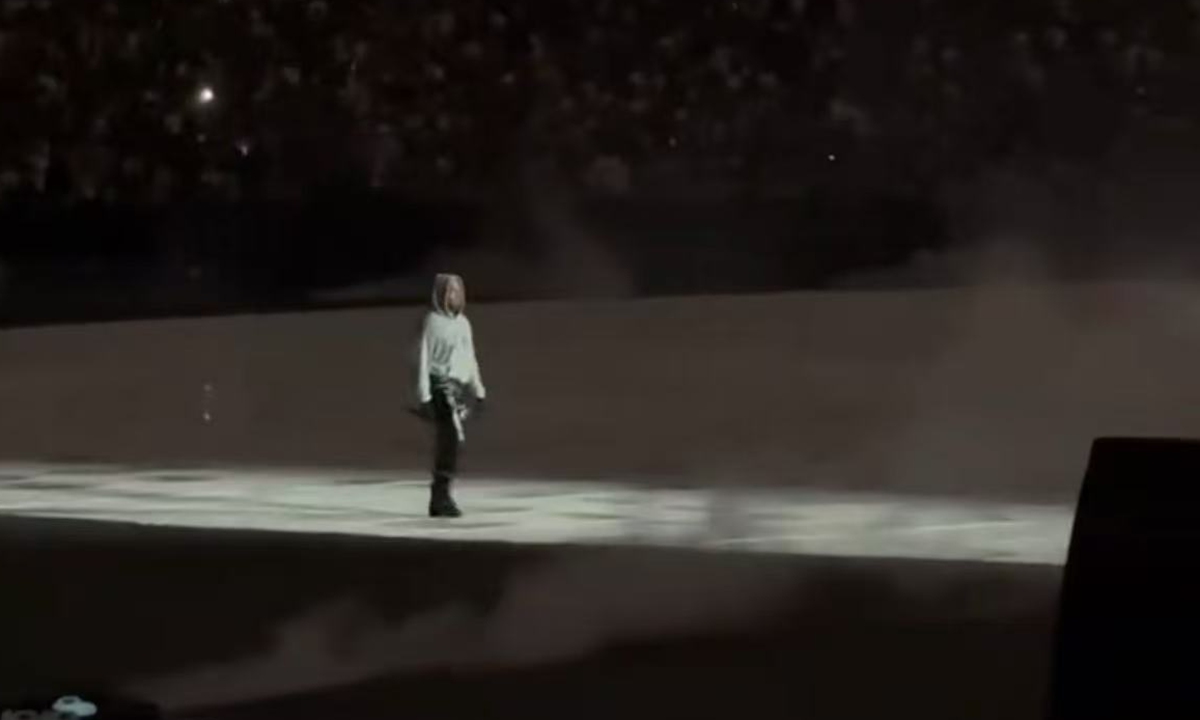
The singer Ye is on the concert. Photo: screenshot from a video posted on Sina Weibo
The recent concert by American music icon Kanye West in Shanghai sparked widespread attention due to his late arrival and early departure. On July 13, although the event organizer, StellarAmberGroup, issued a public apology, it failed to quell audience frustration.
According to media reports, the concert was scheduled to begin at 7:30 pm, but Kanye arrived 40 minutes late and left around 10:10 pm without a curtain call. After listening to about 20 minutes of instrumental music, the audience was left with a rushed ending. The three-hour performance was originally expected to last until around 10:30 pm, meaning Kanye was absent for more than an hour - roughly one-third of the entire concert.
The audience can understand the bad weather, equipment issues and other factors impacting the performance, but it is disrespectful to make them wait in vain for more than one-third of the time with just a "sorry." What needs to be made clear is that this situation raises suspicions of a commercial breach of contract. If the organizer can refund the audience a ticket subsidy in proportion to the length of time the singers are absent, it will be more effective in restoring the business reputation than just a "sorry."
China's cultural consumption market has huge potential. In recent years, for many concerts, it has become very difficult to get tickets, which has also attracted more foreign performers to come to China for events. Chinese society has shown an open and welcoming attitude toward this. Last September, Kanye West held a concert in Haikou, and 42,000 tickets sold out in just a few minutes. After the concert, he added an additional performance, which was a huge commercial success. In this context, the organizers and participants of any performance need to respect and value the audience more and improve their viewing experience. This is what it means to jointly maintain the norms and integrity of the cultural consumption market.
RELATED ARTICLES