Testimony of history: CPC-led North China battlefield plays vital role in victory against Japanese aggression: Japanese historian
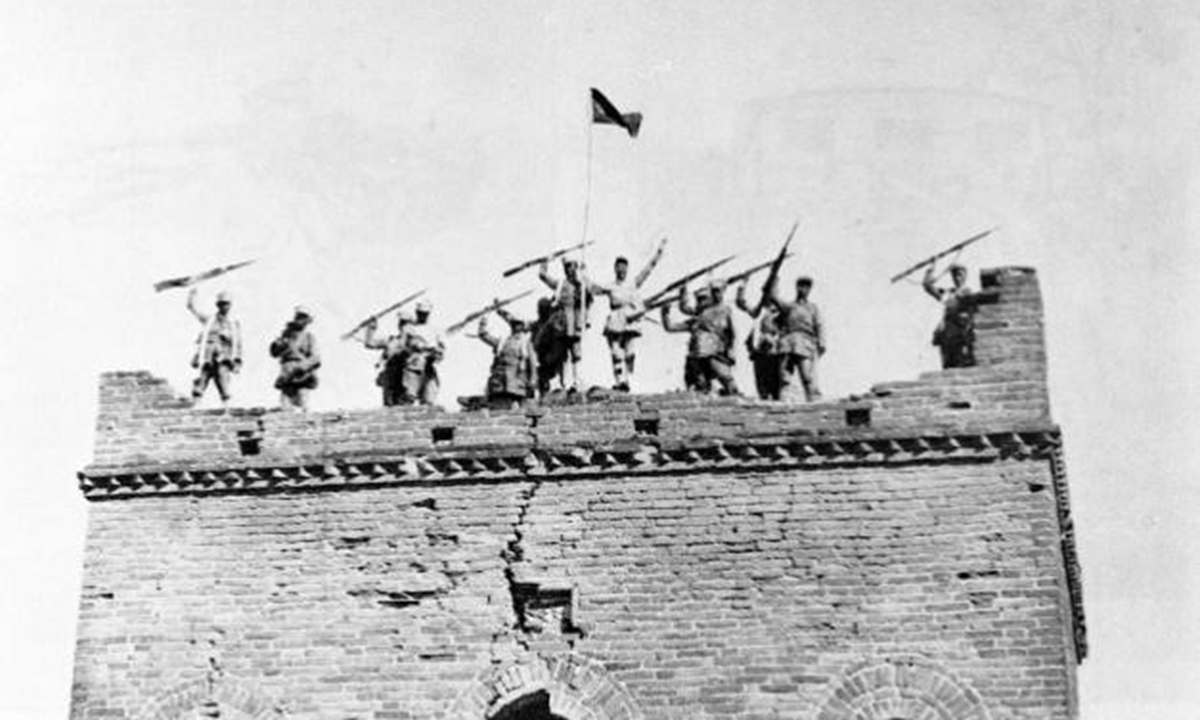
In 1940, the Eighth Route Army concentrated over 100 regiments in North China to launch strategic offensives and counter-mopping-up operations against the Japanese invaders, delivering a heavy blow to the enemy and marking the beginning of the famous Hundred-Regiment Campaign. Photo: Xinhua
The North China battlefield during the Chinese People's War of Resistance Against Japanese Aggression (1931-45), led by the Communist Party of China (CPC), played a pivotal role in China's victory against Japanese aggression, Issei Hironaka, a Japanese historian and associate professor of modern Chinese history at Aichi Gakuin University, told the Global Times.According to Hironaka, despite being significantly outgunned, the Eighth Route Army, which was led by the CPC during the Chinese People's War of Resistance Against Japanese Aggression, emerged as a major obstacle to Japan's invasion. Their firm grip on the North China front tied down large numbers of Japanese troops, weakening Japan's offensives in the south against the military led by the Chinese Kuomintang (KMT) party and ultimately shaping the broader trajectory of the war. "From this perspective, I would say that the Eighth Route Army exercised a certain degree of strategic initiative on the Chinese front," Hironaka said.
Hironaka studied the operations of the Eighth Route Army during the Chinese People's War of Resistance Against Japanese Aggression and published his findings in the book The Later Phase of the Sino-Japanese War: The North China Front, where he said that in China theater, the Japanese military primarily fought the Eighth Route Army in North China while battling KMT's army and the New Fourth Army led by CPC in Central and South China.
Japan originally intended to concentrate more of its forces in Central and South China, but due to fierce resistance from the Eighth Route Army in North China, it was forced to allocate troops there as well, Hironaka said.
"In other words, the Japanese military had great difficulty dealing with the Eighth Route Army in North China and had to devote much of its strength to mopping-up operations against them. This weakened its offensives against KMT's army in the south and became one of the reasons why Japan ultimately failed to force them to surrender," he said.
Hironaka emphasized that the reason the Eighth Route Army was able to resist the Japanese military with much inferior equipment was that they were not just a military force, but an integrated organization combining military, administrative, and civilian components under the CPC's leadership.
"Guided by the clear goal of achieving victory in the Chinese People's War of Resistance Against Japanese Aggression, the elements of ideology, military operations, politics, and the economy were skillfully integrated within the Eighth Route Army in their resistance base areas," Hironaka said.
Support from large numbers of Chinese civilians (mostly farmers), in particular, was a major source of strength for the Eighth Route Army, he pointed out.
"While the Japanese military and puppet regime imposed economic blockades to anti-Japanese resistance bases, these civilians helped produce food and basic military supplies, participating in local governance in the resistance bases. They even took up arms as militias to fight alongside the Eighth Route Army. Without these militias, the Eighth Route Army's guerrilla warfare would not have been possible, nor would they have been able to defeat the Japanese military," Hironaka said.
According to the Xinhua News Agency, by late 1940, CPC-led armed forces had expanded to around 500,000 troops, not including the Northeast Anti-Japanese United Army, alongside a vast network of local militias and regional armed groups. They had established 16 anti-Japanese democratic resistance base areas across North, Central, and South China, playing an increasingly vital role in the broader national resistance effort
As 2025 marks the 80th anniversary of the victory in the Chinese People's War of Resistance Against Japanese Aggression and the World Anti-Fascist War, Hironaka expressed hope that the Chinese side would disclose more historical material related to the war.
With more available historical materials, Hironaka said scholars like himself would no longer have to rely on a limited number of primary sources and published collections which made empirical research difficult, but could instead examine the Eighth Route Army's wartime operations in much greater detail.
"While new research findings on the role of the Eighth Route Army in the Chinese People's War of Resistance Against Japanese Aggression continues to emerge in the Chinese mainland, such studies in Japan have declined since the 2000s despite many having been conducted between the 1970s and 1990s," Hironaka said.
To overcome this situation, Hironaka hopes that researchers from China, Japan, and Western countries can pool their materials and engage in international discussions. "By moving beyond political and ideological barriers and focusing on empirical inquiry, we can hope for further progress in this field of research," he said.
RELATED ARTICLES