How do China’s supply chain strengths foster positive spillover effects globally?
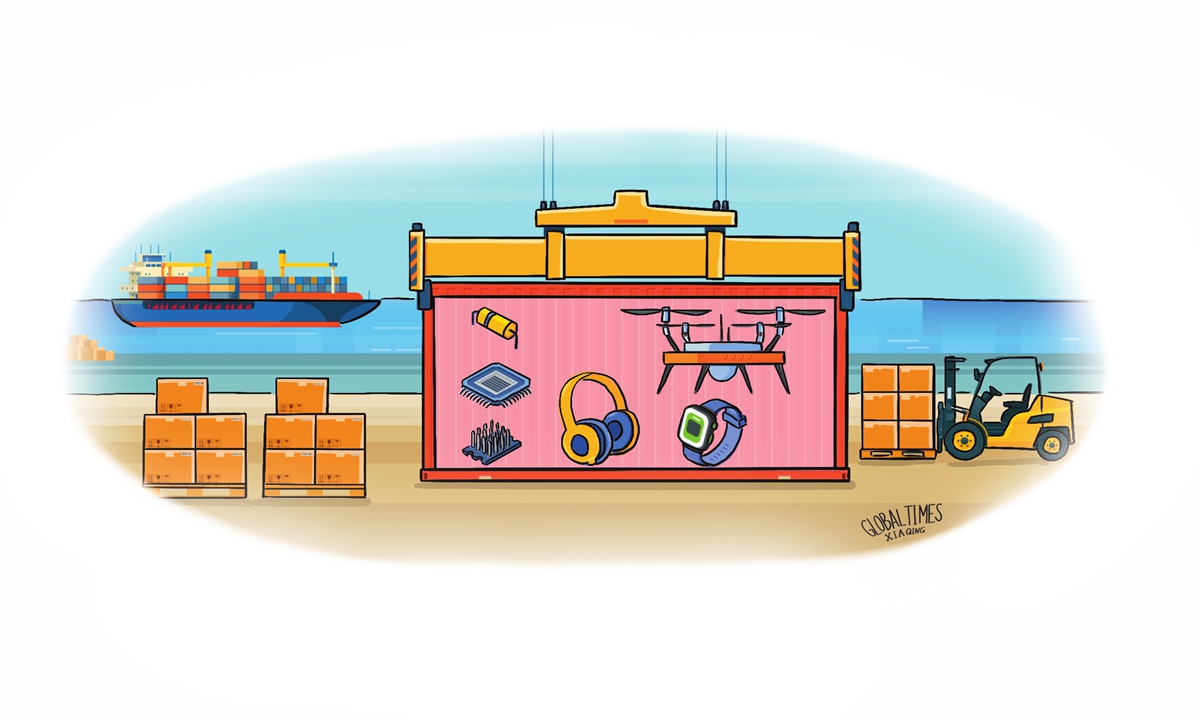
Illustration: Xia Qing/GT
Several consumer electronics supply chain companies have recently made their debuts on the Hong Kong stock market or announced IPO plans there, reflecting their broader global development strategies, the Securities Times reported on Tuesday. This trend offers an intriguing perspective on the beneficial interactions between China's supply chains and the global market.According to the Securities Times, industry insiders noted that in the context of complex and ever-changing global trade dynamics and the increasing demand for localized services, supply chain companies with global production capabilities, localized operations, and the ability to quickly respond to customer needs will have a competitive edge in the market.
In addition to going public in Hong Kong, consumer electronics supply chain companies are expanding their global footprints by investing in overseas manufacturing facilities, engaging in mergers and acquisitions, increasing investment in overseas research and development, and strengthening partnerships within the industry.
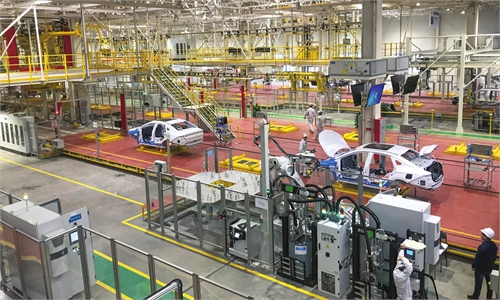
Over the past few decades, China has developed a comprehensive manufacturing supply chain system. This system is fully integrated across various sectors and demonstrates a high level of agility and flexibility.
As the only country that encompasses all UN-defined industrial categories, China ranks first globally in output across more than 220 major industrial products. Its manufacturing strength spans key sectors including electronics, vehicles, energy, and advanced manufacturing. This broad industrial base, combined with vertical integration, digital transformation, and a deeply embedded value chain ecosystem, has made China an indispensable link in global supply chains.
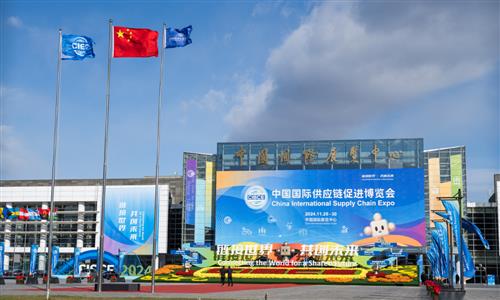
China's supply chain advantage is expected to be on full display on Wednesday when the third China International Supply Chain Expo (CISCE) opens in Beijing. A highlight is China's multi chain integration: this year's expo will showcase six major industry supply chains - advanced manufacturing, smart vehicles, clean energy, digital technology, green agriculture and healthy living. The inclusion of such diverse industries underscores China's increasing capacity to coordinate complex supply networks and adapt to the evolving global economic landscape.
Foreign participation in the CISCE continues to rise, reflecting growing global confidence in China's supply chain ecosystem. This year's CISCE features more than 650 participating companies and institutions, covering 75 countries, regions and international organizations. More than 65 percent of exhibitors are Fortune Global 500 firms or industry leaders, and 35 percent are from overseas.
These figures reinforce China's position as an essential partner in global supply chain collaboration, despite the headwinds of rising protectionism and geopolitical tensions. Amid rising external uncertainties and global supply chain restructuring, China's strengths continue to make it a critical core link in the "win-win chain" for multinational companies.
As Ren Hongbin, chairman of the China Council for the Promotion of International Trade, noted in a recent article, China's supply-side strength lies in its full-spectrum industrial capabilities and its sustained innovation in science and technology. From "Made in China" to "Created in China," the country continues to deliver high-quality products to the world, playing a stabilizing and indispensable role in the global division of labor and the resilience of the world's industrial and supply chains.
In recent years, Chinese companies have shown a growing interest in expanding into international markets and fostering global cooperation in their supply chains. This trend is a natural progression as China's manufacturing supply chains reach a certain level of maturity, focusing on bolstering domestic growth while simultaneously setting their sights on international markets and investments.
Some analysts suggest that while Chinese firms continue to export products, they are increasingly emphasizing the export of their "supply chains." This involves establishing supply chain operations overseas or integrating into existing international supply chains.
Such strategies not only enable Chinese companies to engage more deeply with globalization and integrate with international industry and supply chains, but also help them build localized operational capabilities, making it easier to align with local market demand. Additionally, these efforts contribute positively to the diversification and strengthening of local supply chains, thereby enhancing the stability of global supply networks.
Currently, economic globalization is encountering setbacks, which present new challenges for cross-border investments. However, the reported international expansion of China's consumer electronics supply chain underscores the international vision and growth potential of Chinese industrial enterprises. This fully shows that the industrial advantages China has built in recent decades are increasingly contributing positively to the stability of global supply chains.
The author is a reporter with the Global Times. bizopinion@globaltimes.com.cn
RELATED ARTICLES