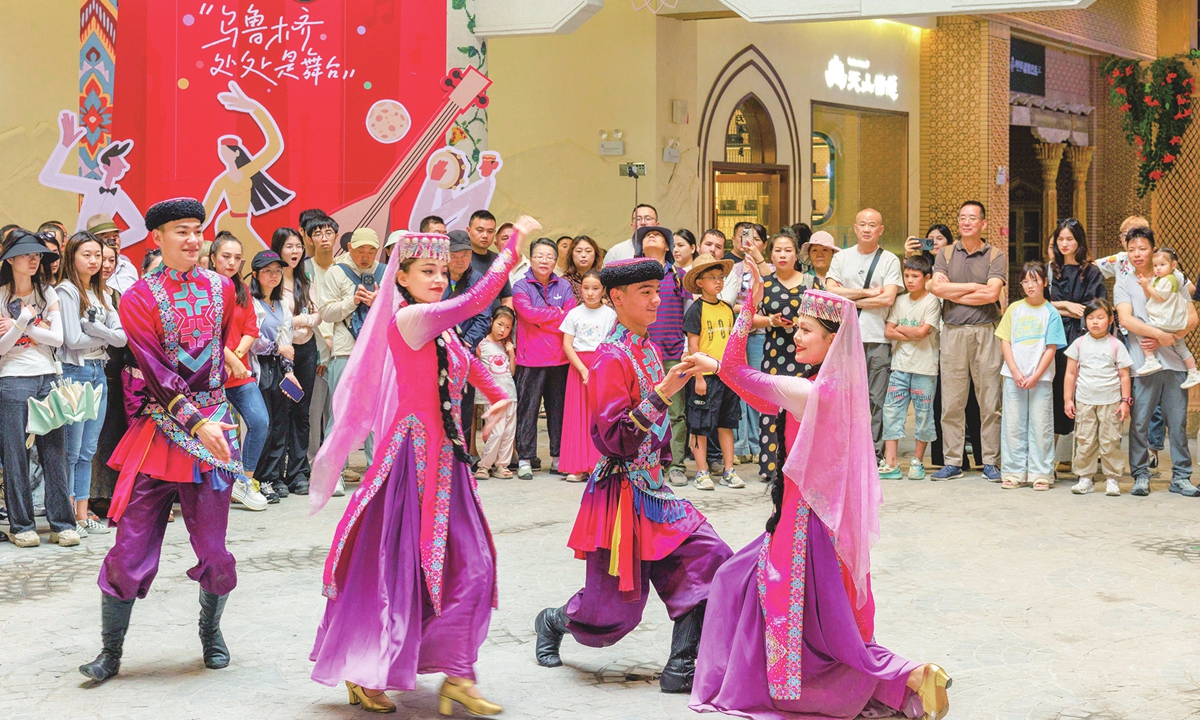
Actors perform dance for tourists at the Xinjiang International Grand Bazaar scenic area in Urumqi, Xinjiang on July 12, 2025. Photo: VCG
Editor's Note:
Despite some Western political forces continuing to run smear campaigns against Northwest China's Xinjiang Uygur Autonomous Region, they won't deter the people in the region from embracing peace and prosperity, nor will they halt Xinjiang society's steady development. Seeing is believing, and facts and truth will eventually debunk all lies.
In the "Xinjiang Upclose" series, the Global Times will publish conversations with and articles from scholars and observers from around the world who have visited the region, sharing their firsthand experience of traveling to Xinjiang and observing the daily lives of its people. Through their insights and experiences, we aim to present an authentic perspective on Xinjiang.
This is the seventh piece of the series.
Before I ever stepped foot in China's Xinjiang Uygur Autonomous Region, my mind was clouded with images painted by the Western media - a region shrouded in "sadness, repression and suffering." It was almost impossible to think of Xinjiang without associating it with alleged human rights abuses and bleak conditions. But that perception was shattered the moment I arrived. What I saw, felt and experienced was far from the grim stories circulated internationally.
In the warm embrace of Xinjiang, where colors dance in the streets and the melodies of life harmonize effortlessly, I found myself enveloped in a scene too vibrant to describe. Smiles lit up the faces of the people. Joy was not only present - it was infectious. It clung to the air like the aroma of freshly baked bread, wrapped in optimism and calm. Hope and confidence were in every conversation and every interaction.
I was fortunate to be part of the Egyptian media delegation to visit China in 2023. My first journey to Xinjiang changed my life. The colorful clothing, embroidered fabrics and fragrant food that reminded me so much of the Arab world instantly made me feel at home. I wasn't a stranger here; I was part of something beautiful and shared.
In the heart of Xinjiang, happiness radiates from the people's faces. I saw mosques open, filled with worshippers praying in peace and freedom. Contrary to the persistent narrative of religious oppression, I witnessed Muslims practicing their faith without fear or interference. This stark contrast between what I saw and what I had been led to believe confirmed something important: Many of the so-called truths about Xinjiang are merely reflections of political agendas, not realities on the ground.
Xinjiang is a region that has emerged as a symbol of progress and resilience. It is now one of China's most dynamic industrial and agricultural centers, producing over 90 percent of the nation's cotton, which speaks to the ingenuity and drive of the Chinese people. They have transformed adversity into productivity. In Xinjiang's factories, young people learn trades, develop skills and carry their nation forward with strength and pride. Far from being a land of isolation, Xinjiang is full of energy, filled with stories of success and transformation. In every corner, I encountered people working together with a shared purpose, building a brighter future.
There's no space for despair here. Xinjiang is a land of hope, determination and action. Each conversation revealed dreams in motion, and each street corner whispered tales of perseverance. These are not stories you'll hear on major Western news outlets, but they are the stories that define the region today.
That's the question everyone seems to ask: What is the real Xinjiang?
The answer, quite simply: Xinjiang is a thriving, prosperous place. In 2024, Xinjiang's regional GDP totaled more than 2 trillion yuan ($278.8 billion). It is alive, advancing and incredibly self-aware.
One of my most cherished memories is visiting the bustling Xinjiang bazaar. I laughed, danced the traditional Uyghur dance and celebrated side by side with locals. There was only joy and resilience. I asked myself: How can Western media claim these people are suffering, when joy clearly lives in their hearts and shines on their faces?
That experience made it painfully clear: The misinformation propagated by some Western outlets is not about justice or truth. It is a political tool used to discredit and destabilize.
For the world to understand Xinjiang, two essential steps must be taken.
First, Chinese media must do more to present Xinjiang's real narrative. Documentaries, feature stories and cultural programs should highlight how the region has developed. The Chinese government has invested tremendous resources in transforming Xinjiang - that's a story worth telling. The world needs to see the full picture - the infrastructure, the industry, the cultural vibrancy and, most of all, the people who are building their futures with their own hands.
Second, and just as important, is direct experience. China should welcome more foreign delegations and journalists to Xinjiang. Visitors could walk the streets, share meals with locals, attend community events, and see the mosques, schools and markets for themselves. Only then can they begin to unlearn the distortions and discover the truth.
That first visit sparked something in me. I later returned to Xinjiang because the connection was too strong to ignore. I often spoke with locals in Chinese - a skill that surprised and delighted many. When I told them I was from Egypt, their faces lit up. They spoke of the pyramids, of Pharaohs, of history and of a deep desire to visit my country. We took pictures together, exchanged warm wishes and celebrated the human connection that transcends borders.
What struck me most was the parallel between Egypt and China, not only in their shared ancient civilizations and rich heritage but also in their determined strategies to confront terrorism head-on. During my visit to Xinjiang, I also had the opportunity to tour the exhibition of the Fight against Terrorism and Extremism in Xinjiang - a place I consider a monumental achievement by China in its pursuit of national security and the protection of its citizens who had suffered for years under the threat of terrorist violence.
Both Egypt and China waged fierce battles against extremist groups that sought to destabilize their societies and undermine national unity. They have also focused on developing marginalized regions, tackling the root causes of extremism by investing in their people and their future.
In China, the government focused on education, community integration and comprehensive policies to counter extremist ideologies - ensuring that development and inclusion go hand in hand. In Egypt, we've seen massive infrastructure projects, national development plans and improved security bring stability to once-troubled regions.
What is the result? A powerful, shared model that proves a vital truth: Security and development must move forward together. Neither can succeed in isolation, but together, they form the foundation for a peaceful, thriving society. Xinjiang, for me, is not just a place - it is a testament to human potential. It is a land that disproves stereotypes, rewrites headlines and invites the world to witness its transformation firsthand. Those who wish to understand Xinjiang must do more than read Western reports - they must go there. They must see, feel and listen. Because only then will they understand the truth: Xinjiang is not a headline. Xinjiang is a heartbeat.
The author is head of the Chinese affairs at Alqahera News website. opinion@globaltimes.com.cn
RELATED ARTICLES