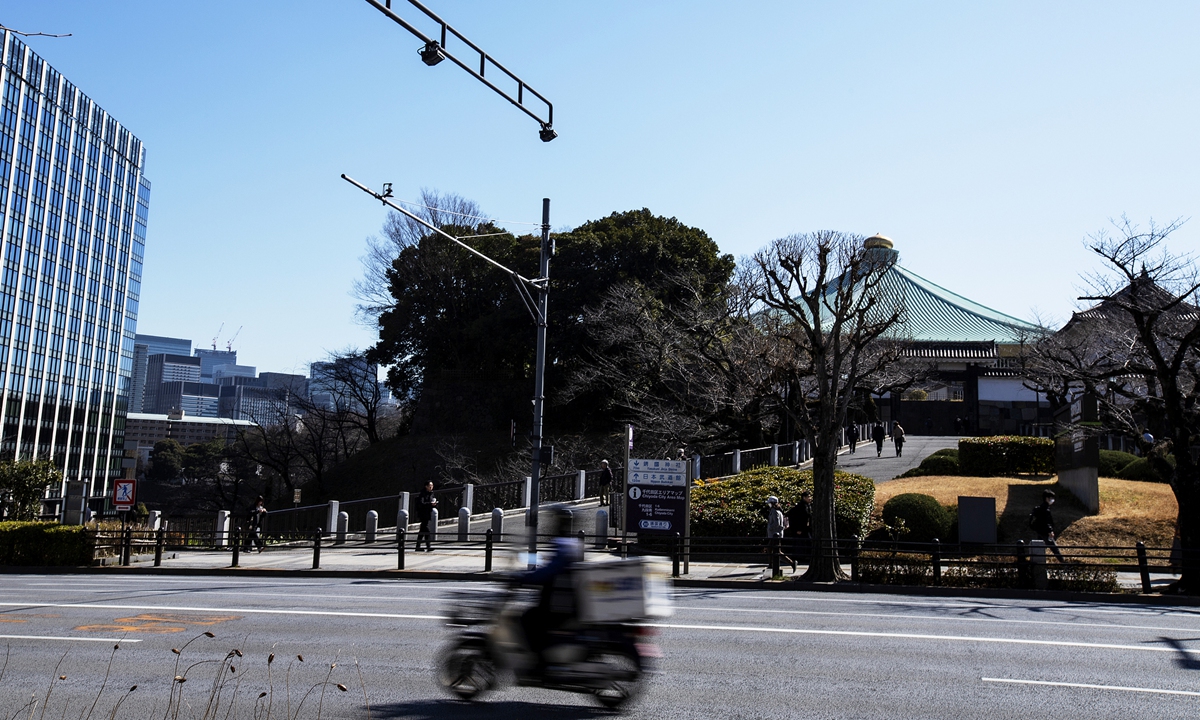
A view of Tokyo, Japan Photo: VCG
Lian Degui, director of the Center for Japanese Studies at Shanghai International Studies University, noted that the slogan "Japanese First" easily evokes associations with the term "non-nationals" used by Japanese militarists during World War II. In prewar Japan, the rise of xenophobic nationalism ultimately pushed the country toward a path of external expansion and aggression.
As of the end of last year, the number of foreigners resided in Japan stood at approximately 3.769 million, marking a year-on-year increase of 10.5 percent. Japan's right-wing forces have been exploiting various issues to stir up xenophobic sentiments and create a hostile atmosphere toward foreigners. Influenced by the "America First" policy promoted by the current US government, some Japanese political forces have likewise begun advocating the idea of "Japanese First."
During the speech by the Sanseito representative promoting the idea of "Japanese First," some members of the audience held up signs in protest. In stark contrast to the xenophobic nationalism that once led Japan down the path of militarism, post-WWII Japan embraced international cooperation and rejected distinctions between insiders and outsiders - an approach that significantly contributed to its postwar economic development.
Lian noted that xenophobia often emerges in many regions, especially during periods of significant national transition, when such tendencies tend to become more pronounced. What Japan needs now is to draw lessons from history. Rather than blindly imitating slogans like "XX first," Japan should seriously pursue regional coordination grounded in openness and cooperation.
RELATED ARTICLES