US move to set 93.5% anti-dumping tariff on Chinese battery mineral is self-defeating, hurts American firms, consumers with higher prices: expert
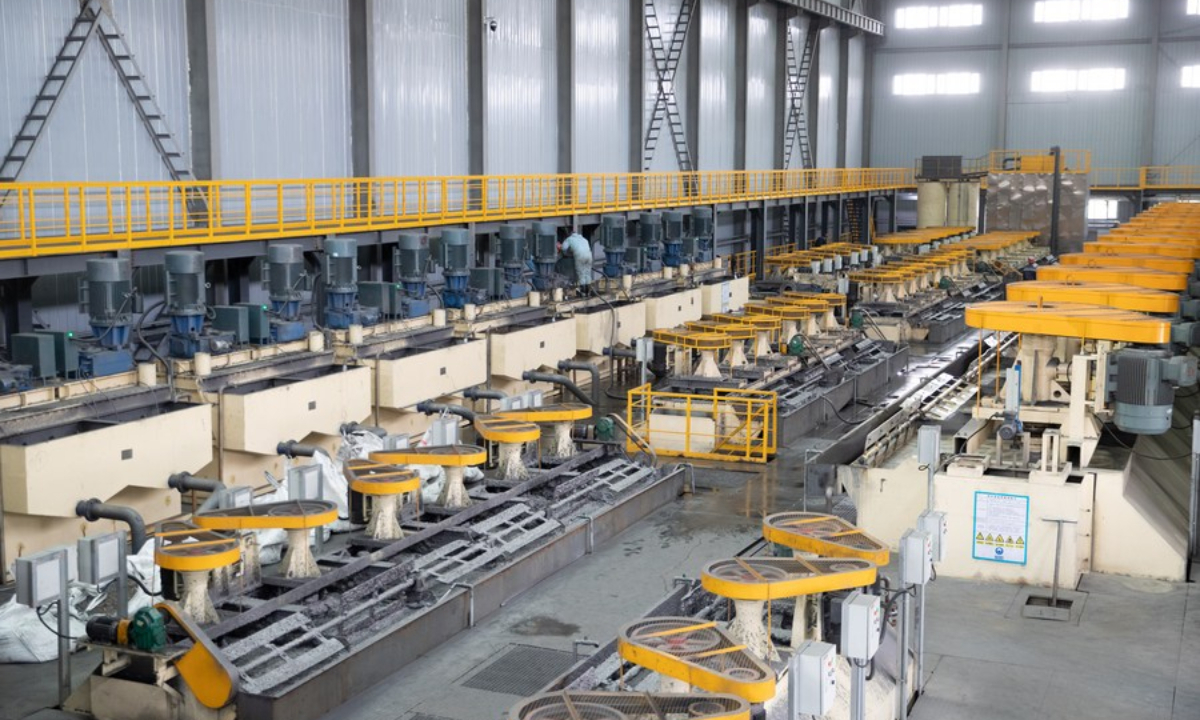
People work in a workshop of a graphite company in Jixi City, NE China's Heilongjiang Province on March 24, 2023. File photo: Xinhua
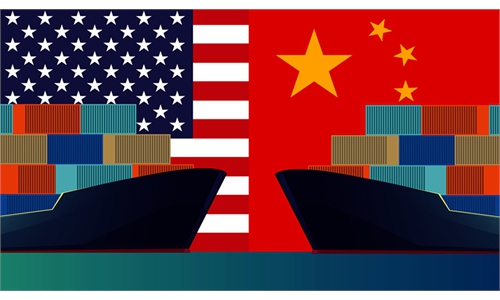
The US Commerce Department on Thursday announced preliminary anti-dumping duties of 93.5 percent on imports of anode-grade graphite, a key battery component, from China, claiming the materials had been unfairly subsidized, according to the US government agency website. A Chinese expert said the US' policies are self-defeating and will likely backfire on US companies and consumers, as they have to pay higher prices for the key mineral that China enjoys strong competitiveness in the international market.
The order affects imports valued at $347.1 million in 2023, the US Commerce Department said.
The duties apply to anode-grade graphite material with a graphite minimum purity content of 90 percent carbon by weight, and can be synthetic graphite, natural graphite or a blend of the two, according to Reuters.
A separate but parallel anti-subsidy investigation into Chinese anode grade graphite materials by the US Commerce Department on May 20 resulted in a countervailing duty of up to 721.03 percent, according to the US government website.
Final anti-dumping and anti-subsidy duties for the material are due by December 5, 2025, it said.
"Currently, there are essentially no subsidies in the battery and materials sectors in China. The US may aim to weaken China's dominant position in the global battery supply chain," Wu Chenhui, an independent industry analyst who closely follows the critical minerals industry, told the Global Times on Friday.
Graphite is a critical mineral that China has international competitive advantages, and also an important resource supporting strategic emerging industries. For example, the vast majority of lithium-ion battery anodes are composed of graphite. The mineral is indispensable for smartphones and laptops to electric vehicles (EVs) and energy storage systems, Wu said.
"Re-establishing a reliable graphite supply chain excluding China would be a complex and costly endeavor, as relevant US industries heavily rely on high-quality graphite products imported from China," Wu said, while stressing "American customers will have to bear higher costs if the US imposes high tariffs on Chinese products."
The US' new tariff on the key battery mineral would be a blow to battery manufacturers, said Sam Adham, head of battery materials at consultancy CRU Group, Bloomberg reported. "That basically wipes out profits for one or two entire quarters for the Korean battery makers," Adham said.
Tesla Inc and its key battery supplier, Japan's Panasonic Inc, were among companies pushing to block the US' new tariffs, arguing that they rely on Chinese graphite imports because the domestic industry hasn't developed enough to meet the quality standards and volume that the carmaker requires, according to the report.
Chinese Foreign Ministry has repeatedly stressed that "China's opposition to politicizing, instrumentalizing and weaponizing tech and trade issues and malicious attempts to blockade and keep down China is consistent and clear. These actions will destabilize the global industrial and supply chains, and serve no one's interests."
RELATED ARTICLES