Practices in Dabancheng shed light on Xinjiang efforts in all-around rural revitalization
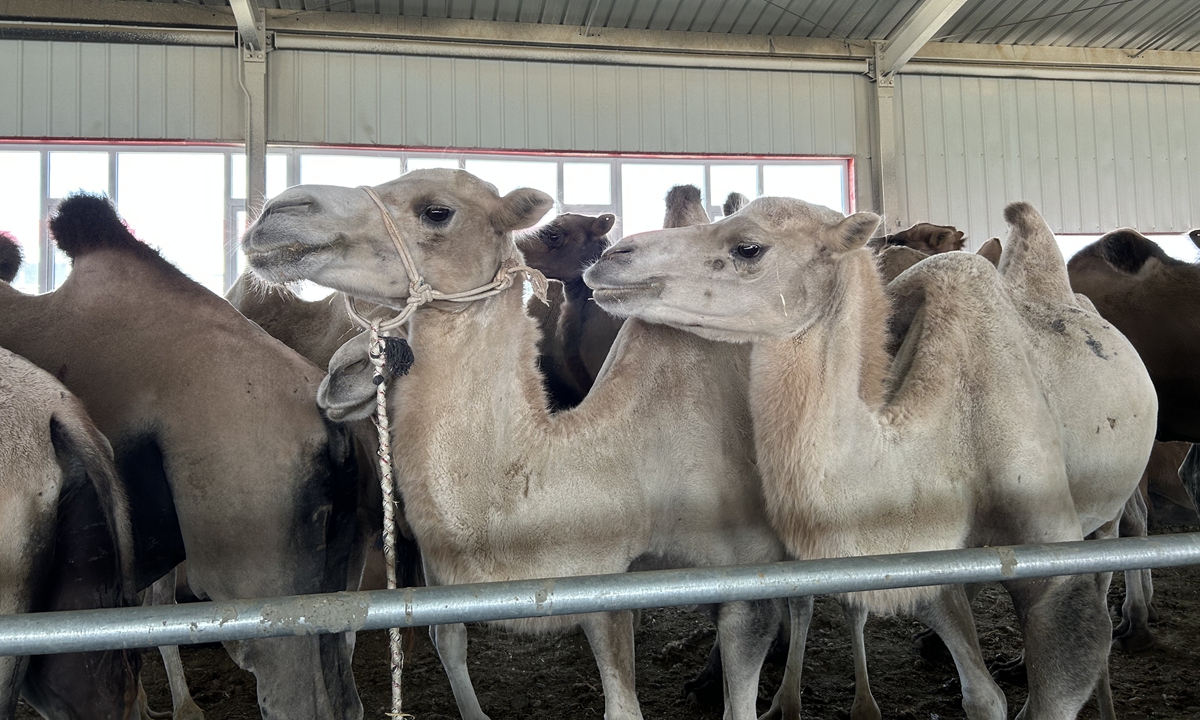
Photo: Zhang Han/GT
Standing at the foot of snow-capped Tianshan Mountains in Northwest China's Xinjiang Uygur Autonomous Region are giant wind mills with their tens-meters long blades spinning in winds and phalanxes of solar panels with their metal frames twinkling in scorching sun.This is Dabancheng district of Urumqi, the capital city of Xinjiang region. In Dabancheng, force 6 gale blow for more than half of the year, driving clouds away while leaving clear sky and strong sunlight.
Given such natural advantage, developing clean energy is a natural option. Such a move in accordance with China's carbon goals has not only generated "green electricity" that light up all homes in Dabancheng but also bring benefits to local villagers.
A villager could earn over 400 yuan ($56) a day at the photovoltaic construction site, while the average income of the village was no more than 30,000 yuan a year. Villagers also earn money by lending their rooms to inbound workers, Party chief of Leijiagou village Su Guoqiang recalled with a grin. Though the photovoltaic site does not recruit as many workers after entering operation in 2024, a handful of villagers still work as cleaners and guards, earning 4,000 yuan or so per month.
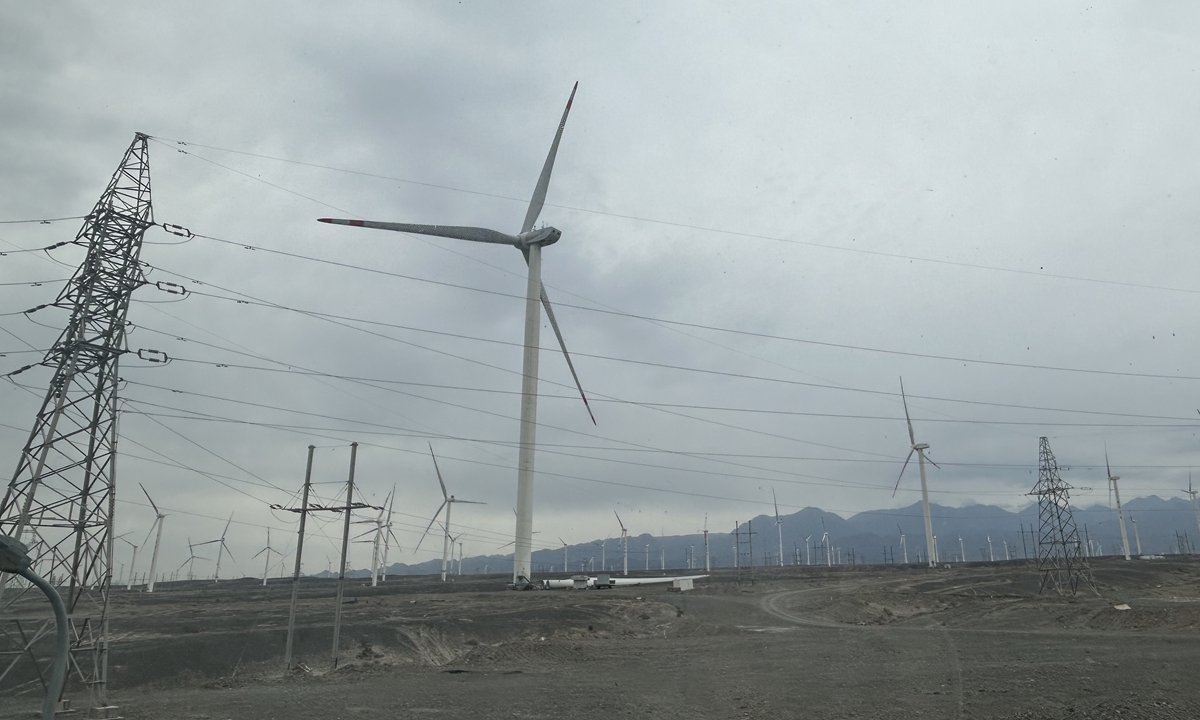
Wind mills in Leijiagou village, Dabancheng district of Urumqi, Northwest China's Xinjiang Uygur Autonomous Region Photo: Zhang Han/GT
Hosting China's first wind mill since 1989, Dabancheng now has 57 wind and solar farms, which marks the country's green transition, as well as a revitalization practice unique to this place.But Su was pitiful that Leijiagou village cannot enjoy another benefit from the clean energy projects - rent for the lands - as villages in the neighboring township do. "The grasslands in our village are owned by the state rather than the village collective, therefore rents are public revenues rather than assets of the village collective," Su said.
Keeping the rents as village assets means immediate increase in income for villagers, while public revenues are ultimately spent on villages, although in an indirect way - special financial budgets redistributed by different levels of governments in support of all-round rural revitalization, the Global Times learned at multiple villages in Urumqi.The Global Times learned that some villages can benefit from the clean energy projects by receiving rent for the lands, and the money can be used to increase villagers’ income.
Also there is special financial budgets redistributed by different levels of governments in support of all-round rural revitalization, the Global Times learned at multiple villages in Urumqi. The money usually has designated purposes including investment in agriculture or husbandry, while the income can be used more broadly such as to buy rural medical insurance for the people, upgrade village facilities and environment, and other affairs as agreed by the villagers.
Leijiagou village did benefit from this. Su only had a very brief conversation with Global Times because he was rushing to another meeting on a polytunnel program for planting morel, a delicious and high-value fungus which sells at more than 300 yuan a kilogram to wholesaler and hundreds yuan in retail markets.
China unveiled in January a plan for an all-around rural revitalization for the 2024-2027 period. The plan's stated goals include building a modern rural industrial system, cultivating the value of "specialties" and developing rural manufacturing, tourism and services.
Leijiagou had planted a small batch of morel as an experiment, and "it was successful," Su said. Now with the new polytunnel, the village collective can lend the polytunnel to an experienced plantation company and the revenues can be used to buy medical insurance for villagers and repair roads.
Aksu village of Aksu township, Danbancheng district, stands right beneath the snow-capped Bogda Peak, the highest point of eastern section of Tianshan Mountains. The rather arid climate nurtured xerophytic and halophytic plants, providing a natural land for camels. The village therefore explored camel husbandry and manufacturing of camel milk products.
After promotion of local officials and technicians, Aksu villagers, mostly of Kazakh ethnicity, got to understand why concentrated camel husbandry is important - it is more environmentally friendly than random grazing and camel milk is a profitable product, the Global Times learned at the village.
Uncle Jenshan Sharap first bought 5 camels and "lent" them at 5,000 yuan each a year to a nearby husbandry base, which is in charge of feeding, caring for, milking the camels and selling the milk. Seeing the benefits, Jenshan bought another 45 camels and can now stay at home with a stable source of income. This has given him more time to practice, perform and teach local children "burketbi," or Kazakh Eagle Dance.
The performers mimic an eagle catching a fox with keen postures and vivid facial expressions, usually at festivals, weddings, major gatherings as well as the leisure time. Jenshan is the fifth generation inheriting this performance and a certified inheritor of this intangible cultural heritage.
As a result, the roads and villages are clean, trees are green, there are less quarrels and more happiness. In Dabancheng, and more places in Xinjiang region, the goal to promote five "revitalizations" of industry, talent, culture, ecology and organization is being realized step by step.
Li Ke, Liao Jingmin, Huang Jun and Cai Shuo from Sun Yat-sen University contributed to this story
RELATED ARTICLES