US farm agency fires 70 foreign researchers, mostly Chinese; expert warns of increased brain drain and research collaboration barriers
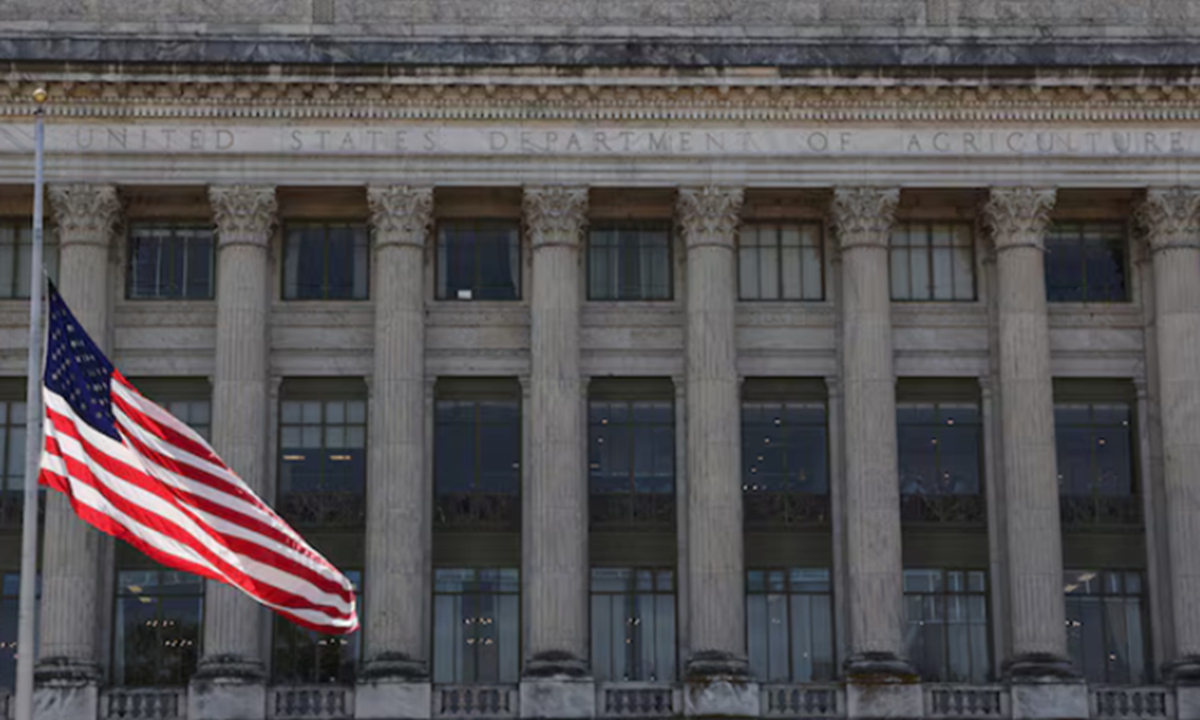
File photo of US Department of Agriculture. Source: British media
The US Department of Agriculture (USDA) said it has fired 70 foreign contract researchers after a national security review intended to secure the US food supply from adversaries including China, Russia, North Korea and Iran, according to Reuters on local Friday. A Chinese expert warned on Sunday that such politicization of scientific research will prove detrimental to US own agricultural development.
"USDA has completed a thorough review of individuals authorized to work on contracts with the department and identified approximately 70 individuals from countries of concern," a spokesperson said.
The workers had been with the Agricultural Research Service (ARS), the research arm of the USDA, Thomas Henderson, who represents the union for some of the research workers, told Reuters.
ARS does research on areas of importance to American farmers, such as pests, food safety and climate change, according to the Fox News.
Most of those dismissed were Chinese post-doctoral researchers on two-year contracts with the agency, and who were already subject to vetting before being hired, said Henderson.
USDA has traditionally been a vital platform for China-US cooperation, with China being the largest export market for US agricultural products, Lü Xiang, a research fellow at the Chinese Academy of Social Sciences, told the Global Times on Sunday. The current move clearly deviates from the department's traditional stance, the expert said.
Because of a federal hiring freeze that has been extended through October 15, the USDA will not be able to replace the fired staff and will need to halt ongoing scientific work that benefits farmers, like a project to develop a vaccine for a deadly toxin that occurs in undercooked beef, Henderson said.
"We don't have the talent now to progress on these research projects. It's setting us back by years, if not decades," he said.
The USDA did not comment on the concern about lost research capacity, Reuters reported.
"As a major agricultural country facing labor shortages, the US inherently relies on technological support—such exclusionary policies will ultimately harm its own scientific research development," Lü stressed.
The targeted suppression of Chinese scholars will undoubtedly undermine confidence in academic exchanges between the two countries, the expert warned. During this sensitive period in China-US relations, such symbolic actions could trigger a chain reaction, exacerbating brain drain in the US and obstacles to research collaboration. In the long run, this politicization of scientific research will also prove detrimental to US own agricultural development, Lü said.
In response to the US' frequent use of "national security" as an excuse to undermine exchanges and cooperation between the two countries, the Chinese side has also made multiple statements previously. China urges relevant US personnel to foster a right perception of China, view China and China-US relations in an objective and rational way, stop attacking, smearing, containing and going after China, and contribute to a steady, sound and sustainable bilateral relationship, a Chinese Foreign Ministry spokesperson said on July 18.
RELATED ARTICLES