A container is lifted by a crane, backdropped by the construction of the Chinese-funded port in Chancay, Peru, on October 29, 2024. Photo: VCG
Editor's Note:
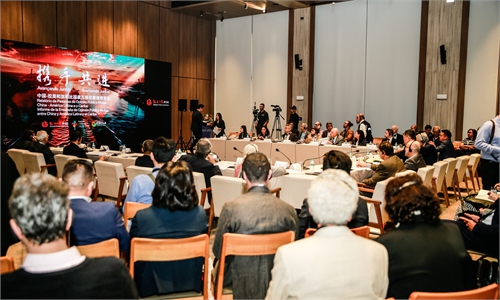
The "Global Times Overseas China Week and Global South Dialogue: Seminar on Relations between China and Latin America and the Caribbean (LAC) countries and the Mutual Perception of Public Opinion" were held in Buenos Aires, the capital of Argentina, in late June, followed by another event, the "Global Times Overseas China Week and Global South Dialogue: Roundtable Forum of China-LAC countries" in Rio de Janeiro, Brazil. Earlier in July, the 17th BRICS Summit was held in Rio de Janeiro.
To enhance understanding of LAC countries, provide a framework for dealing with these countries, and grasp the trajectory of China-LAC relations, the Global Times, in collaboration with China's universities and think tanks, is releasing a series of country reports on the LAC countries.
In the third report of the series, we focus on how the Belt and Road Initiative deepens China-LAC cooperation by delivering tangible development gains and advancing a new phase of sustainable and inclusive growth.
The China-proposed Belt and Road Initiative (BRI) initially focused on the Eurasian continent, but some LAC countries began to participate in 2017 and responded swiftly, opening up a new dimension in China-LAC cooperation.
Chinese President Xi Jinping once referred to Latin America as a "natural extension of the 21st Century Maritime Silk Road." More than 20 LAC countries have now become BRI partner countries. This widespread enthusiasm underscores the region's expectations for the development opportunities brought by the initiative, as well as hopes to improve local infrastructure, facilitate trade with Asia and enhance people-to-people exchanges with China.
Growing public support
Public awareness of the BRI across the LAC region presents a complex and multi-layered picture - marked by positive expectations for economic cooperation, as well as concerns over specific issues.
Since 2017, some LAC countries have signed memoranda of understanding on BRI cooperation with China, and the term "Belt and Road" has gradually entered the public discourse in the region. Overall perceptions of China have become more favorable.
The LAC region's increasingly positive view of China is closely tied to China's growing importance in trade and technology, presenting a stark contrast to the negative perceptions seen in some developed economies.
When evaluating foreign cooperation, the people in the LAC region often prioritize tangible benefits - such as lower energy prices, improved transportation and increased employment - over abstract geopolitical labels. As a result, projects led or supported by China are more likely to gain popular support as they can deliver concrete benefits. Multiple surveys and reports have found that even in regions where the term "Belt and Road" is not yet widely known, there is generally a positive view of China as an economic partner. This sentiment is often shaped by visible outcomes - such as the Chancay Port in Peru - which are viewed favorably and, in turn, enhance recognition of the BRI.
Creating opportunities: the role of Chinese capital
After 2019, the LAC region entered into its deepest economic downturn on record, with GDP levels falling back to what they were in 2010. The crisis laid bare structural weaknesses, including overreliance on foreign trade and underdeveloped infrastructure. The ongoing Russia-Ukraine conflict has further strained foreign trade, slashed remittance inflows and deterred foreign investment. As a result, this has exacerbated political, economic and social challenges across the region. These difficulties have prompted governments, think tanks and elites in the LAC region to reevaluate existing systems and propose bold reforms.
Against this backdrop, the BRI has offered LAC countries a range of development opportunities, particularly in infrastructure, trade and investment promotion, technological advancement and broader socio-economic benefits. One flagship project is the Chancay Port in Peru, a $3.5 billion investment by China COSCO Shipping aimed at creating a major trade hub between South America and Asia, significantly reducing maritime transit time. In addition, Chinese companies have participated in the construction or operation of several port projects, including Colon Port in Panama and Sao Luis Port, Santos Port and Paranagua Port in Brazil.
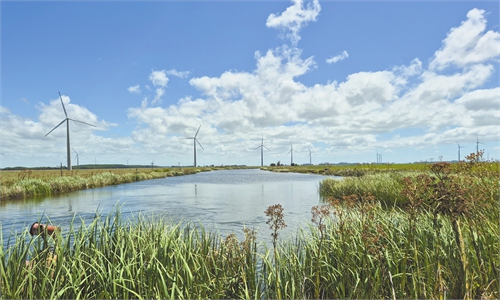
In the energy sector, key BRI-related projects include Argentina's Nestor Kirchner-Jorge Cepernic Hydroelectric Power Plant, Ecuador's Coca Codo Sinclair hydroelectric project and Brazil's Belo Monte ultra-high voltage direct current transmission line. In the renewable energy space, Argentina's Helios wind power cluster and Cuba's solar and biomass power stations have contributed to the region's energy transition and sustainable development. China's technological and cost advantages in clean energy offer accessible and inclusive solutions for LAC countries.
Connectivity in transportation infrastructure is a key focus of the BRI. The planned transcontinental railroad will connect Peru's Pacific coast with Brazil's Atlantic coast. Completed projects - such as the revamp of Argentina's Belgrano Cargas railway, the Jamaican North-South Highway and the Talca-Chillán section of Chile's highway Route 5 - have significantly improved regional transportation and effectively addressed long-standing infrastructure gaps across the LAC region.
The entry of Chinese capital has also helped boost local trade and investment. China is the primary trading partner for many of the LAC countries. Bilateral trade surged from around $10 billion in 2000 to over $500 billion in 2024. China has signed Free Trade Agreements (FTAs) with several LAC nations, including Chile, Peru, Costa Rica, Ecuador and Nicaragua - some of which involve comprehensive arrangements or upgraded FTAs.
Traditionally, China's investments in the region have focused on energy, infrastructure and mining, but over the past five years, they have increasingly shifted toward the technology sector. In 2023, Brazil signed a memorandum of understanding on strengthening investment cooperation in the digital economy. In addition, China's investments have grown significantly in areas such as renewable energy, electric vehicles and battery storage. The two sides are also deepening cooperation in green supply chains, aerospace and technological innovation.
More notably, Belt and Road projects have created a large number of jobs for local communities. The Chancay Port project in Peru is expected to provide 8,000 stable jobs, while the North-South Highway project has generated thousands of direct and indirect jobs for Jamaica.
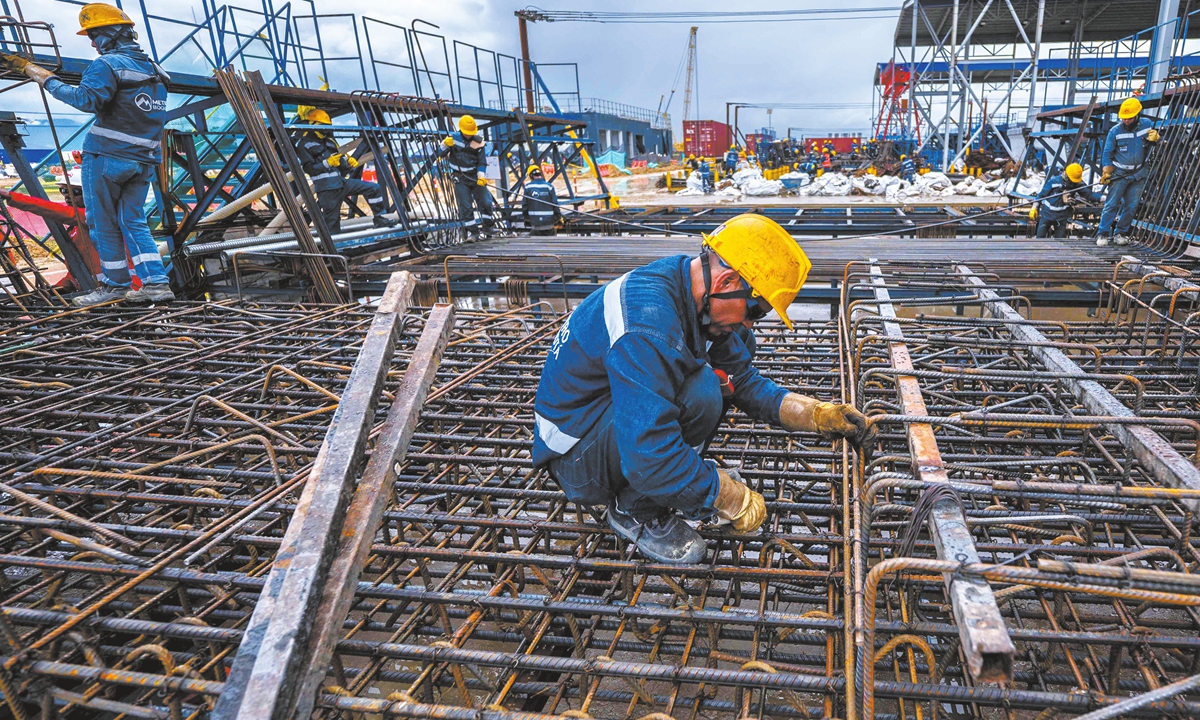
A construction worker works on the first line of the metro in Bogota, Colombia, on March 17, 2025. Photo: VCG
More resilient: advancing sustainable and inclusive growth
In the face of a complex international environment, geopolitical rivalries and the evolving stage of the BRI, China's engagement in the LAC region must continue to adapt and refine its approach in order to build more resilient, independent and open partnerships - winning both the hearts of local communities and a firm foothold in the regional market.
First, this involves embracing high-quality development and shifting toward more sustainable, inclusive and "small yet smart" projects. China has explicitly called for advancing Belt and Road cooperation into a new phase of high-quality development, with a focus on sustainability, improving people's livelihoods and adhering to higher standards. This signals a future emphasis on smaller-scale, targeted projects that can quickly deliver benefits to local communities and may be denominated in renminbi.
However, the continued advancement of large-scale strategic projects - such as the Chancay Port in Peru - also invites new reflection. Rather than being mutually exclusive, large strategic initiatives and "small yet smart" projects should proceed in parallel, complementing and enhancing one another.
Second, priority is being given to green and digital cooperation. China is placing increasing emphasis on environmental protection and is committed to building a "Green Silk Road." In line with this vision, China announced in September 2021 that it would stop building new coal energy plants abroad - a move that aligns closely with the development priorities of many LAC countries.
The LAC region has vast potential for renewable energy and rich carbon sink resources. China holds key advantages in this field. It also has extensive experience in energy transition, particularly in the power sector. Joint efforts by China and LAC countries to promote the development and utilization of clean energy respond to the shared needs of their respective transitions.
Third, the adoption of digital technologies should be actively promoted. The LAC faces a long-standing shortfall in telecommunications infrastructure and a wide digital divide. In response, countries across the region are accelerating the development of policies and regulations, increasing investment in digital welfare, and promoting the widespread use of information and communication technologies. China, having emerged as a leader in IT innovation and the information revolution, holds a comparative advantage in this field. Under a fair and competitive market environment, China-LAC digital cooperation holds vast potential.
Fourth, strengthening local participation and pursuing mutually beneficial outcomes is essential. Going forward, the BRI projects should be guided by local needs and closely aligned with the development strategies of LAC countries. At the same time, special attention must be paid to areas within the local business environment that differ significantly from the Chinese market. To better integrate into local industrial and value chains, priority should be given to local employment, using local suppliers and promoting technology transfer.
Although the BRI has gained widespread recognition in both official narratives and among the public in some LAC countries, it still faces many misunderstandings, such as the concept of a "debt trap." Against this backdrop, it is especially important to create a favorable environment for Chinese enterprises to enter the LAC region and to support effective public diplomacy, fostering a positive public opinion environment for the BRI's continued progress in the region.
China's public diplomacy and media communication should shift focus toward concrete, publicly perceptible actions that demonstrate a positive response to local concerns. In addition to high-level government interactions and people-to-people exchanges, efforts should extend beyond traditional cultural exchanges by actively promoting engagement between Chinese civil society groups, media, and academia - as grassroots storytellers - and local political parties, media, and opinion leaders. This approach aims to build genuine trust and effectively counter negative perceptions.
The author is director of the Latin American and Caribbean Region Law Center at China University of Political Science and Law. opinion@globaltimes.com.cn
RELATED ARTICLES