China’s transportation infrastructure becomes increasingly modern, efficient during 14th Five-Year Plan period (2021-2025): minister
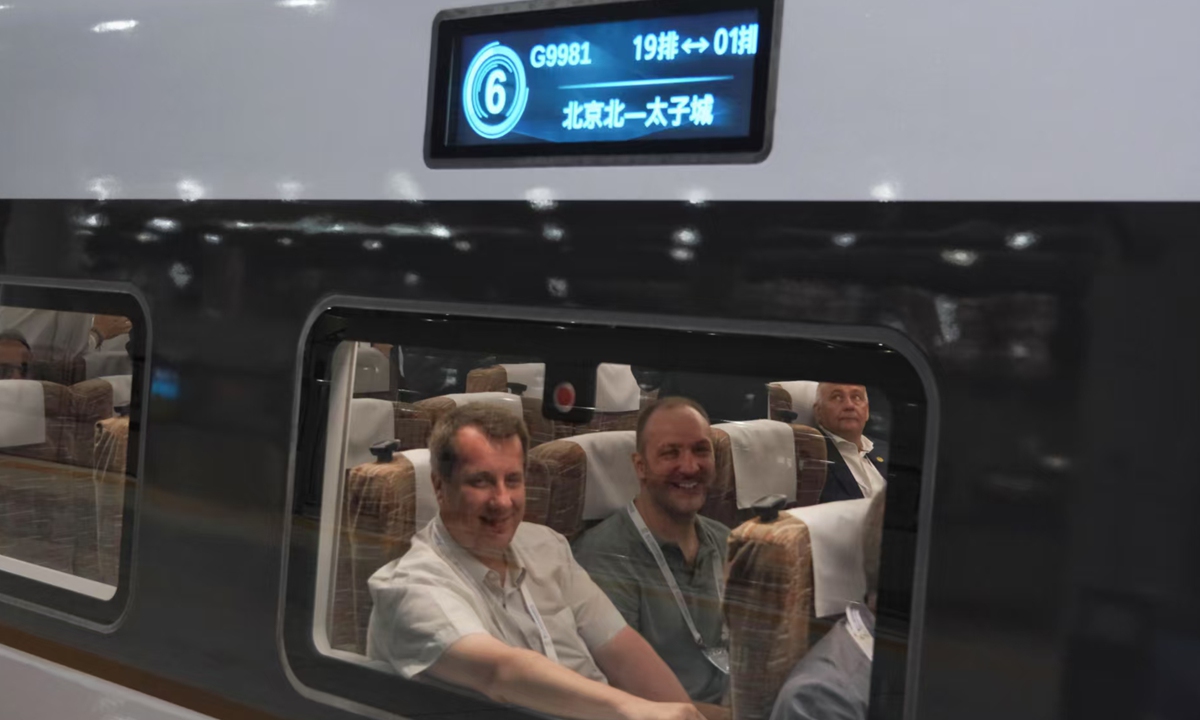
International representatives and guests attending the 12th World Congress on High-Speed Rail take the Beijing-Zhangjiakou High-Speed Railway from Beijing North Station to visit Taizicheng, the venue of the 2022 Winter Olympics in Hebei Province on July 11, 2025, experiencing the advanced technology and speed of Chinese high-speed rail. Photo: VCG
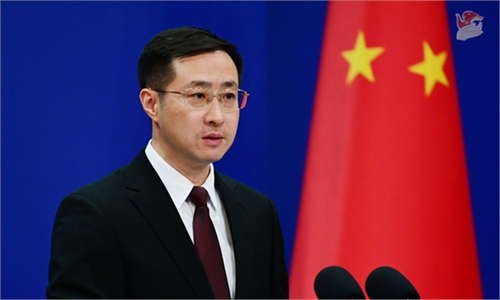
China is on track to achieve major tasks set in the transportation plan under the country's 14th Five-Year Plan period (2021-2025), as six items of the plan have been accomplished ahead of schedule, and the remaining 11 expected to be fulfilled, according to Minister of Transport Liu Wei on Monday.
Specifically, the six items including new highway mileages, Beidou satellite navigation system use rate in key areas, and the proportion of new-energy buses in cities, were completed ahead of schedule in 2024. The remaining 11 items, including high-speed railway mileages and the urban rail transit access rate, to hub airports, are expected to be completed by the end of this year, Liu said at a press conference in Beijing.
Speaking on the achievements during the five-year period, Liu said the transportation network has become more robust, with a focus on modernization and high-quality, while accelerating the development of a comprehensive national transportation system.
For instance, by the end of 2024, China's railway operational mileages reached 162,000 kilometers, an increase of 16,000 kilometers from the end of the 13th Five-Year Plan period (2016-2020), including 10,000 kilometers of high-speed rail, according to Liu.
And, China's' high-grade navigable waterways reached 17,600 kilometers, an increase of 1,600 kilometers, and ports had set up 2,971 berths of 10,000 tons or more, up by 379. Additionally, certified civil aviation airports totaled 263, an increase of 22. During the first four years of the 14th Five-Year period, fixed asset investment in transportation reached 15.2 trillion yuan ($2.12 trillion), marking a 23.3-percent increase.
Highlighting the country's technological progress, Liu noted that transportation equipment has become more advanced, with a string of "China brands" like high-speed railways, high-speed roads, bridges, ports, and express delivery gaining global acclaim.
New milestones have been achieved, such as the unveiling of the CR450 bullet train, the launch of the first domestically built large cruise ship, and the C919 plane entering regular commercial service. In addition, over 4,000 kilometers of highways were upgraded with intelligent systems, and 9,950 kilometers of electronic waterway charts were released.
Regarding international cooperation, Liu said that a global transportation connectivity framework is taking shape rapidly. The construction of the Shanghai International Shipping Center has gained pace, and Hainan Free Trade Port has achieved breakthroughs in aviation and maritime policy innovations.
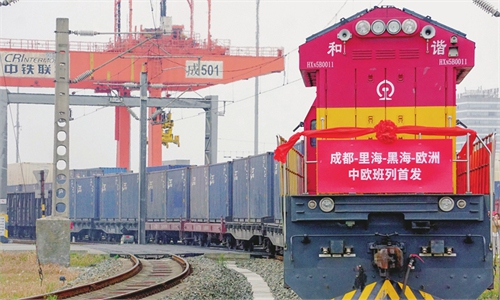
Major projects such as the China-Laos Railway, the Heihe-Blagoveshchensk cross-border highway bridge, and Peru's Chancay Port have been completed and are now operational, while the China-Kyrgyzstan-Uzbekistan Railway has started construction, Liu said. The China-Europe Railway Express has operated over 110,000 freight trains, and the rail-sea intermodal train running along the New International Land-Sea Trade Corridor handles nearly 10,000 sea-rail intermodal trains annually, according to Liu.
In addition, Liu stressed that China's transportation services have become more modern and efficient. Each day, about 180 million people travel across provinces, 160 million tons of goods are transported, and 478 million express courier parcels are collected and delivered.
Liu noted that the country's transportation services have significantly supported coordinated regional and urban-rural development. Comprehensive transportation networks, urban rail systems, world-class ports, and airport clusters have taken shape in the Beijing-Tianjin-Hebei region, Yangtze River Delta, Guangdong-Hong Kong-Macao Greater Bay Area, and Chengdu-Chongqing region in Southwest China.
Global Times
RELATED ARTICLES