US officials target China’s purchasing of Russia oil; Move risks undermining trade talk mechanism, reflects Washington’s frustration from failed mediation: expert
By Published: Jul 22, 2025 04:28 PM

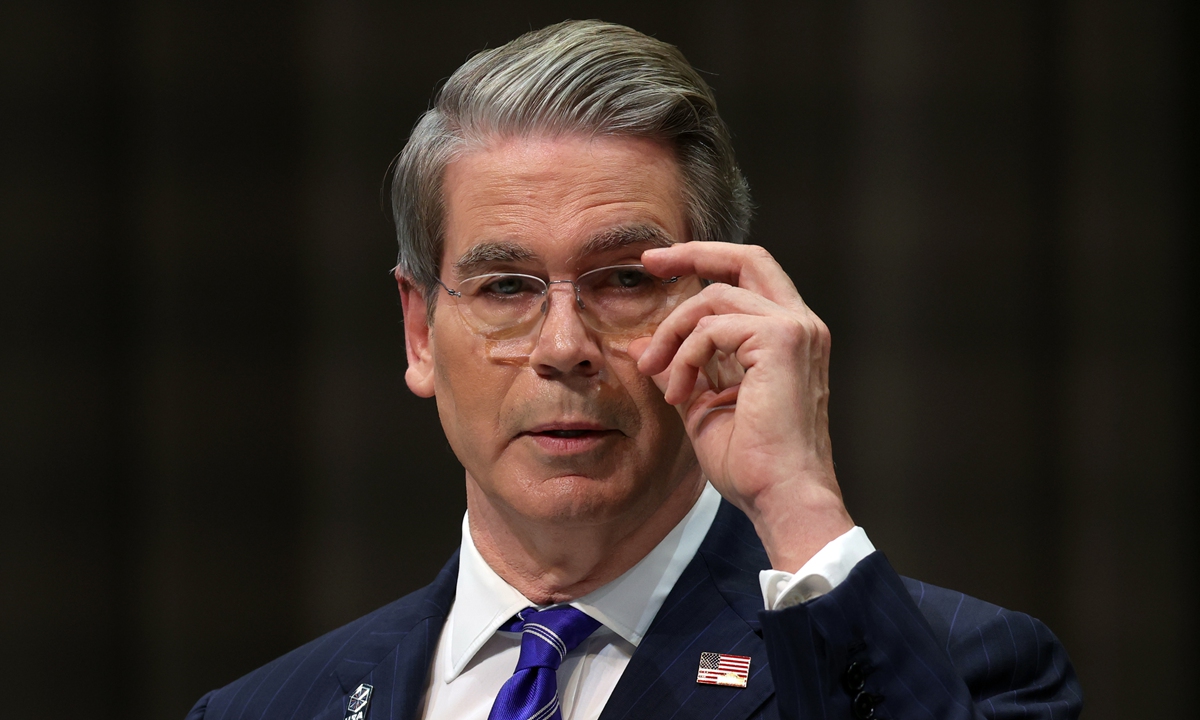
US Treasury Secretary Scott Bessent. Photo: VCG
Some US officials have issued comments targeting at China's purchasing of Russia and Iran oils, with US Treasury Secretary Scott Bessent claiming that the next round of US-China talks could include China's purchases of Russian and Iranian oil.Also, US Senator Lindsey Graham has warned that President Donald Trump will impose steep tariffs on countries that continue to import oil from Russia, specifically naming India, China and Brazil. "We're going to crush your economy," Graham said, according to Fox News.
Chinese experts said the flurry of criticism from US officials over China's oil imports from Russia reflects Washington's growing anxiety and frustration over its failed attempts to mediate the Russia-Ukraine conflict. However, experts warned that if the US attempts to weaponize trade talks and tariffs to pressure China into submission, Beijing will not yield to the pressure. Such moves, they added, would also risk undermining the trade negotiation mechanism between the two countries.
On China, Bessent told CNBC in an interview that there would be "talks in the very near future."
"l think trade is in a good place, and l think, now we can start talking about other things. The Chinese, unfortunately ... are very large purchasers of sanctioned lranian oil, sanctioned Russian oil," he said.
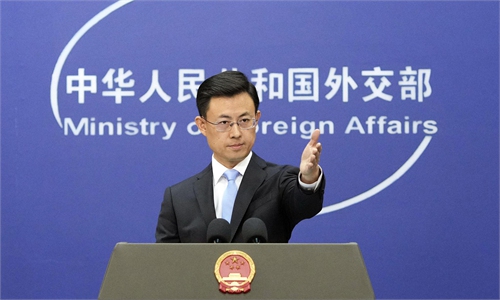
In response to Bessent's remarks, Guo Jiakun, spokesperson from China's Ministry of Foreign Affairs said on Tuesday that on the issue of tariffs, China's position is consistent and clear.
We hope the US will work with China to implement the important common understandings reached by the two presidents during the phone call, give play to the role of the economic and trade consultation mechanism, build up consensus, reduce misunderstanding, and step up cooperation through communication and dialogue, and promote the steady, sound, and sustainable development of bilateral relations.
Xin Qiang, director of the Taiwan Studies Center at Fudan University, said that China will not allow the US to weaponize trade negotiations. "Beijing is likely to insist that trade talks remain focused solely on trade and not be hijacked by other issues or targeted at third countries."
If Bessent tries to pressure China on this issue, it could jeopardize the newly established trade consultation mechanism between the two countries, Lü Xiang, a research fellow at the Chinese Academy of Social Sciences, told the Global Times. He slammed the US for using trade talks as a geopolitical tool to force China to align with Washington's strategic agenda.
Moreover, in a recent interview on Fox News, Graham claimed that, "Trump is going to impose tariffs on people that buy Russian oil: China, India, and Brazil. Those three countries buy about 80 per cent of cheap Russian oil, and that's what keeps (Vladimir) Putin's war machine going. So, President Trump is going to put a 100 per cent tariff on all those countries, punishing them for helping Putin."
Hugo Dixon, a commentator from Reuters wrote on Monday that Trump's threat to "sanction countries that buy oil from Moscow is full of pitfalls."
Dixon pointed out that So if Trump slapped 100 percent tariffs on Chinese imports into the United States, he probably would not change their behavior. He would merely further inflame a trade war with the world's second largest economy and push up inflation at home," according to Reuters.
Lü noted that the remarks by Bessent and Graham reflect the US' growing anxiety and frustration over its failed efforts to mediate the Russia-Ukraine conflict. With few options left to counter Russia directly, Washington is now attempting to pressure other countries into helping strangle the Russian economy. "The move won't succeed, and China will never dance to that tune," Lü said.
Trump threatened Russia on July 14 with steep tariffs and announced a rejuvenated pipeline for American weapons to reach Ukraine, hardening his stance toward Moscow after months of frustration following unsuccessful negotiations aimed at ending the conflict, per AP.
On July 15, Lin Jian, spokesperson from Chinese Foreign Ministry said China firmly opposes any illicit unilateral sanctions and long-arm jurisdiction, when asked about Trump threatened to impose 100 percent tariffs on Russian goods and also secondary sanctions on countries buying Russian oil unless Russia agrees to a peace deal within the next 50 days; and Graham has threatened China and other countries with 500 percent tariffs and other punitive measures if they continue trading with Russia.
Lin said China's position on the Ukraine crisis is consistent and clear. We always believe that dialogue and negotiation is the only viable way out of the crisis. Tariff wars have no winners. Coercion and pressure will lead nowhere.
We hope parties will help create the atmosphere and conditions for a political settlement of the Ukraine crisis, and act in ways conducive to promoting talks for peace, said Lin.
Double standards
India has also cautioned against "double standards", as the US lawmakers consider a Bill that would impose 500 percent duties on India and other countries buying Russian oil, according to The Hindu.
On July 16, NATO Secretary General Mark Rutte, who met with Trump and members of the US Congress, also issued a threat, in particular to China, India and Brazil, who are among the top buyers of Russian crude oil, oil products, and coal. Mr. Rutte said "Beijing and Delhi" should push Russian President Vladimir Putin towards ending the conflict, or face tariffs, The Hindu reported.
India's Ministry of External Affairs spokesperson Randhir Jaiswal said on July 17 that it was following the developments "closely". "Securing the energy needs of our people is understandably an overriding priority for us. In this endeavor, we are guided by what is there on offer in the markets, as also by the prevailing global circumstances," per The Hindu
"We would particularly caution against any double standards on the matter," he added, in a possible reference to the fact that European Union members continue to procure oil, LNG and pipeline gas from Russia despite the sanctions, The Hindu reported.
In an opinion piece on Bloomberg last week, it said that Trump's threat of secondary tariffs on Russian oil could unite BRICS countries further.
Li Haidong, a professor at China Foreign Affairs University, said the US continues to employ measures lacking legal justification in an effort to pressure other countries into submission. Such bullying behavior, he noted, increasingly runs counter to the prevailing norms of the international community; and as a result, the US is steadily isolating itself from the global consensus.
RELATED ARTICLES