Chinese firms committed to EU market, ready to support Europe’s growth under fair, transparent and predictable conditions: chamber head
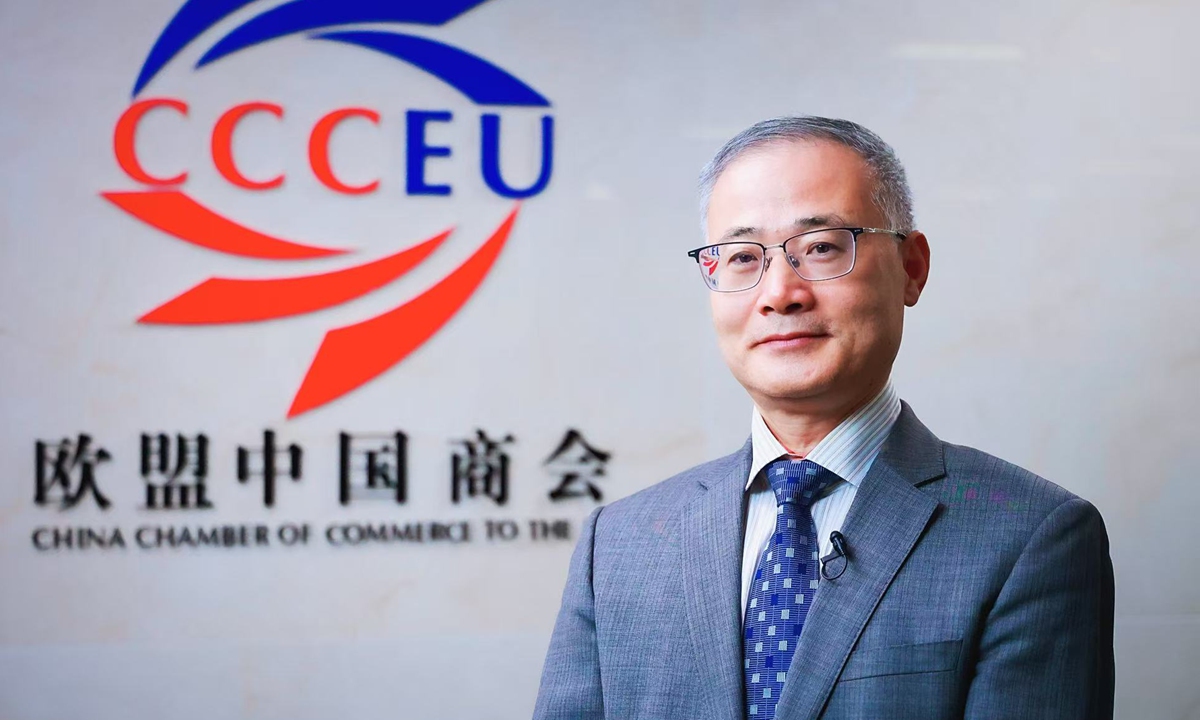
Fang Dongkui, Secretary General of the China Chamber of Commerce to the EU (CCCEU) Photo: Courtesy of CCCEU
Chinese companies remain firmly committed to the EU market and stand ready to contribute to Europe's economic development under conditions of fairness, transparency and predictability, Fang Dongkui, secretary general of the China Chamber of Commerce to the EU (CCCEU), said in an interview with the Global Times.
The remarks were made against the backdrop as China and EU will hold the 25th China-EU Summit in Beijing. The upcoming China-EU Summit presents a valuable opportunity to reflect on the experience and insights gained from 50 years of bilateral ties. It offers a platform to build consensus and chart a stable and healthy path forward that benefits both sides and the world, the Xinhua News Agency reported.
The CCCEU and Chinese enterprises operating in Europe extend our warmest welcome to the upcoming China-EU Summit in Beijing. This landmark meeting holds special significance as it coincides with the 50th anniversary of diplomatic relations between China and the EU, Fang said.
"Since the beginning of this year, EU leaders have consistently expressed their commitment to enhancing bilateral economic and investment ties. With substantial preparatory work completed by both sides, this well-timed visit is poised to deliver concrete outcomes in advancing China-EU economic cooperation," Fang said.
China and the EU, as two of the world's major economies, have both the responsibility and capacity to send a strong message in support of multilateral trade systems and inject much-needed stability and certainty into global markets during these challenging times, he said.
Despite the headwinds, the fundamentals of China-EU economic relations remain strong, with several areas particularly standing out for future cooperation, naming green transition, digital economy and third markets cooperation, the chamber head said.
Specifically, pairing European industrial expertise with China's clean tech scale could accelerate decarbonization. Joint ventures in battery recycling or smart grids could become global models, Fang said.
In digital sector, rather than fragmented standards, we could develop compatible systems for AI governance or cross-border data flows that protect privacy while enabling innovation, he said.
"While healthy competition in certain sectors serves as an engine for innovation, its benefits can only be fully realized within a framework of fair and equitable rules... More importantly, our economic partnership has the capacity to establish new global benchmarks for responsible international commerce that balances competitiveness with cooperation," said Fang.
Meanwhile, challenges persist as Chinese enterprises operating in Europe continue to face multiple challenges that affect their business operations and market confidence. The current political environment has seen economic issues increasingly politicized, with expanding security concerns creating invisible barriers for Chinese businesses, the Chinese chamber head said, giving example of recent EU measures, including the Foreign Subsidies Regulation and anti-subsidy investigations targeting key sectors like green technology and electric vehicles that have resulted in unequal market conditions.
The regulatory landscape also presents additional difficulties, said Fang. While supporting high standards, the complex framework governing digital infrastructure, artificial intelligence and sustainability compliance has inadvertently increased operational costs while potentially stifling innovation. Practical administrative hurdles, particularly in visa processing and business approvals, further complicate normal operations, the business representative said.
"We raise these matters in a spirit of constructive dialogue, with the aim of fostering improved market conditions... Chinese companies remain firmly committed to the EU market and stand ready to contribute to Europe's economic development under conditions of fairness, transparency and predictability," said Fang.
To foster a better business environment, the CCCEU recommended the EU side apply trade rules fairly and transparently, distinguishing genuine security concerns from economic policy, and streamlining regulations to boost competitiveness.
"Our shared objective should be creating a business environment that benefits all market participants while maintaining appropriate standards," said the chamber head.
RELATED ARTICLES