China’s stable policies, deepening openness offer EU firms long-term certainty: Portugal-China chamber chief
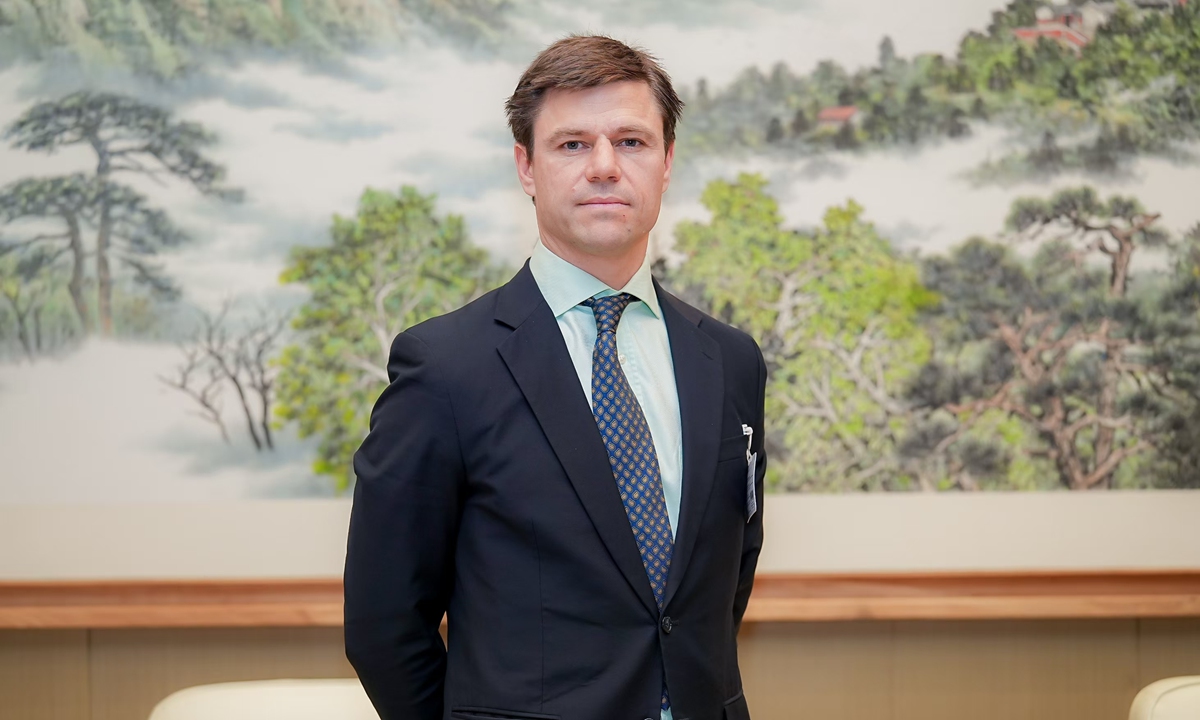
Bernardo Mendia,Secretary General of the Portugal-China Chamber of Commerce and Industry Photo: Courtesy of WGDO
China's policy stability and expanding openness offer predictability for European firms despite global uncertainties, said Bernardo Mendia, Secretary General of the Portugal-China Chamber of Commerce and Industry in an exclusive interview with the Global Times, urging deeper China-EU cooperation in green and digital trade while warning against rising protectionism.
"Amid global volatility, China's policy consistency and deepening openness—from nationwide pilot free trade zones to streamlined foreign investment laws—offer tangible stability," said Mendia. "For European companies, this means predictability: clear timelines for manufacturing, R&D, and green tech subsidies, as well as market depth, more than one billion consumers driving demand for high-quality EU goods such as Portuguese wines and German engineering," he told the Global Times.
Mendia made the remarks in a recent exclusive interview with the Global Times, emphasizing the importance of safeguarding multilateralism amid rising global uncertainties, as the 25th China-EU Summit unfolds.
When discussing the status and prospects of China-Portugal and broader EU-China trade, Mendia highlighted the rapid growth of bilateral commerce, and underscored Portugal's continued relevance as "a China-EU gateway, especially in Lusophone markets."
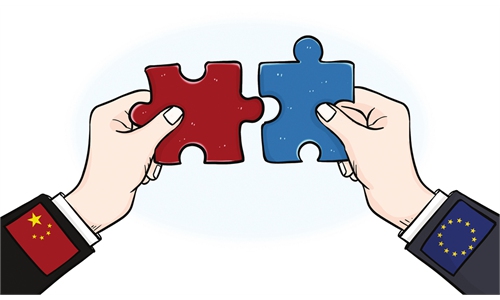
This year marks the 50th anniversary of diplomatic relations between China and the EU. Over the past five decades, the two sides have built on their complementary strengths in economic and trade cooperation, with bilateral trade expanding more than 300-fold, according to Wang Lingjun, head of the General Administration of Customs (GAC) at a press conference last week.
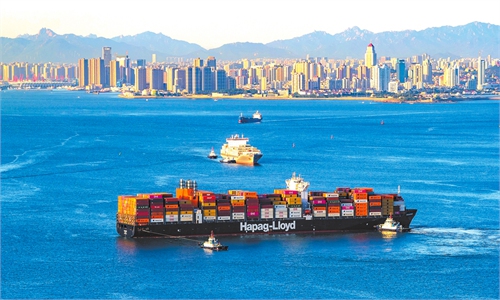
In the first half of this year, trade between China and the EU reached 2.82 trillion yuan ($389.66 billion), a year-on-year increase of 3.5 percent, according to the GAC. Average daily trade exceeded 15 billion yuan, roughly equivalent to the entire annual total when diplomatic ties were established.
During the same period, the EU accounted for 12.9 percent of China's total foreign trade, solidifying its position as the country's second-largest trading partner.
"The most compelling opportunities align with China's dual priorities: sustainability and high-quality consumption," Mendia said, commenting on opportunities for Portuguese as well as European enterprises in China.
Amid rising global market instability, one of the most immediate shocks comes from the US tariff policies. The US has announced a 30 percent tariff on imports from the EU, effective August 1.
When asked about the uncertainties caused by the US tariff and the broader implications for global trade, Mendia expressed concern over the growing trend of unilateral protectionism. He noted that such actions destabilize global supply chains and penalize consumers.
Mendia emphasized the importance of rules-based multilateralism, calling it "not merely idealistic - it's an economic imperative." He stressed that as the world's two major trading blocs [China and the EU] share a responsibility to defend the WTO's dispute-resolution mechanisms; accelerate green and digital trade corridors to bypass fragmentation; leverage collective bargaining power against coercive measures.
In his view, protectionism fuels inflation and scarcity, cooperation builds resilience. Mendia also affirmed that China clearly remains committed to the EU-China Comprehensive Agreement on Investment (CAI) framework as a foundation for fairer, greener trade.
Amid rising global trade protectionism and mounting economic challenges, expanding openness and deepening cooperation between China and the EU align with both sides' core interests and represent a pragmatic and necessary choice, Jian Junbo, director of the Center for China-Europe Relations at Fudan University's Institute of International Studies, told the Global Times on Thursday. He said that such collaboration helps stabilize their respective economic foundations and supports joint responses to global challenges.
Despite headwinds, China-EU trade and investment continue to grow, highlighting strong resilience and intrinsic momentum, Jian said. "Deeper cooperation requires both sides to foster a more open market environment and reduce non-economic interference to build mutual trust. In areas such as climate action, green transition, and the digital economy, the two sides share complementary strengths and common interests."
RELATED ARTICLES