Beijing activates highest flood emergency response, suspends in-person classes, urges residents to avoid non-essential outdoor activities
By Published: Jul 29, 2025 12:10 AM

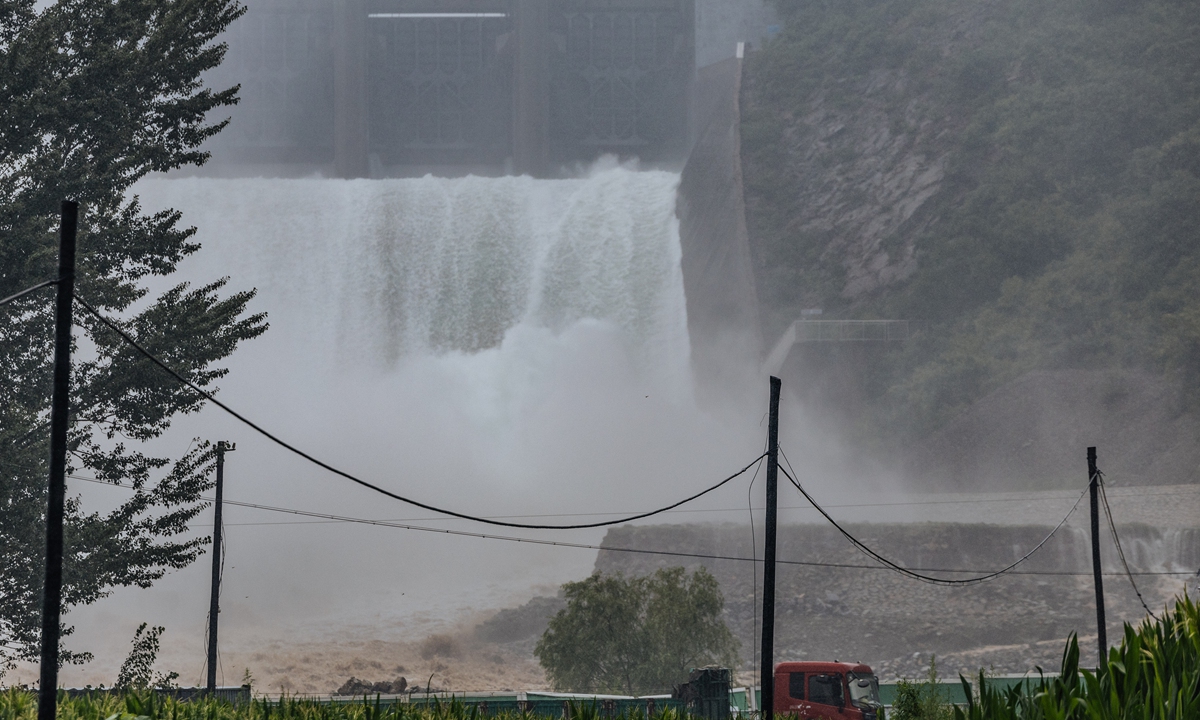
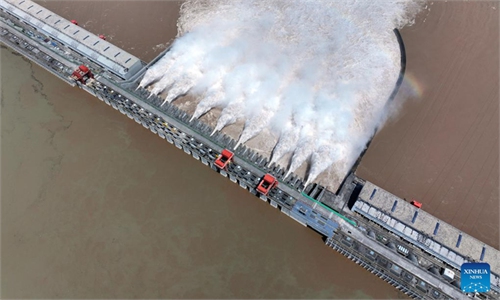
As the flood season continues, the Miyun Reservoir initiated controlled discharge starting in the afternoon of July 27, 2025 to lower water levels below the flood control limit, preparing for potential subsequent inflows. Photo: Li Hao/GT
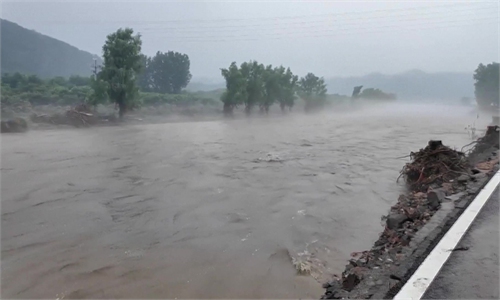
Beijing has declared the highest-level flood emergency response effective from 8 pm on Monday, forecasting that from Monday evening to Tuesday morning most areas of the city will be hit by torrential rainfall, warning of extremely high risks of flash floods, mudslides and landslides in mountainous areas, as well as severe waterlogging in low-lying urban areas, announced the municipal emergency management authority.
According to the Beijing Emergency Management (BEM) Bureau on Monday afternoon, the Beijing meteorological bureau issued the highest-level red alert for torrential rainfall at 12 noon on Monday. The Beijing flood control headquarters will activate a citywide Level I flood emergency response at 8 pm on Monday.
It is forecast that from 8 pm on Monday to 7 am on Tuesday most areas of the city will receive over 150 mm of rain within six hours, with localized accumulations potentially exceeding 300 mm.
When the emergency response takes effect, key measures will include - only essential personnel maintaining urban operations and public services should report to workplaces while all other employees are advised to work remotely; all organized cultural, tourism, and indoor and outdoor sports events are cancelled; safe evacuation protocols should be implemented for affected participants.
Also, schools must suspend all in-person classes and field activities; training institutions must halt offline programs; authorities will arrange safe relocation for stranded individuals. All construction sites must cease operations and evacuate workers.
Mountain and water-related tourism is prohibited. All parks, scenic areas and forests will be closed. Rural guesthouses must suspend business and assist with tourist evacuations.
Also, when the emergency response takes effect, the city will close all mountain flood channels and urge residents to stay away from riverbanks and remain vigilant against potential basin-wide floods, landslides and mudslides.
Residents in high-risk areas, including vulnerable mountain villages, stranded tourists, and people in dilapidated urban buildings and low-lying courtyards, must comply with evacuation orders and are prohibited from returning without official authorization. Those living in semi-basement units should closely monitor rainfall and waterlogging risks, and evacuate promptly when necessary.
Temporary traffic controls will be implemented in key danger zones and along major emergency response routes, with potential suspensions of subway and bus services if required. Train services along mountainous areas prone to geological disasters or flood-affected routes may be cancelled, rerouted or diverted as necessary.
Beijing has warned mountainous areas in its districts such as Yanqing, Huairou and Miyun faced extremely high risks of slope collapses and rockfalls from Monday morning to Tuesday morning, according to the municipal authorities.
A grassroots official in Mujiayu town, Miyun district told the Global Times on Monday that he has been working on the frontlines of flood prevention for two straight days without rest, together with all other local officials.
On Sunday, they successfully evacuated all residents under his jurisdiction to safe shelters, where adequate daily necessities have been provided along with dedicated psychological support services. He noted there have been no casualties in his area so far.
In recent days, multiple regions in North China including Beijing and Hebei Province have been hit hard by torrential rains and floods.
The National Development and Reform Commission has activated a Level IV national disaster relief emergency response on Monday, urgently allocated 50 million yuan ($6.97 million) from the central budget to support emergency recovery efforts in Hebei Province following the devastating rainstorms and floods, People's Daily reported Monday.
Persistent rainfall from Saturday to Sunday in China has caused floods exceeding warning levels in 31 rivers across Hebei, Beijing, Inner Mongolia, Shanxi, Shaanxi, Yunnan, and Xinjiang, with water levels 0.05 to 3.48 meters above alert thresholds, China News Service reported Monday.
Affected by recent heavy rainfall, the Luanhe River in the Haihe River Basin has experienced its first officially designated flood of 2025, marking the initial numbered flood event this year among China's major river systems, Guangming Daily reported Monday.
The latest round of precipitation has been concentrated in the Haihe River Basin. As of 4:00 pm on Sunday, 10 rivers, including the Chaohe and Baihe rivers (the two headwaters of the Chaobai River) and the Nanyang River (a tributary of the Yongding River's upper reaches), experienced their highest recorded flood levels since measurements began, the report said. The Haihe River, northern China's main water system, drains the Beijing-Tianjin-Hebei region before emptying into the Bohai Sea.
On Monday morning, the inflow rate at Panjiakou Reservoir (Tangshan, Hebei) on the main stream of the Luanhe River reached 2,270 cubic meters per second.
The reservoir is expected to face a peak inflow of approximately 4,000 cubic meters per second by Monday evening.
RELATED ARTICLES