County-level vitality fuels summer spending, with rural consumption a key policy focus
Promotion of rural spending a key priority for policy efforts: expert
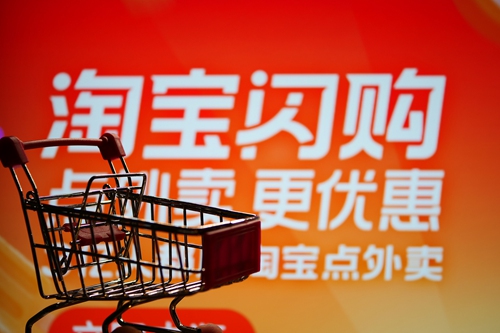
Taobao Flash Sales Photo: VCG
China's county-level regions are emerging as new engines of consumption in the summer of 2025, platform data shows, fueled by the rise of personal incomes, targeted government policies, and vibrant spending activities ranging from e-commerce to grassroots sports events.
Li Changan, a professor at the Academy of China Open Economy Studies at the University of International Business and Economics, pointed out that counties serve as a crucial link between China's urban and rural areas, and their economic vitality not only benefits cities but also helps drive rural development. Enhancing rural incomes and boosting the consumption capacity of county-level populations will remain key priorities for nation's policy efforts, he told the Global Times.
According to Taobao Flash Sales data for July, 623 counties' food orders doubled compared with June, while non-food orders doubled in 834 counties nationwide. Small and medium-sized merchants are steadily increasing their revenue through the platform. In the past week alone, 57,000 non-food small shops hit record-high order volumes, and more than 100,000 shops recorded month-on-month revenue growth of more than 100 percent, according to an article published on the official WeChat account of ele.me, a Taobao delivery platform, on Monday.
There are a total of 2,834 county-level regions in China, including 977 municipal districts, 394 county-level cities and 1,301 counties, statistics showed.
In particular, food orders in places such as Huitong county in Central China's Hunan Province, Fenggang in Southwest China's Guizhou Province, and Hanyuan in Southwest China's Sichuan Province increased more than tenfold compared with June. Meanwhile, non-food orders in counties like Luopu county in Northwest China's Xinjiang Uygur Autonomous Region and Xinjiang county in North China's Shanxi Province also saw a more than tenfold month-on-month increase, said the article.
As night falls, the full potential of nighttime consumption is unleashed. According to the data, the average daily number of nighttime orders from county-level regions across China increased by 70 percent in July compared with June. Kunshan in East China's Jiangsu, Yiwu in East China's Zhejiang, Jinjiang in East China's Fujian, Puning in South China's Guangdong and Cixi in Zhejiang — all long-time regulars on the list of China's top 100 counties — ranked as the top five most active county-level cities at night.
The robust consumption reflects the strength of the underlying economic data. In the first half of 2025, retail sales in rural areas reached 3.24 trillion yuan ($449.39 billion), an increase of 4.9 percent, the National Bureau of Statistics said on July 15.
Notably, the per capita disposable income of rural residents was 11,936 yuan, a nominal year-on-year growth rate of 5.9 percent. After deducting price factors, the real growth was 6.2 percent, both indicators higher than those of urban residents, the NBS data showed.
Building on this momentum, the summer sports initiative such as the Jiangsu City Football League, commonly known as Su Super League, has further energized local consumption by linking athletic events with community spending.
For several consecutive weekends, a night market in Jinhu county in Jiangsu has been bustling with activity, as customers placed orders while watching football matches, the chime of mobile payments blending into the cheers of the crowd. Since May, the area has welcomed more than 1.2 million visitors, driving more than 600 million yuan in related consumption — much to the surprise of many, the Xinhua News Agency reported on July 30, noting that the football tournament has driven multi-scenario consumption of more than 38 billion yuan since May.
However, Li noted that rural consumption still faces certain challenges such as lower consumption capacity than cities, while calling for more flexible marketing strategies and policies promoting rural consumption.
The Ministry of Commerce launched a new-energy vehicle consumption promotion campaign across China's counties and towns from July 1 to the end of 2025. Consumers who scrap eligible old vehicles and purchase new-energy passenger cars or fuel-powered cars with engines of 2.0 liters or smaller will receive subsidies ranging from 15,000 to 20,000 yuan, a move to stimulate rural automotive consumption.
As of now, China has allocated 69 billion yuan in its third batch of ultra-long special treasury bond funds to support the national trade-in program, following 162 billion yuan distributed in January and April. The remaining funds will be released in October, Xinhua reported on July 25.
RELATED ARTICLES