China extends probe into imported beef for 3 months; move ‘necessary, responsible’ to ensure well-founded conclusion: expert
Move ‘necessary, responsible’ to ensure well-founded conclusion: expert
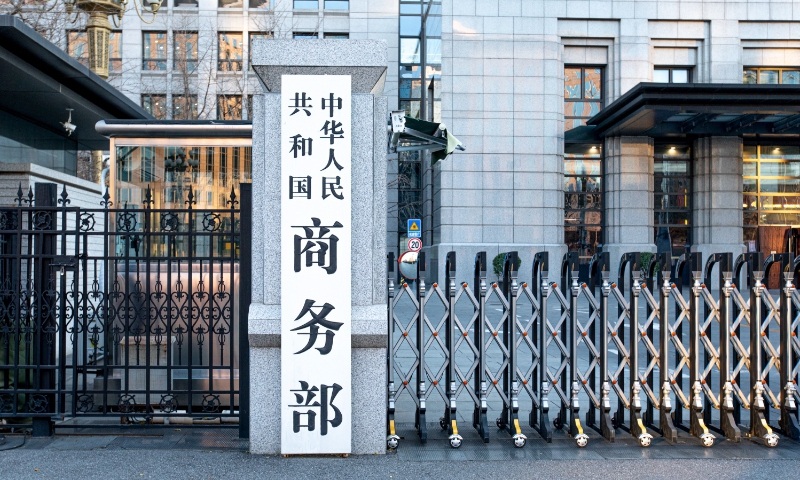
The Ministry of Commerce of China File photo: VCG
China's Ministry of Commerce (MOFCOM) announced on Wednesday a three-month extension of its ongoing safeguard investigation into beef imports, a move that experts affirm as both lawful and responsible.
In an exclusive interview with the Global Times, an expert closely following the case highlighted the necessity of the extension due to the involvement of numerous stakeholders, saying that the probe process is "prudent" and being conducted strictly in accordance with Chinese law and WTO rules.
It is not targeted at any specific country or region, the expert noted.
The MOFCOM launched the investigation on December 27, 2024, in response to an application submitted by the China Animal Agriculture Association and nine industry associations from major beef-producing regions on behalf of the domestic beef industry.
The probe was expected to conclude within eight months, although it may be extended under special circumstances, the ministry said at the time.
The MOFCOM's decision strictly complies with both domestic laws and WTO regulations, while demonstrating China's responsible approach to trade remedy measures, Shi Xiaoli, director of the WTO Law Research Center at the China University of Political Science and Law, told the Global Times.
Since the investigation's initiation, domestic and foreign stakeholders have been entitled to submit comments and participate in public hearings.
"Given the large number of stakeholders from various countries and regions involved in this case, and the substantial volume of questionnaires and comments submitted, it is necessary to extend the investigation period to ensure all perspectives are adequately considered," Shi said.
Shi noted that it is common international practice for investigation authorities to extend timelines based on the complexity of a case and the volume of work required, and that the extension will help fully address all concerns and opinions. "This is a responsible approach to ensuring a well-founded conclusion."
In March, the MOFCOM held a public hearing attended by about 180 representatives from 75 domestic and international stakeholders. The participants included government representatives, exporters, and trade associations from countries such as Brazil, Argentina, Uruguay, Australia, New Zealand, and the US, alongside Chinese importers, beef producers, cattle farms, and the original petitioners.
Chinese authorities are prudently conducting the safeguard investigation in strict accordance with Chinese law and WTO rules, and the process is fair, impartial, and transparent, Shi noted.
The MOFCOM has followed legal and procedural standards throughout, including issuing formal notices of initiation and stakeholder registration, distributing detailed questionnaires, and notifying parties of their rights to comment, request confidentiality, access public files, and attend hearings. On-site verification has also been conducted to ensure transparency and procedural fairness.
The expert further noted that the safeguard investigation is not aimed at any particular country and region but applies to all sources of imports that may be causing or threatening to cause serious injury to China's domestic industry. The investigation will not disrupt normal trade between companies, she added.
"The investigation authority will ascertain facts during this period. Imports would only be affected if a positive finding is made and a decision is taken to impose safeguard measures," she said.
Even if such measures are implemented, they are temporary and may last no more than four years. "China is a well-established major importer. Demand for products like beef will continue to grow. As long as companies make appropriate operational plans, safeguard measures will not have a long-term impact on them," she noted.
On December 19, 2024, the Global Times learned from an industry insider that China's beef sector has been experiencing mounting operational and production challenges. The China Animal Agriculture Association noted that China's imports of foreign beef have grown rapidly, particularly between 2019 and 2023, during which beef imports surged by 65 percent. In the first half of 2024, beef imports more than doubled those in the first half of 2019.
Global Times
RELATED ARTICLES