UK re-hypes China’s London embassy plan; ‘spy' hysteria may project its own MI5 practices, says expert
By Published: Aug 07, 2025 01:00 PM

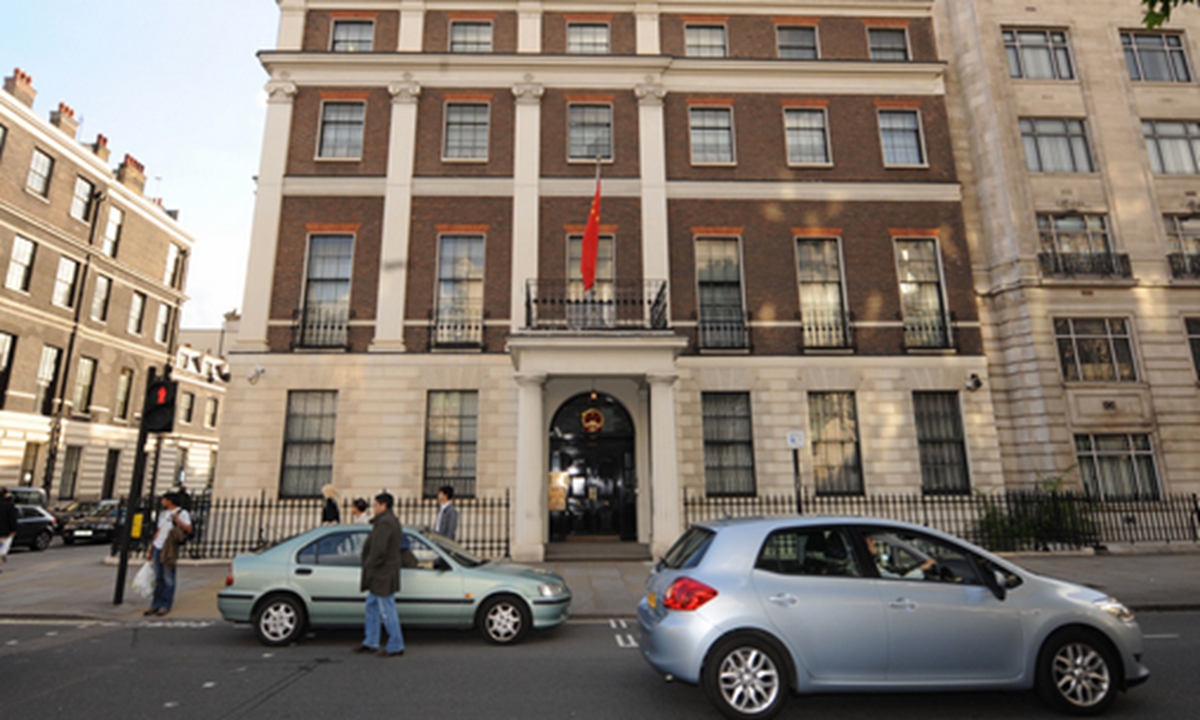
The Embassy building Photo: Chinese Embassy in the UK
British media have once again spotlighted China's proposed embassy in London, this time focusing on a letter from UK Deputy Prime Minister and Housing Secretary Angela Rayner, who requested further details from the Chinese side ahead of a key decision in two weeks. Some outlets used the letter to amplify "security concerns." In response, Chinese experts said that China's diplomatic missions operate strictly within international law and norms, calling the British media's continued hype a political maneuver aimed at exaggerating the "China threat."
According to The Guardian, Rayner on Wednesday gave the Chinese embassy two weeks to provide "additional details" about its proposed embassy at Royal Mint Court in east London, before a crunch decision over whether to approve them. In her letter, she claimed that two buildings on the drawings — the Cultural Exchange Building and Embassy House — were "greyed out," and asked the planning consultancy to "identify precisely and comprehensively" the drawings that had been redacted and explain the rationale and justification for these redactions.
She also asked the embassy to "consider whether to provide unredacted versions" of the drawings and questioned whether the redactions might infringe on the principle that the public must know what planning permission is granted for, according to The Guardian.
Some British media covered the letter and reignited long-hyped "security concerns" surrounding the proposed Chinese embassy.
Under international law — specifically the 1961 Vienna Convention on Diplomatic Relations —foreign embassies, including those in China, are permitted to maintain secure areas for handling classified information, a routine aspect of diplomatic work. The UK's overreaction to China's embassy plans reflects how, despite government signals to improve ties, some people in the UK remain influenced by bias and suspicion. Viewing China as a threat, the UK misinterprets standard diplomatic practices as potential security risks, Cui Hongjian, director of the Department of European Studies in China Institute of International Studies, told the Global Times on Thursday.
As early as August 2024, a spokesperson from the Chinese Embassy in the UK refuted some media reports on that China has resubmitted the planning application for the new embassy project to the Tower Hamlets Council, saying that "six years ago, the Chinese government purchased the Royal Mint Court, London for the use as the new Chinese embassy premises. The UK government had given its consent to this."
The resubmitted planning application has taken into full consideration the UK's planning policy and guidance as well as opinions of all relevant parties. This is a high-quality development scheme, said the spokesperson.
Building the new embassy at an early date would help us better perform such responsibilities, said the spokesperson, noting that host countries have the international obligation to support and facilitate the building of the premises of diplomatic missions.
China's plan to build a new embassy in London's financial district is a routine diplomatic move. The Chinese Embassy operates within international law and diplomatic norms, and establishing such a mission is a legitimate part of normal China-UK relations, Gao Jian, director of the Center for British Studies at Shanghai International Studies University, told the Global Times on Thursday.
However, some British media have falsely portrayed it as a move for espionage or surveillance of overseas Chinese — claims that are entirely baseless, said Gao, who noted that the current narrative is a politically motivated smear campaign, relying on speculations to fuel the "China threat" theory and deliberately discredit China's diplomatic presence under the guise of security concerns.
In a report on Wednesday, The Telegraph claimed the plans "include a vast basement with no obvious function," claiming there are "justifiable fears" it could be used for "espionage."
In response, Cui said that the UK's repeated hype over China's embassy stems from its own long history of MI5 and MI6 intelligence operations and deep sensitivity to espionage.
British media often project these fears onto others, interpreting China's diplomatic activities through a security lens. "This 'spy threat' narrative reflects a mindset of projecting its own practices onto other countries, leading to exaggeration and misrepresentation," said the expert.
RELATED ARTICLES