China’s Buddhist association vows adherence to ‘precepts as teacher’ following probe into Shaolin abbot Shi Yongxin
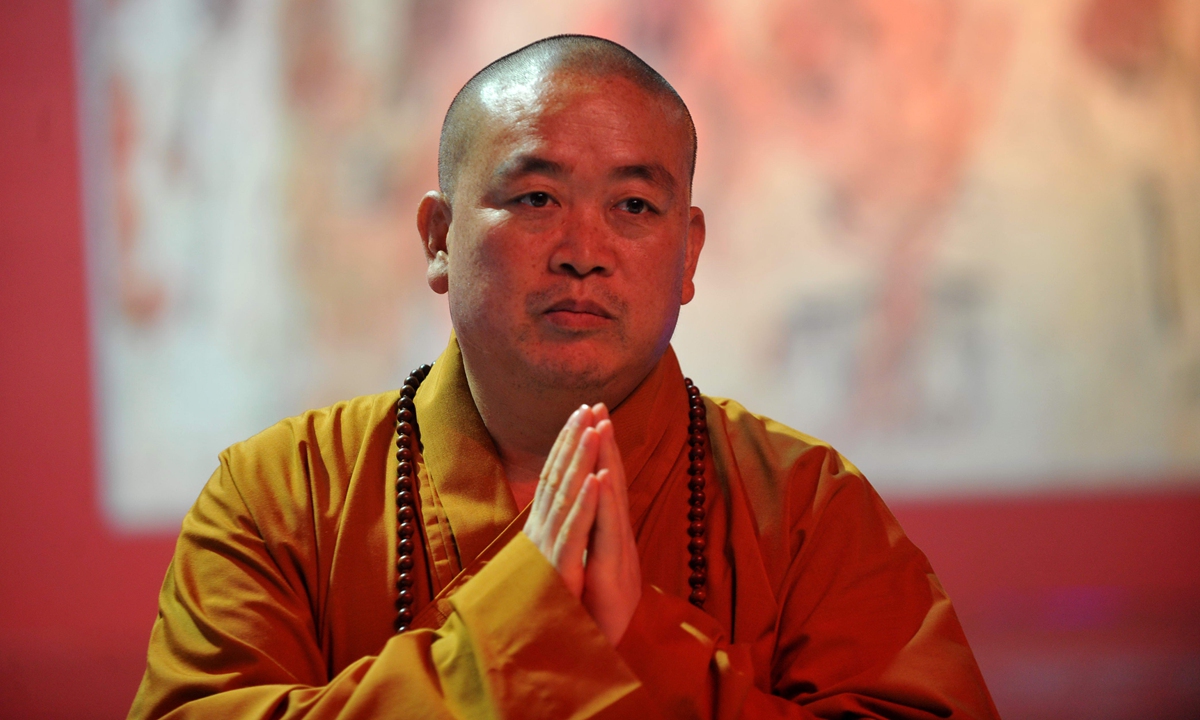
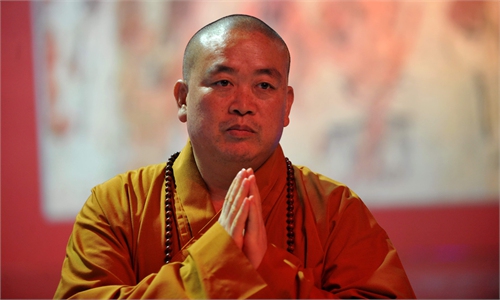
Shaolin Temple Abbot Shi Yongxin Photo: VCG
The Buddhist Association of China released an article titled “Adhere to ‘precepts as the teacher’ to promote the healthy inheritance of Buddhism in China” on Thursday, following news that Shi Yongxin, the abbot of the renowned Shaolin Temple, is suspected of criminal offenses and has seriously violated Buddhist precepts, and is currently under investigation by multiple departments.
Shi is not only facing severe penalties under national law, but according to the Buddhist principle of cause and effect, he will also bear serious consequences for his actions. What he has done not only jeopardizes his own spiritual life but also tarnishes the integrity of Buddhism, undermines the healthy fabric of the religion, damages the social image of monastics, and creates a significant negative impact on the healthy transmission of Buddhism, the article said.
In the face of the serious mistakes made by Shi and their detrimental effects, we deeply reflect on the compassionate intent, foresight, and significant meaning of the Buddha Shakyamuni’s last instruction to “take precepts as a teacher,” reads the article.
A national conference on work related to religious affairs held in 2021 emphasized that the religious community should strengthen self-education, self-management, and self-restraint, and implement strict governance in religious practices. It also called for leading by example in abiding by laws and regulations and enhancing religious cultivation, reads the article.
The emphasis on upholding precepts and practicing cultivation is a fine tradition in Chinese Buddhism. However, a situation still exists in the Buddhist community in which precepts are lax. Instances of Buddhist clergy violating their vows, even breaking fundamental precepts, occur from time to time. For example, individuals like Shi show no reverence for the precepts, indulging in laxity, pursuing fame and profit, seeking pleasure, and wantonly breaking their vows, even descending into illegal and criminal activities. This not only jeopardizes their personal futures but also brings shame to the entire Buddhist community, according to the article.
The article attributes the reasons for these issues as follow: firstly, there are still some loopholes and shortcomings in the management systems, mechanisms, and specific implementations of personnel in Buddhist organizations and activities. The internal supervision mechanisms within the Buddhist community need to be further improved and enforced. Secondly, some Buddhist clergy have become lax and negligent in their practice, allowing themselves to be undisciplined, which undermines the Buddhist faith, betrays their commitment to monastic life, disregards the law of cause and effect, and ignores the precepts, ultimately leading to a complete loss of the integrity expected of monastics.
Shi’s case has sounded an alarm for the entire Buddhist community in the country. The Buddhist Association of China firmly supports and endorses the relevant authorities’ legal investigation into Shi, and vows to learn from the lessons of his case, according to the article.
The association also vows to further improve the supervision and management system, and resolutely punish those who violate regulations to promote the healthy inheritance of Buddhism in the country.
The Buddhist Association of China announced on July 28 that it has agreed to revoke the ordination certificate of Shi Yongxin over suspected criminal offenses.
Global Times
RELATED ARTICLES