Putin, Trump to meet face to face with details to be announced: media
By Published: Aug 07, 2025 09:34 PM

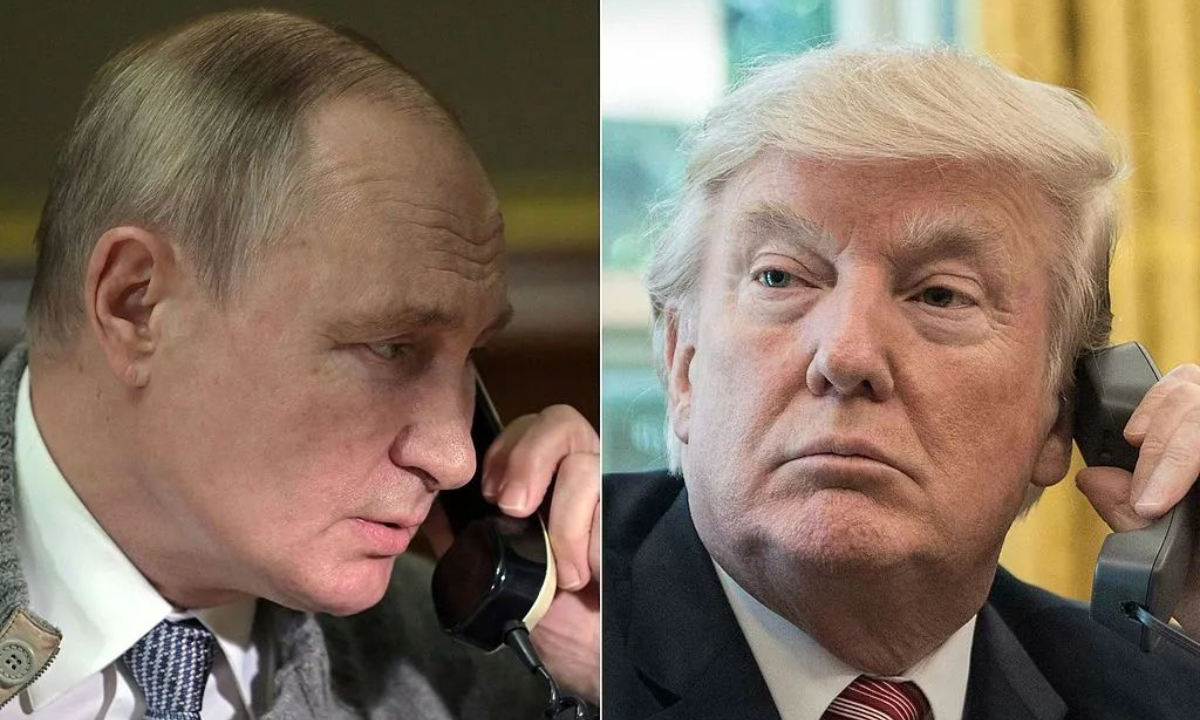
Russian President Vladimir Putin (left) and US President Donald Trump, file photo. Photo: VCG
The venue for a meeting between Russian President Vladimir Putin and his US counterpart, Donald Trump, has been agreed and will be announced later, Kremlin Aide Yury Ushakov said on Thursday. If held, it would be the first face-to-face meeting between a sitting US and Russian president since Trump's predecessor Joe Biden met Putin in Geneva in June 2021, according to media reports.
"We have launched work to discuss the parameters of such a meeting and the venue for it jointly with our American colleagues now," Tass quoted Ushakov as saying, while adding that the venue [for a Putin-Trump meeting] has been agreed in principle and will be announced a bit later.
Putin said on Thursday that the UAE is one of the suitable places for his meeting with Trump, Sputnik reported.
The New York Times reported that Trump told European leaders during a call on Wednesday that he intended to meet with Putin, and then follow up with a trilateral involving the Russian leader and Ukrainian President Zelensky.
"There's a good chance that there will be a meeting very soon," Trump told reporters.
Trump on Wednesday said his special envoy, Steve Witkoff, had made "great progress" during a meeting with Putin. In a Truth Social post, Trump said he had briefed several European allies about Witkoff's meeting with Putin, which focused on the Russia-Ukraine crisis, according to Reuters.
Everyone agrees the conflict must come to a close, "and we will work towards that in the days and weeks to come," Trump added, without providing further details.
Zelensky on Thursday also called for a face-to-face meeting with Putin to end the conflict.
Trump has made clear that he wants a deal to end Russia-Ukraine crisis by August 8, senior US diplomat John Kelle told the United Nations Security Council, Reuters reported in July.
"We in Ukraine have repeatedly said that finding real solutions can be truly effective at the level of leaders. It is necessary to determine the timing for such a format and the range of issues to be addressed," Zelensky wrote on X, a day after speaking to the US president.
Meanwhile, the US administration is reportedly to impose additional tariffs on countries that purchase Russian oil, a move that observers said is aimed at further weakening Russia's economy. Trump on Wednesday signed an executive order imposing an additional 25-percent tariff on imports from India in response to the country's purchases of Russian oil, according to a White House statement cited by Xinhua News Agency.
India's Ministry of External Affairs responded with a statement calling Trump's move "the targeting of India is unjustified and unreasonable" and that India's oil imports are meant to "ensure predictable and affordable energy costs" for Indian consumers.
If the planned Putin-Trump meeting takes place, the likelihood of producing any meaningful outcome in solving the crisis is not very big, Yang Jin, an associate research fellow with the Institute of Russian, Eastern European and Central Asian Studies at the Chinese Academy of Social Sciences, told the Global Times.
Currently, the US, Russia, Ukraine, and Europe all hold sharply divergent positions on how to resolve the crisis, with no party showing any willingness to compromise. Moreover, there's little mutual trust and foundation for substantial communication between Moscow and Washington.
RELATED ARTICLES