What next for India? Illustration: Liu Rui/GT
One of India's major think tanks, the Observer Research Foundation, recently published a paper titled "Forging India-Taiwan Engagement: Theoretical Foundations, Policy Debates, and Pragmatic Pathways" to mark the 30 years of informal relations between the two sides. The paper recommended that India pursue a soft-hedging strategy that leverages asymmetric economic interdependence with Taiwan while preserving its strategic ambiguity. "Put simply, this strategy maximizes economic and limited strategic gains without triggering a systemic backlash from China," the paper noted.These views, which are not new, are common in the Indian strategic circle. On May 19, Vijay Gokhale, former Indian ambassador to China, published an article in the Indian press, titled "Why Taiwan should matter to India." He wrote, "whatever happens in the Taiwan Straits must become integral to India's national security policy." Eerishika Pankaj, director of New Delhi-based Organization for Research on China and Asia, claimed in a July article that India and the Taiwan region share the same challenges from Beijing's cognitive warfare and advocated for India's cyber-security partnership with Taiwan.
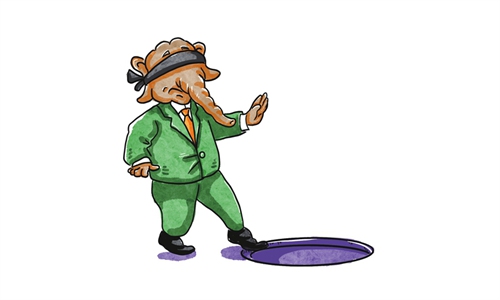
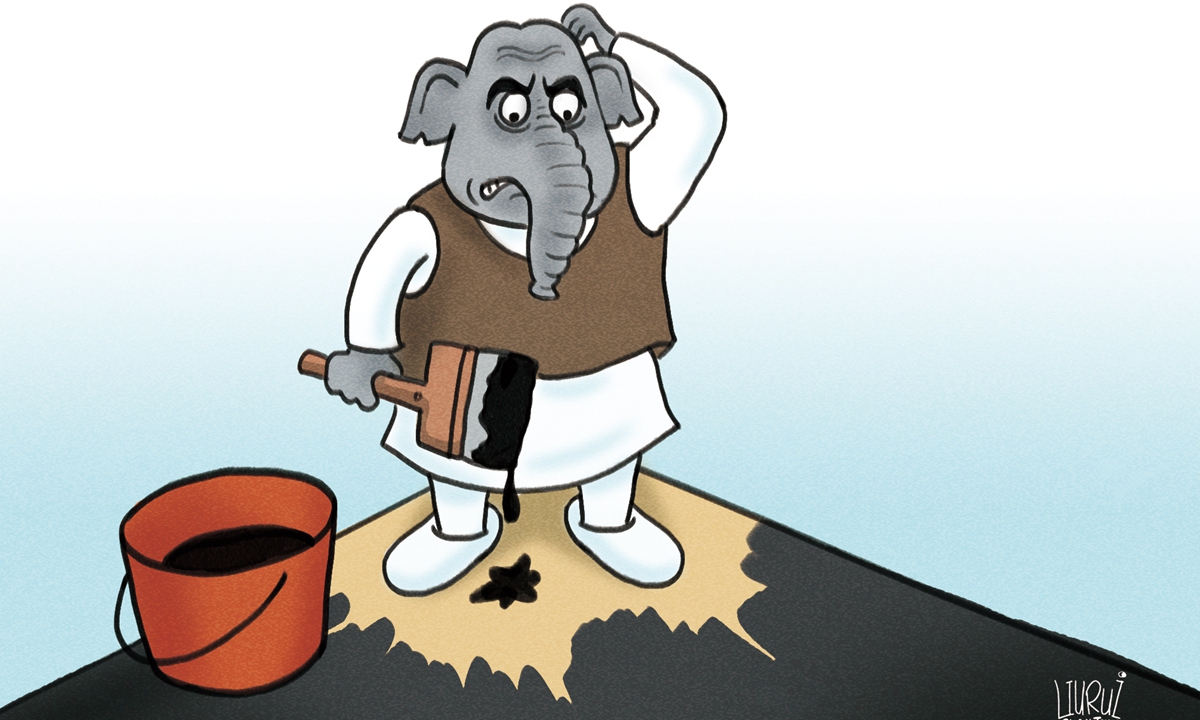
The frequent emergence of such views calling for building closer ties with Taiwan reflects India's deep-seated anxieties and ambivalence.
On the one hand, the Indian strategic circle often views China as an imaginary rival, believing it to be the primary obstacle to achieving its great power dream. This unhealthy mind-set has persisted within Indian strategic research, particularly since Western academia began comparing China and India.
The Indian strategic circle seems to fail to recognize that, whether viewing China as a partner or a competitor, attempting to entangle the Taiwan question to make trouble for Beijing is a crude tactic that is unlikely to be effective. Such an approach will only undermine India's global credibility and create the impression that India's strategy for managing its relations with China is inadequate. China never exploits India's internal affairs; rather, it maintains a more objective view of the fluctuations in bilateral relations and prioritizes the overall development of the relationship, avoiding tactics designed to embarrass the other side.
On the other hand, while the Indian strategic circle often touts the importance of economic and trade ties with the Taiwan region, India is essentially eager to pursue breakthroughs in high technology, particularly the semiconductor industry, which is what it most desires from the Taiwan region. In May, TSMC rejected India's proposal to build a factory there. In the long run, Taiwan is unlikely to share its advanced technologies with India, as it views these technologies as strategic and economic leverage.
In reality, the Chinese mainland is India's primary trading partner, and India officially adheres to the one-China principle. However, it cannot be ignored that the various instigations by India's strategic community over a long period are not without repercussions. In May, representatives from four Indian state governments led a record-size delegation to Taiwan.
Regardless of the purpose of such a visit, it is inherently detrimental to China-India relations, especially at a time when bilateral relations are getting back on track after five years of volatility.
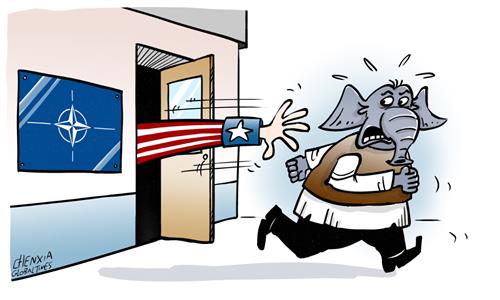
The US recently issued an executive order doubling the US tariff on Indian imports to 50 percent, effective August 27, over its purchases of Russian oil, severely damaging its economic prospects. Previously, the Indian strategic circle advocated adopting the "China + 1" strategy - diversifying production to other nations in addition to China - and replacing China in the global supply chain, but this has been met with a chilling impact. Reality has forced these strategic scholars to recognize the reality: The US will never be a true friend of India. It will not only try to dictate India's energy policy but also create obstacles for India on key issues.
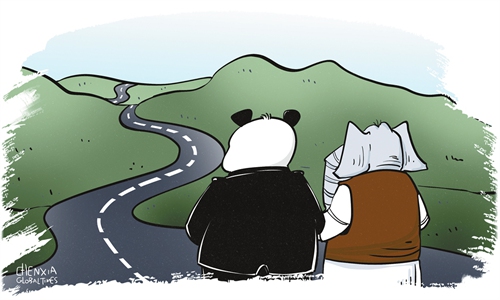
Therefore, India's strategic community should adopt a more pragmatic approach when it comes to its foreign policy, particularly regarding the Taiwan question. Hyping up the Taiwan question will not bring any benefits to India. A return to rational analysis is crucial for India in its China relations.
The author is the director of the Centre for South Asian Communication Studies of the Academy of International and Regional Communication Studies at the Communication University of China. opinion@globaltimes.com.cn
RELATED ARTICLES