DPP authorities act as main accomplice in US effort to hollow out Taiwan’s industries: Mainland spokesperson on US semiconductor tariff hike and TSMC’s Arizona plant
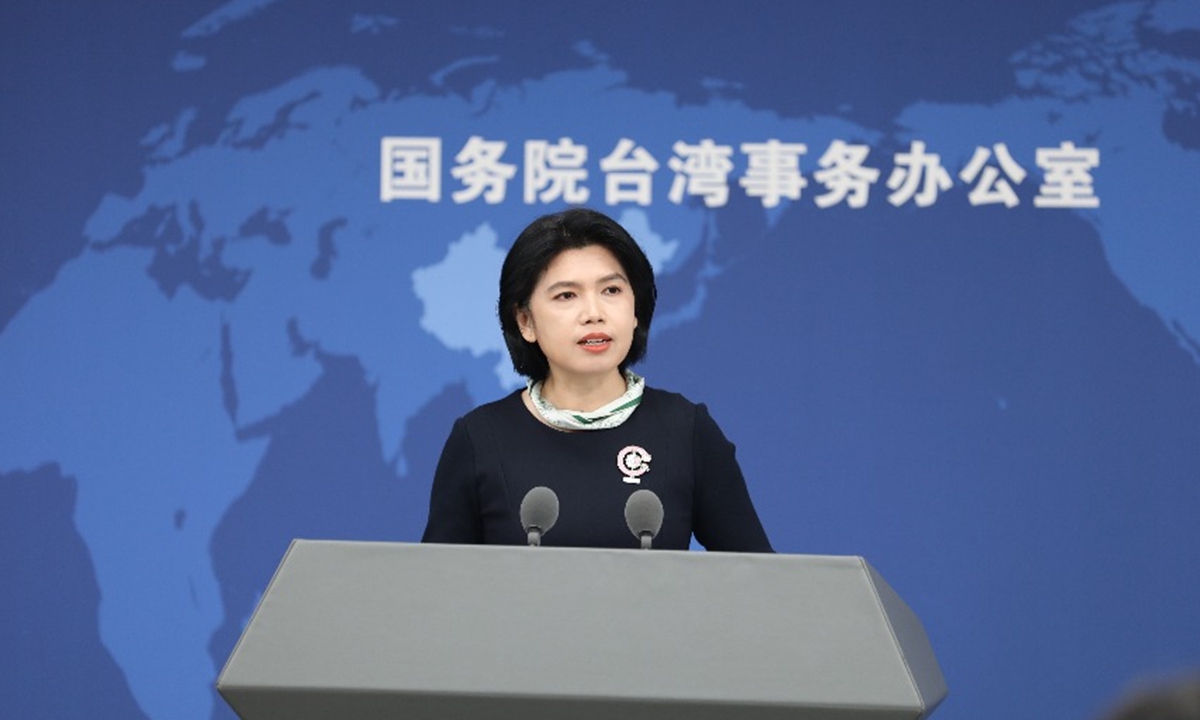
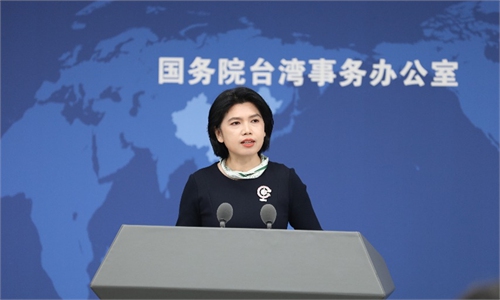
Zhu Fenglian Photo: Taiwan Affairs Office of the State Council
The DPP authorities are the biggest accomplice of the US in hollowing out Taiwan's industries, a spokesperson for the Taiwan Affairs Office of the State Council said on Wednesday.
Zhu Fenglian, the spokesperson of the office, made the remarks when asked to comment on reports that US President Donald Trump has said he will impose a 100 percent tariff on imported goods such as semiconductors, and claimed that TSMC will build the world's largest wafer fabrication plant in the state of Arizona backed with $300 billion.
When TSMC previously announced an additional $100 billion investment in the US, it sparked panic and public discontent in Taiwan. A $300 billion plan would further erode the island's economic vitality and autonomy, said Zhu.
Zhu said that the DPP authorities have ceded key industries to the US, maintained deliberate opacity regarding the negotiation process and repeatedly misled the public, showing neither the will nor the ability to protect Taiwan's economy and its people's welfare. They should reverse course, and the people of Taiwan should unite to defend their interests, said the spokesperson.
Xiang Ligang, director-general of the Beijing-based Information Consumption Alliance, told the Global Times on Wednesday that Taiwan's semiconductor industry is widely seen as the backbone of the island economy.
Without it, the island would be left with mostly traditional sectors such as agriculture, fruit farming, aquaculture, and tourism, which are all in decline. Manufacturing also faces minimal room for expansion and lags behind countries and regions such as the Chinese mainland, Japan and South Korea, said Xiang.
The latest executive orders published on the website of the White House on July 31, 2025, showed that the reciprocal tariff rate on the Taiwan island was modified to 20 percent.
In response, the DPP authorities alleged that as the two sides have yet to conclude a final review meeting, the 20 percent tariff is still temporary, with hopes of a reduction pending a future agreement, the Xinhua News Agency reported.
However, analysts in the island are cautious. Commentator Hsieh Chih-chuan warned that without a joint statement, "temporary tariffs" could mask extra obligations, such as major US investments, further straining industries — especially small firms in central and southern Taiwan, according to Xinhua's report.
Xiang said that the DPP authorities are "burying their heads in the sand" in the face of US tariff pressure. Washington's bid to seize control of the island's semiconductor sector — particularly its advanced manufacturing capacity — and shift it to American soil will not change, regardless of the Taiwan island's stance.
Asked to comment on the US imposition of a 20 percent "reciprocal tariff" on the island of Taiwan, Zhu said that the DPP authorities have disregarded the island's economy and livelihoods, selling out Taiwan's development interests and causing deep harm to its people and businesses.
"We sternly warn the DPP authorities that currying favor will bring no benefits, and kneeling to the US will lead nowhere," Zhu said.
Global Times
RELATED ARTICLES