China’s high-tech manufacturing sees rising added value in July, as demonstrated by smart unmanned aerial vehicle manufacturing
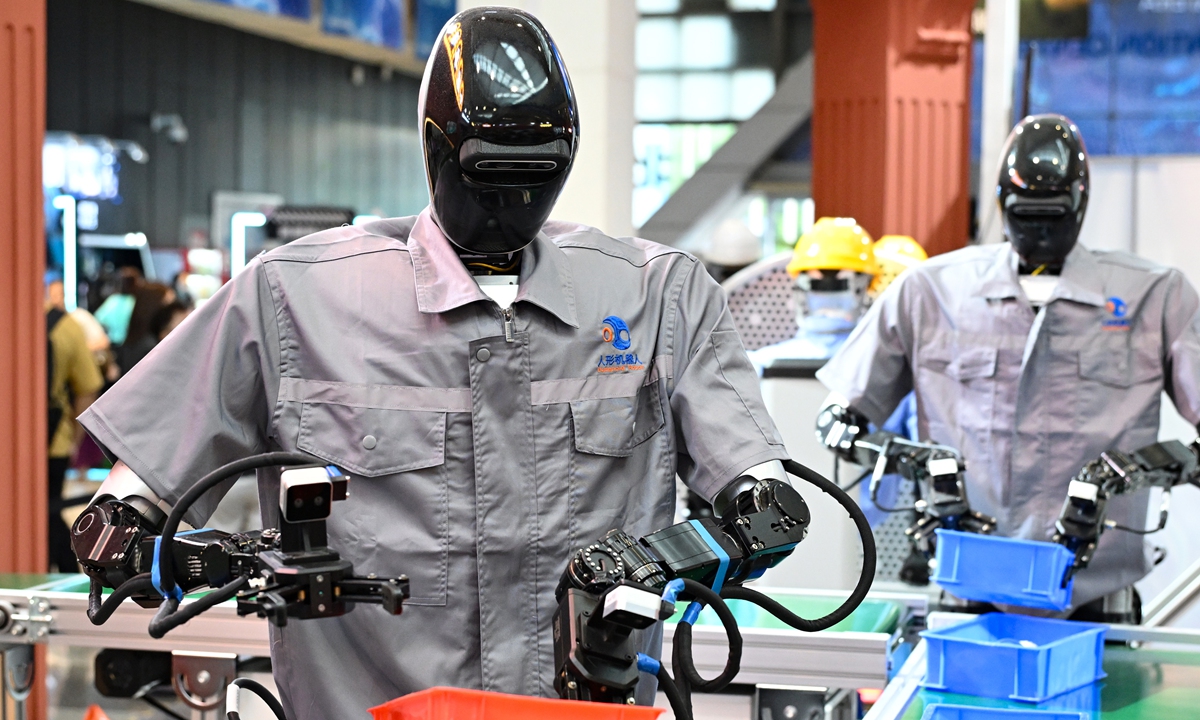
A humanoid robot demonstrates logistics sorting at the 2025 World Artificial Intelligence Conference on July 26, 2025. Photo: VCG
In July, the added value of smart unmanned aerial vehicle manufacturing in China soared by 80.0 percent year-on-year, with intelligent vehicle-mounted equipment manufacturing rising by 21 percent, Fu Linghui, spokesperson of the National Bureau of Statistics (NBS), told the press conference on Friday.
Fu made the remarks as the NBS released the country’s key economic indicators for July, which showed that the added value of industrial enterprises above the designated size grew by 5.7 percent year-on-year, and that of the high-tech manufacturing rose by 9.3 percent.
Fu said that, since the beginning of this year, various sectors have actively promoted the deep integration of technological and industrial innovation, vigorously advancing the high-end, intelligent, and green transformation of industries, and facilitating the application of scientific and technological achievements. China's new quality productive forces have been steadily developing, injecting new momentum into the economy’s high-quality growth.
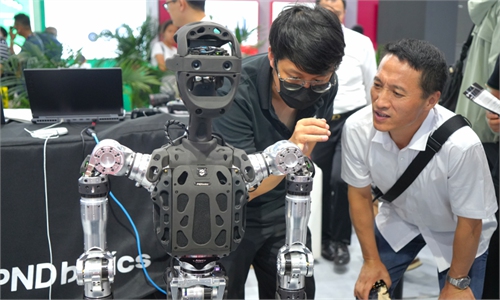
In July, the added value of the digital product manufacturing industry grew by 8.4 percent year-on-year. Artificial intelligence is rapidly developing and integrating more closely with the real economy, with application scenarios continuously expanding and various intelligent terminal products becoming increasingly widespread, Fu said, noting that the output of intelligent products such as industrial robots and civilian drones increased by 24 percent and 18.9 percent, respectively.
Moreover, high-tech industries with high technological content and added value have maintained rapid growth this year. In July, the added value of the integrated circuit manufacturing and electronic special materials manufacturing industries rose by 26.9 percent and 21.7 percent year-on-year, respectively, Fu said.
In line with the trend of green and low-carbon development, China has focused on building new growth poles for green development. In July, the output of new-energy products such as new energy vehicles and lithium-ion batteries increased by 17.1 percent and 29.4 percent year-on-year, respectively, while the output of green materials like carbon fiber and bio-based chemical fiber grew by 43.8 percent and 19.8 percent, respectively.
The green transformation has also created favorable opportunities for the development of the green circular economy, with the added value of the waste resource comprehensive utilization industry rising by 11.7 percent year-on-year in July, said the spokesperson.
China has continued to increase research and development (R&D) investment, promote high-level technological self-reliance, and achieve new breakthroughs in scientific and technological innovation.
In 2024, the country’s R&D expenditure exceeded 3.6 trillion yuan, with an investment intensity of 2.68 percent, surpassing the overall level of the EU and approaching the average level of OECD economies. Since the beginning of this year, a series of technological achievements, from the boom in domestic large artificial intelligence models to the robot marathon, have captured global attention, Fu noted.
Additionally, the sustained release of the effects of large-scale equipment renewal has created favorable conditions for traditional industries to accelerate equipment upgrades and technological transformations. Some enterprises in traditional industries, by adopting new processes, technologies, and concepts, and leveraging the advantages of flexible production and rapid response, have established core competitiveness in intense market competition, said Fu.
Global Times
RELATED ARTICLES