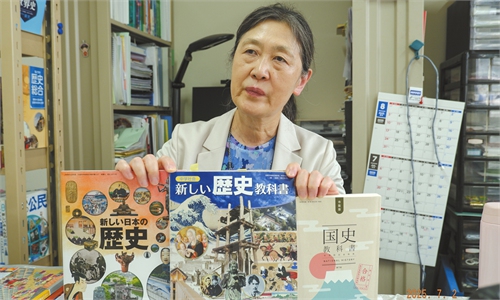
Japan urged to reflect on aggression history, make clean break with militarism: Chinese Embassy spokesperson on Japanese politicians’ Yasukuni visits, offerings
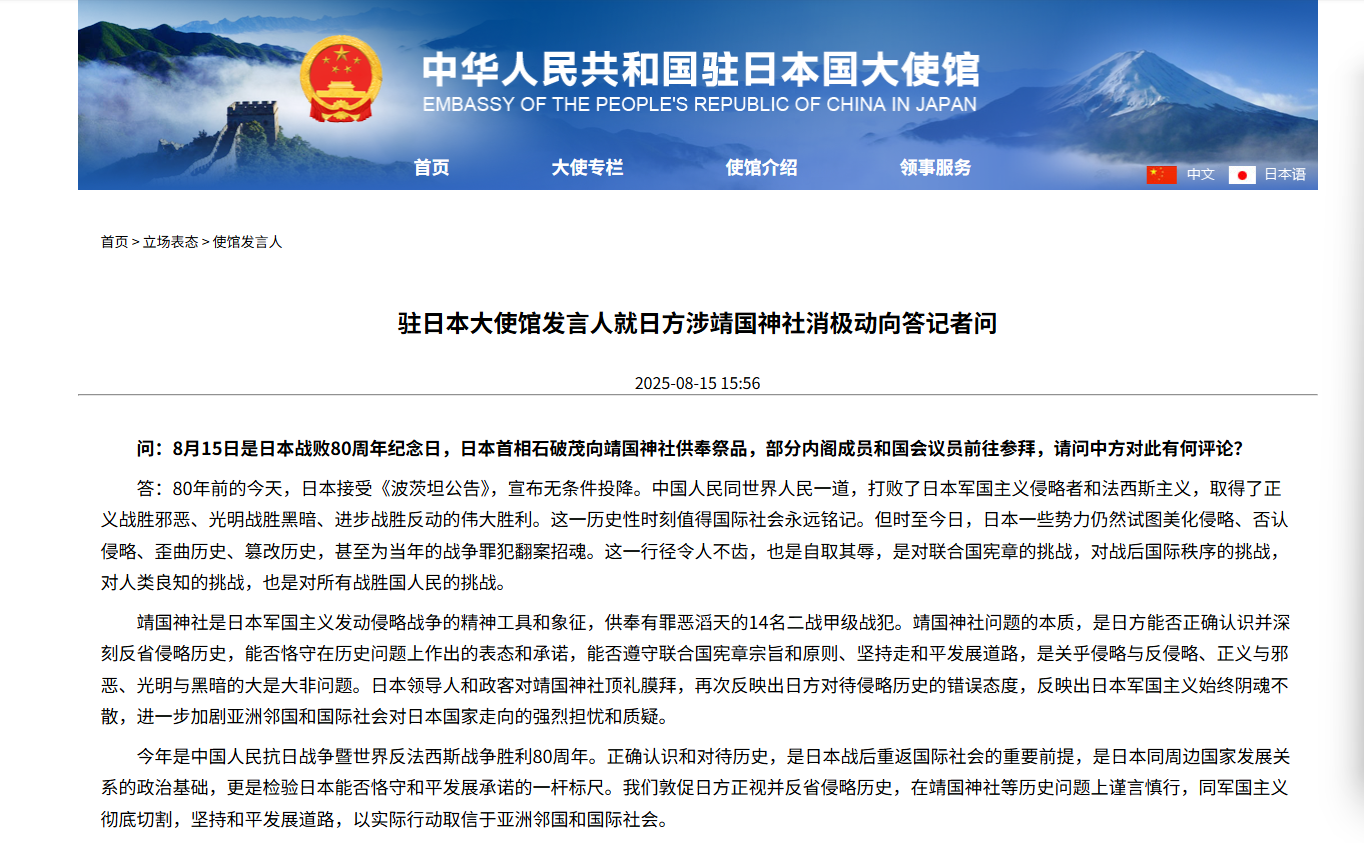
A screenshot from Chinese Embassy in Japan
In response to a media inquiry on Japanese Prime Minister Shigeru Ishiba offered ritual offerings to the Yasukuni Shrine, while some cabinet members and lawmakers paid visits there on Friday, August 15, which marks the 80th anniversary of Japan's defeat in World War II, the spokesperson for the Chinese Embassy in Japan released a statement, urging Japan to face up to and reflect on its history of aggression, speak and act prudently on issues such as the Yasukuni Shrine, make a clean break with militarism, remain committed to peaceful development, and win the trust of its Asian neighbors and the international community through concrete actions.
Japanese Prime Minister Shigeru Ishiba sent an offering to the war-linked Yasukuni Shrine on Friday. Japanese Agriculture Minister Shinjiro Koizumi visited the shrine, becoming the first cabinet minister confirmed to do so since Ishiba took office. Former economic security minister Sanae Takaichi also paid a visit, according to Kyodo News.
In response, the spokesperson for the Chinese Embassy in Japan said that eighty years ago today, Japan accepted the Potsdam Proclamation and announced its unconditional surrender. Together with the peoples of the world, the Chinese people defeated Japanese militarist aggressors and fascism, achieving a great victory of justice over evil, light over darkness, and progress over reaction. This historic moment should be forever remembered by the international community.
Yet to this day, some forces in Japan still attempt to glorify or deny its aggression, distort and falsify history, and even whitewash and vindicate war criminals of that time. Such acts are disgraceful and self-humiliating. These acts constitute a challenge to the UN Charter, the post-war international order, human conscience and the people of all victorious countries of WWII, said the spokesperson.
The Yasukuni Shrine was a spiritual tool and symbol of Japanese militarism in launching wars of aggression, and it enshrines 14 Class-A war criminals of World War II with heinous crimes. The essence of the Yasukuni Shrine issue is whether Japan can correctly recognize and deeply reflect on its history of aggression, honor the statements and commitments it has made on historical issues, abide by the purposes and principles of the UN Charter, and stay committed to the path of peaceful development. It is a major issue of principle between aggression and counter-aggression, justice and evil, light and darkness, said the spokesperson.
The spokesperson noted that Japanese leaders and politicians' reverence for the Yasukuni Shrine once again reveals Japan's erroneous attitude toward its history of aggression and shows that the specter of militarism still lingers. This has further heightened the concerns and doubts of its Asian neighbors and the wider international community about the direction of the country.
This year marks the 80th anniversary of the victory of the Chinese People's War of Resistance Against Japanese Aggression and the World Anti-Fascist War. A correct understanding and approach to history is an important prerequisite for Japan's post-war return to the international community, a political foundation for its relations with neighboring countries, and a benchmark for testing whether Japan can honor its commitment to peaceful development, said the spokesperson.
RELATED ARTICLES