Reading China into US-Russia relations a symptom of retrogressive zero-sum mentality
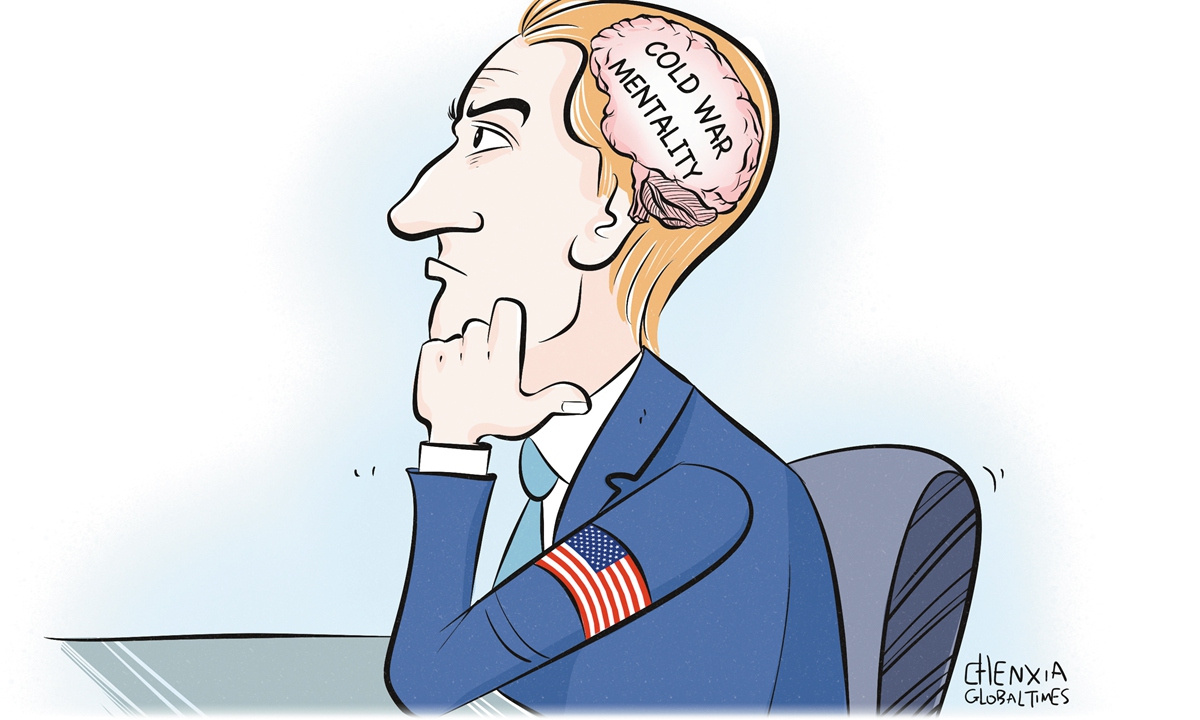
Illustration: Chen Xia/GT
What does China have to do directly with the just-concluded Alaska meeting between the US and Russian leaders? Well, some in the US saw, or even created - such a linkage, under an obvious urge to push for confrontations. This raises a question: Is it ever possible for these people to take off their zero-sum glasses and correctly view today's international relations, especially relations among major powers?
On Sunday local time, Fox Business published a commentary interpreting the so-called "Trump's Russia play." The commentary claimed that the US leader met with his Russian counterpart not aiming at resolving the Ukraine crisis but rather "reducing Moscow's dependence on Beijing." If Washington can "use Russia's weakness to fracture its bond with China" and to "reshape the board," then it can fight and win the contest with China, the article continued.
It may sound strategic, but such an analysis of the Trump-Putin meeting is an exaggeration, Li Haidong, a professor at China Foreign Affairs University, told the Global Times.
On one hand, it is obvious that US-Russia interactions are mainly driven by the Ukraine crisis currently, and even if the two sides continue to engage more, it is still too optimistic to predict a rosy future for the relations between the US and Russia due to their structural contradictions.
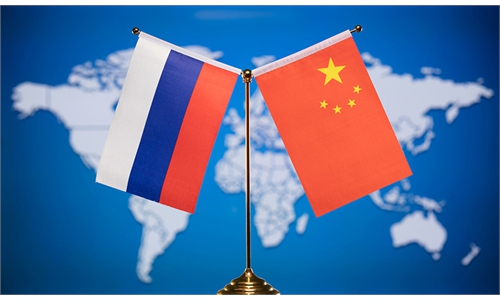
On the other hand, over the past decades, China and Russia have built a solid strategic partnership across political trust, economic cooperation, energy supply, security coordination and multilateral mechanisms. Judging from the historical logic and strong internal dynamics of China-Russia relations, no matter what the US tries to do to "pry away" Russia, the strategic foundation of China-Russia cooperation is unlikely to be shaken.
Looking deeper, the reason some people in US political circles insist on dragging China into the US-Russia narrative lies in the inertia of Cold War thinking. Such an outdated mentality assumes that major-power relations are inevitably zero-sum - one side's gain is another side's loss. Thus, following this logic, they hyped that any improvement in US-Russia relations must necessarily be a "problem" for China.
Yet, this is clearly a typical Western short-sighted view, according to Li. "China hopes to see stability in major-power relations as well as a peaceful and prosperous world. If US-Russia relations stabilize, the world will see more stability and certainty, which is also good for China," he added.
In fact, ceasefire and peace talks have always been the keywords in China's position on the Ukraine crisis. If the US and Russia can reduce the risk of confrontations through dialogue and promote a political settlement to the Ukraine crisis, this would not only serve the interests of the parties at war and in turmoil for years, but also align with the expectations of the international community, including China.
The zero-sum thinking also runs counter to the trends of our time, which is characterized by multipolarity. Real-world challenges - from climate change, energy security, AI governance to public health - cannot be solved by unilateral effort, let alone bloc-based confrontation. Therefore, in today's world, there is not much space for an exclusive mentality of "us against you" but a cooperative one advancing "us plus you."
In contrast to the logic of "division and confrontation" promoted by some in the US, China has consistently advocated building a new type of international relations featuring win-win cooperation. However, it is feared that phrases like "win-win cooperation" sound quite alien to those who still treat the world as a "chessboard" and countries as "chess pieces." Those who cannot break free from the constraints of Cold War thinking are doomed to fail to understand what peace and prosperity truly mean in a multipolar world and, thus, will inevitably be left behind by history and the times.
RELATED ARTICLES