China-India. Photo: VCG
Chinese Foreign Minister Wang Yi kicked off his visit to India on Monday, with a Chinese Foreign Ministry spokesperson saying on the same day that China hopes to work with India to deliver on the important common understandings between the leaders of the two countries, keep the momentum of high-level exchanges, enhance political mutual trust, strengthen practical cooperation, properly handle differences, and promote the sustained, sound and steady development of China-India relations.
Chinese experts believe that Wang's visit, with high-level meetings with Indian side, demonstrates that India attaches great importance to improving ties and shows both sides' sincerity in conducting in-depth and candid talks.
Member of the Political Bureau of the CPC Central Committee, Minister of Foreign Affairs and China's Special Representative on the China-India boundary question Wang Yi is scheduled to visit India and hold the 24th Round of Talks Between the Special Representatives of China and India on the Boundary Question at the invitation of the Indian side from Monday to Wednesday, a Chinese Foreign Ministry spokesperson announced previously.
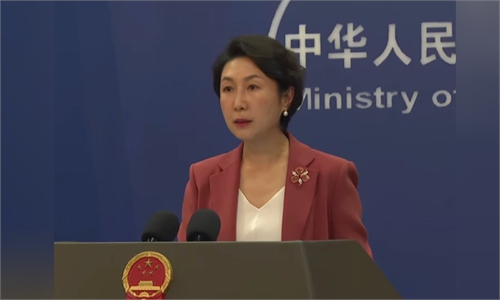
When asked about China's expectations of the visit, Chinese Foreign Ministry spokesperson Mao Ning said on Monday that China hopes to work with India to deliver on the important common understandings between the leaders of the two countries, keep the momentum of high-level exchanges, enhance political mutual trust, strengthen practical cooperation, properly handle differences, and promote the sustained, sound and steady development of China-India relations.
Desire to improve ties
Wang will hold talks with Shri Ajit Doval, India's National Security Adviser and Special Representative for the China-India Boundary Question, and meet with Indian External Affairs Minister Subrahmanyam Jaishankar, according to India's Ministry of External Affairs.
Spokesperson Mao said that during his stay in India, Wang will also have in-depth exchange of views with Indian Minister of External Affairs S. Jaishankar on bilateral ties and issues of mutual interest.
Wang will then call on Prime Minister Narendra Modi at his residence, 7 Lok Kalyan Marg, at 5:30 pm on Tuesday, per NDTV. The Hindu reported that the meeting is significant as it takes place days before Modi's planned trip to China to attend the annual summit of the Shanghai Cooperation Organisation (SCO).
Experts noted that Wang's India itinerary, which includes reported meetings with India's Prime Minister, Minister of External Affairs, and National Security Advisor, demonstrates that India attaches great importance to improving China-India relations and also hopes to enhance mutual trust through frequent interactions.
Such meetings also pave the way for Modi's upcoming trip to China to attend the SCO summit, facilitating early high-level communication and coordination, Lan Jianxue, director of the Department of Asia-Pacific Studies at China Institute of International Studies, told the Global Times.
On Tuesday morning, Wang will hold a new round of the Special Representatives talks on boundary questions with Ajit Doval, India's National Security Advisor, at 11:00 am, per NDTV.
Chinese Foreign Ministry spokesperson Mao said that the Talks Between the Special Representatives of China and India on the Boundary Question has played a positive and constructive role for the two countries' boundary negotiations.
During the 23rd round of talks held last year, the two sides reached several important common understandings that are being actively implemented by the two sides.
On the upcoming talks, we look forward to working with India to first and foremost follow through on the existing common understandings, and on that basis continue the in-depth communication with India to jointly keep the border areas peaceful and tranquil, said Mao.
Mao added that since the beginning of this year, the two sides have maintained communication through the diplomatic channels and actively advanced the implementation of those outcomes. For the upcoming round of talks, China stands ready to continue the in-depth communication with India on the above-mentioned issues on the basis of the existing common understandings and with a positive and constructive attitude, and together maintain sustained peace and tranquility in the border areas.
As a high-level communication channel, the talks on the boundary question are not only an important platform for border negotiations but also a key mechanism for strategic communication, demonstrating China's willingness to resolve differences through dialogue, Qian Feng, director of the research department at the National Strategy Institute at Tsinghua University, told the Global Times.
Since the resumption of the mechanism last year, China and India have made positive progress on boundary issue and cross-border cooperation, with both sides expressing the desire to promote the sustained implementation of the relevant consensus, Qian added.
The talks aim to deepen communication based on existing consensuses, focus on resolving practical issues, and ultimately uphold long-term peace and stability in the border areas, the expert noted.
In addition to the border issue, the NDTV reported that meetings could also see both sides deliberate on a range of key issues including trade and resumption of flight services.
When reporting on Wang's visit to India, foreign media reports also frequently mentioned India's relationship with the US. On Monday, The New York Times published an article saying that "Trump Is Pushing India Back Toward China," noting that "Prime Minister Narendra Modi had been moving to align India with the United States and freeze out China. Now, efforts to rebuild ties between the Asian giants are gaining momentum."
Indian outlets such as Financial Express also pointed out that the visit came at a time as India recalibrates its foreign policy.
The recent US tariff hikes have made India recognize the limitations of US-India relations, prompting New Delhi to recalibrate its previously US-leaning policy and return to a more balanced diplomacy rooted in strategic autonomy, Qian said, noting that India is expected to place greater emphasis on developing relations with all countries, including China.
China-India relations themselves contain an inherent momentum for improvement. The two sides are moving toward each other, gradually returning to a healthy trajectory of development. Changes in India-US relations, he stressed, are only a secondary factor, the expert noted.
RELATED ARTICLES