Celebrities’ voices synthetically generated for profit; expert urges ‘only AI can beat AI’ via improved review mechanisms
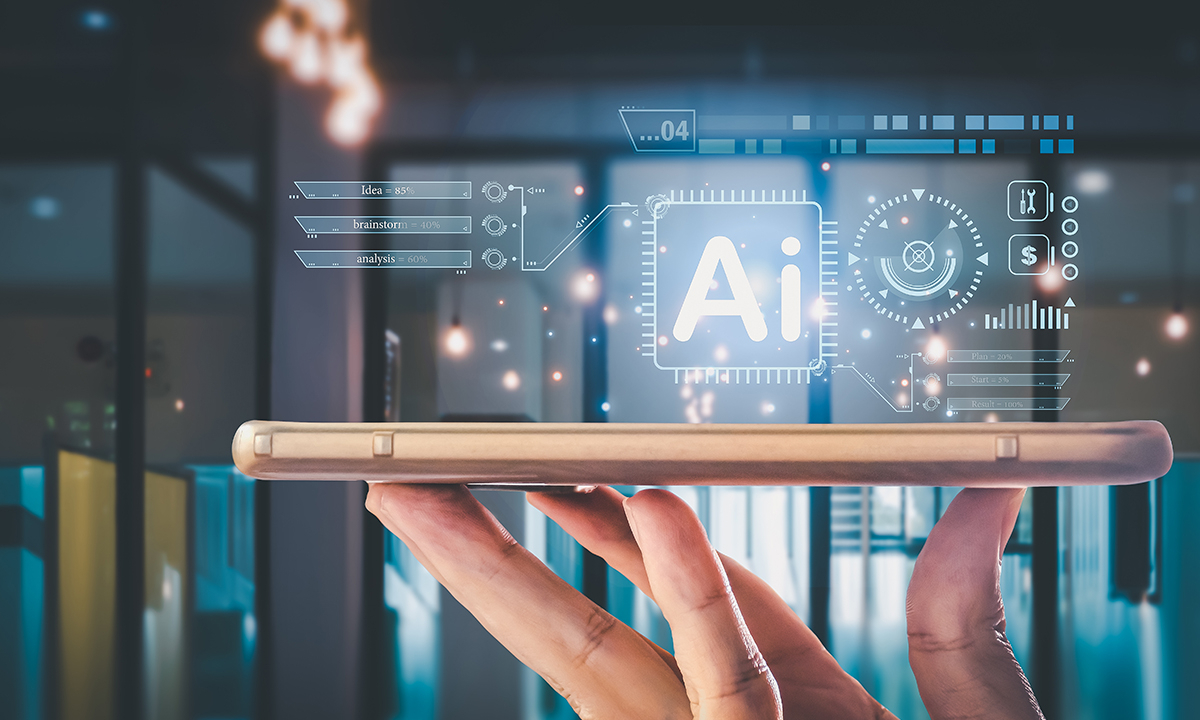
An illustration of using AI applications on a mobile phone Photo: VCG
The voices of Olympic champions are being used online to promote products, and the voices of renowned actors are being used to lure fans' money in livestreams...these artificial intelligence (AI)-cloned voices have become profit-making tools for some self-media bloggers. A legal expert said that "only AI can beat AI," urging platforms to improve AI-powered review mechanisms and infringement reporting systems.
On Douyin platform, a content creator used AI to impersonate the voice of Olympic diving champion Quan Hongchan to promote eggs, CCTV News reported on Tuesday.
Among 17 posted videos, one garnered 11,000 likes. Many fans mistook the account for Quan herself, purchased eggs via the product sales link, which showed 47,000 items sold, the report said.
In April, however, Quan's family confirmed to media that she had neither endorsed nor authorized any agricultural product promotions, CCTV News said.
Besides Quan, Chinese table tennis players Sun Yingsha and Wang Chuqin have also been impersonated for profit.
Zhu Wei, a professor at the China University of Political Science and Law, told the Global Times on Tuesday that such acts violate citizens' right of personality — voice rights. Under China's Civil Code, voice rights are protected similarly to portrait rights, and any use without permission constitutes an infringement, Zhu said.
As required, deepfakes must explicitly mark the generated content as AI-created, Zhu said, adding that "failure to add any such label, even with the imitated person's consent, constitutes a legal violation."
Under advertising and internet regulations, such ads are also illegal, he added.
The problem of AI counterfeiting celebrities extends far beyond product promotion. Some self-media bloggers clone celebrities' voices for 24-hour livestreams, said CCTV News. Such livestreaming by imitating celebrities not only lures fans for profit but also quickly transforms a novice account into one with tens of thousands of followers, while also paving the way for subsequent profit-making intentions, the report said, citing a cybersecurity expert.
Currently, according to Zhu, infringements targeting celebrities' and public figures' portraits, voices, and likenesses are frequent, mostly for commercial gain. Some violators even exploit public figures' credibility to spread misinformation and rumors, disrupting online and social order.
In March, China issued a notice to standardize the labeling of AI-generated content. Proper labeling will be one of the criteria that internet application service providers must meet to gain approval before listing or launching their applications.
The notice will be officially put into practice on September 1.
Clear labeling improves transparency, safeguards users' right to know and choose, fosters public awareness of AI technology, and helps prevent telecom fraud through AI-generated synthetic content, Zhu said.
It also enables media platforms to quickly identify AI-generated content, intercept harmful or illegal information in time, and establish clearer compliance requirements and management procedures, he added.
The expert suggested that in response to AI abuse, platforms are encouraged to fulfill their regulatory responsibilities. "Only AI can defeat AI," Zhu said, urging the establishment and improvement of AI-powered review mechanisms targeting counterfeit content and infringement reporting systems to detect and block illegal and harmful content. Adopting credit management measures for accounts and imposing harsher penalties are also among the recommended measures, he added.
RELATED ARTICLES