ARTS / CULTURE & LEISURE
ACG surge powered by cultural resonance
By Published: Aug 19, 2025 10:54 PM

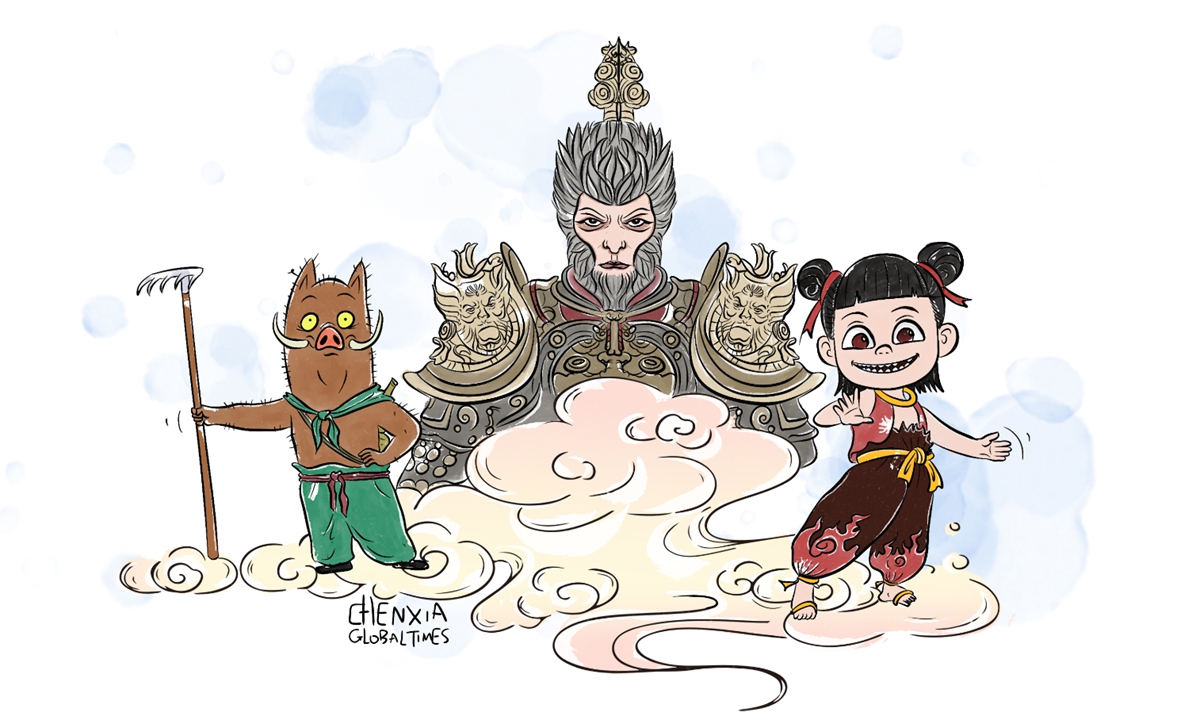
Illustration: Chen Xia/GT
This summer, Chinese cultural landscape is facing an ACG (animation, comics, and games) boom. This can be seen from the 15th China International Cartoon and Animation Festival recently held in Dongguan, South China's Guangzhou Province, which attracted nearly 100,000 visitors, including overseas anime enthusiasts, and the participation of 600 foreign anime teams.Meanwhile, an anime event in Shanghai welcomed over 100,000 ACG enthusiasts and role-players in a single weekend, offering them an immersive experience.
These are not isolated incidents marking a fleeting trend, but rather striking manifestations of a profound and sustained transformation. At its core lies the ascent of homegrown Chinese ACG Intellectual Property (IP), evolving into mainstream cultural products and reshaping entertainment consumption trends across the nation, driving unprecedented offline engagement.
The sheer scale of this phenomenon is staggering.
Data from iiMedia Research shows that China now is the world's largest ACG market. This can be seen from the colossal 503 million "pan-ACG" users in 2024, growing steadily at 2.65 percent year-on-year, with projections soaring past 570 million by 2029.
The associated merchandise market reached an astonishing 597.7 billion yuan ($83 billion) in 2024 and is forecast to balloon to 834.4 billion yuan by 2029.
Dedicated ACG hubs like some zones in Beijing, Shanghai and Guangzhou have transcended from mere shopping destinations to cultural landmarks, driving significant foot traffic and commerce.
Crucially, this fervor is no longer confined to major metropolises; it's rapidly expanding into tier-3 and tier-4 cities, fueled by ubiquitous internet access.
Equally important is the demographic shift: ACG fandom has decisively shed its niche "youth-only" label, now resonating powerfully across diverse age groups and genders.
The undeniable magnet drawing these massive crowds is the unique cultural resonance and power of Chinese ACG IPs.
While Japan and the West have long established global strongholds within the ACG sphere, China is now carving a distinct and compelling niche.
Success stories like Chinese hit game Black Myth: Wukong, which took the global gaming world by storm with its profound deconstruction of the classic novel Journey to the West and modern reimagining of Sun Wukong, exemplify this trend.
Blockbuster movie franchises like Ne Zha 2 and Nobody consistently achieve both critical acclaim and box-office success by creatively reinterpreting Chinese mythology and folklore.
These are not superficial exercises in cultural pastiche, instead, they delve deep into China's rich heritage, weaving narratives that resonate universally.
A veteran cosplayer surnamed Liu told the Global Times that characters from domestic games and animated works are now the primary inspiration for cosplay in China, while the popularity of Western icons, particularly Marvel characters, has noticeably waned at domestic events.
These homegrown IPs offer something potent, that is authentic Chinese stories articulated in a globally accessible cinematic and narrative language.
This fosters a powerful sense of cultural identity and pride among domestic fans while simultaneously sparking intense curiosity and appreciation internationally. The narratives themselves become powerful catalysts for connection.
This profound cultural resonance directly translates into tangible energy and engagement.
Yuan Ye, a curator and art director, aptly characterizes this dynamic as converting deep-seated "emotional equity" among fans into real-world "kinetic energy."
Yuan told the Global Times that fans aren't passive consumers; they actively seek to inhabit the worlds and embody the characters they love. This manifests most visibly in the passionate cosplay scene, where crafted costumes based on domestic IPs dominate convention floors, turning fans into living tributes.
Beyond cosplay, intricate discussions dissecting plotlines, character motivations, and lore fuel vibrant, spontaneous interactions at themed events and meetups.
The IP itself becomes the essential "traffic password," guaranteeing enthusiastic attendance and infectious energy at venues.
Yuan underscores the commercial potency of this connection, noting that "as high as 78 percent of audiences are willing to pay for IP-related sentiment."
The enduring success of deeply immersive experiences serves as powerful evidence: The deeper the immersion into a story's universe - whether through meticulously crafted theme parks, interactive exhibitions, or augmented reality overlays - the stronger the fan connection becomes, translating directly into sustained engagement and spending.
However, sustaining this offline boom requires more than just a passionate fandom. It demands a sophisticated industrial ecosystem adept at monetizing domestic IPs across multiple dimensions.
China's ACG industry has matured significantly, evolving from fragmented creative efforts into a robust, integrated value chain. This chain now seamlessly encompasses IP incubation and development, high-quality content creation across animation, comics, and games, extensive merchandise development and manufacturing, and, critically, the design and execution of diverse offline experiences.
Successful IPs like Ne Zha vividly demonstrate this holistic approach. Their popularity spawns not just ubiquitous toys and collectibles, but also drives the creation of themed pop-up shops, large-scale immersive exhibitions, and integrated entertainment zones that extend the IP's narrative world into physical spaces.
In conclusion, the vibrant, crowded spectacle of China's ACG scene represents far more than just a popular pastime, but a powerful cultural engine that is fueled by the culturally resonant homegrown ACG IPs that tap into deep wells of heritage and identity, and a maturing industrial ecosystem.
The author is a reporter with the Global Times. life@globaltimes.com.cn
RELATED ARTICLES