Locality in Inner Mongolia encourages smaller-scale, frugal weddings, funerals with trial advisory

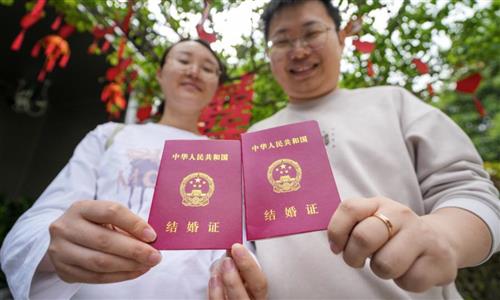
A newly wedded couple poses for a picture at a marriage registration office in Wuhan, Central China’s Hubei Province, on May 20, 2025. Photo: VCG
Tumd Left Banner in Hohhot, North China’s Inner Mongolia Autonomous Region, has recently issued trial advisory standards for handling weddings, funerals, and celebratory events, calling for locals to keep procedures simple, and shorten event durations, limit the scale of gatherings, lower banquet costs, The Paper reported on Wednesday.
Located in central Inner Mongolia, Tumd Left Banner has a population of 370,000.
The trial advisory, issued on August 15, proposed the standards to streamline and simplify the local wedding and funeral procedures while respecting traditional culture and essential customs. The standards call for canceling or reducing the practice of hosting large-scale banquets, simplifying ceremonies, and gradually replacing outdated customs with new, modern approaches.
The trial advisory standards call for strictly controlling the number and the scope of banquet guests at weddings and funerals.
For other matters such as wedding vehicles, band performances, fireworks, and giving or receiving wreaths, the principle of frugality should be followed – use less if possible, avoid if unnecessary, and prohibit if feasible – with the aim of gradually reducing or abolishing these practices.
The trial advisory standards also call for firmly correcting and stopping unhealthy practices such as uncivilized wedding pranks, exorbitant bride prices, excessive cash gift, and ostentatious displays so that traditional customs can return to their true essence.
In particular, the standards ban arranged or commercial marriages and other practices that interfere with the freedom of marriage.
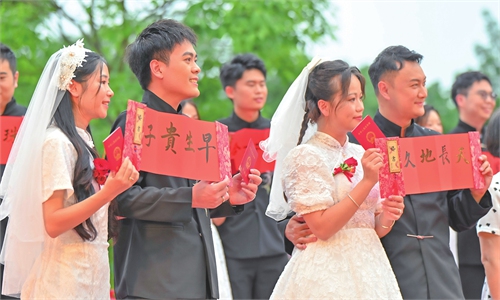
New forms of wedding ceremonies, such as group weddings, charity weddings, and travel weddings are encouraged.
The standards also recommend capping bride prices at 100,000 yuan ($13,930), urge abandoning the practices such as borrowing for weddings, especially the move of placing the financial burden on parents or family members. The standards also suggested on frugal expenses on the wedding banquets, detailing the costs of drinks, fruits and cigarettes consumed at the banquets.
For funerals, the standards call for narrowing their scope, shortening their duration, prohibiting memorial activities that disturb others, and eliminating safety hazards.
The standards also stipulate that funeral meals should follow the principle of frugality, with buffet-style arrangements encouraged to reduce food waste. The standards also outline limits on the number of dishes, drinks, and other items.
Global Times
RELATED ARTICLES