Photo: VCG
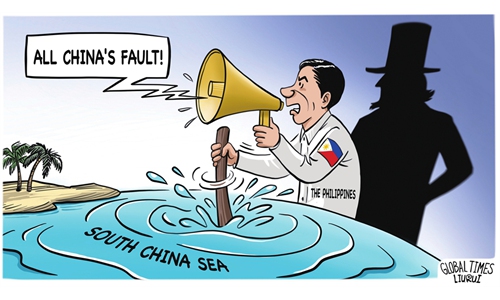
Regional observers are closely watching Manila's approach to sensitive China-related issues as the Philippines prepares to "take the helm and chair ASEAN in 2026." ASEAN faces ongoing challenges, notably the South China Sea issue and increasing great-power rivalry, but it also holds significant opportunities for deeper economic integration and strengthened regional unity. A constructive, balanced approach by Manila would benefit both the Philippines and ASEAN, whereas a confrontational stance could risk regional stability.
Taking on ASEAN chairmanship will place the Philippines at the forefront of addressing complex regional challenges. Foremost among these is the South China Sea dispute, which has seen heightened tensions between Manila and Beijing in recent years. President Ferdinand Marcos Jr has committed to pushing for a finalized and binding code of conduct (COC) in the South China Sea during the Philippines' chairmanship, emphasizing its critical role in preventing maritime incidents and maintaining regional stability. This goal aligns closely with longstanding ASEAN and Chinese commitments, with both sides indicating strong political determination to complete a binding COC by 2026.
Another significant challenge facing ASEAN under Philippines' chairmanship is how to navigate the complex dynamics of great-power rivalry. Historically aligned with the US, Manila has recently strengthened its defense cooperation with Washington through expanded joint military exercises and greater US access to bases, largely driven by so-called concerns over the South China Sea. These actions risk drawing ASEAN into the broader China-US strategic competition.
ASEAN members uphold "ASEAN centrality," maintaining neutrality to avoid alignment with major powers. The Philippines must similarly champion ASEAN's neutrality and consensus-driven principles, ensuring it remains a neutral platform for regional dialogue and cooperation rather than a stage for geopolitical rivalry.
Economic cooperation should remain a key priority, as China has been ASEAN's largest trading partner since 2009. The ASEAN-China Free Trade Area 3.0 agreement, set to be signed later this year, offers avenues for further economic collaboration. The Philippines should enhance this momentum by promoting trade and investment initiatives while simultaneously addressing disputes in a reasonable and pragmatic manner.
What are the risks of a confrontational approach by Manila? Attempts to leverage ASEAN platforms against China or "internationalize" the South China Sea issue risk undermining ASEAN unity. For example, Manila reportedly suggested in 2024 an informal proposal for a separate South China Sea code of conduct excluding China, an idea that regional media indicated was met with opposition from ASEAN neighbors such as Malaysia and Vietnam. Indeed, no other ASEAN member supports Manila's aggressive rhetoric toward Beijing, highlighting widespread regional discomfort with confrontational tactics.
Economically, escalating tensions with China would carry significant costs. China remains the Philippines' largest trading partner, a vital investor, and a source of tourism for the region. Heightened hostility could negatively impact trade, investment, and tourism, damaging both the Philippine economy and broader regional growth prospects. Stability in the South China Sea is critical for investor confidence and economic prosperity across Southeast Asia; conflict or prolonged tensions could disrupt regional trade and economic recovery efforts, adversely affecting critical initiatives like the Regional Comprehensive Economic Partnership.
Manila's confrontational or politicized handling of China-related issues risks lasting damage to ASEAN's cherished peace, stability, and neutrality. Such tactics neither resolve maritime disputes nor influence China's stance.
Recent experience demonstrates that aggressive alignment with external powers only weakens ASEAN unity without altering Beijing's policies. Despite these challenges, China and ASEAN share a sincere desire for Manila to succeed in fostering regional peace and prosperity.
Malaysia's 2025 ASEAN chairmanship offers a compelling model. Malaysia prioritized confidence-building, diplomacy, and open dialogue, notably maintaining channels for the COC negotiations and firmly rejecting exclusionary initiatives. It's hoped that the Philippines can carry forward this legacy of constructive regionalism. China consistently supports ASEAN centrality and successful chairmanship rotations. The Philippines is expected to have a smooth and successful tenure that fosters a stable and prosperous Southeast Asia benefiting all. If the Philippines makes progress on the COC, developed through consensus, it would represent a historic legacy. Even without immediate breakthroughs, maintaining a calm diplomatic negotiation environment will significantly strengthen regional stability.
The Philippines' ASEAN chairmanship should catalyze cooperation rather than conflict. Manila must commit to maintaining ASEAN's trajectory toward unity and shared prosperity at this pivotal crossroads.
The author is an associate professor and assistant director at the Collaborative Innovation Center of South China Sea Studies at Nanjing University. opinion@globaltimes.com.cn
RELATED ARTICLES