Young Westerners go gaga for TCM including Pei Pa Koa and gua sha
Old medicine and therapies, new vitality and fans
By Shen Sheng and Published: Aug 21, 2025 10:32 PM
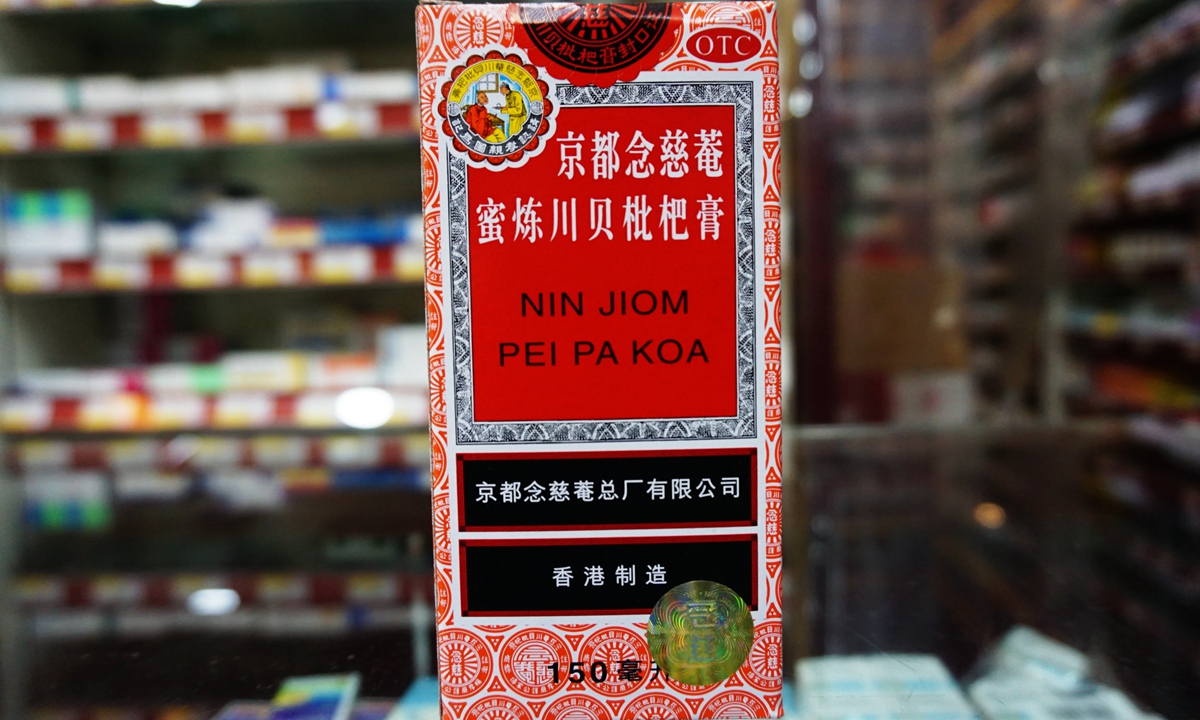
Nin Jiom Pei Pa Koa Photo: VCG
Traditional Chinese medicines have been steadily gaining interest in the West, including Pei Pa Koa and gua sha. The Economist reported recently that sales for Pei Pa Koa, a sweet Chinese cough syrup, rose by almost a third between 2019 and 2024, reaching 635 million yuan ($88 million) last year.
TCM finds Western enthusiasts
Those coughing up for the syrup are not just in China, but increasingly in the West, too, according to the report titled "A 400-Year-Old Chinese Cough Syrup is Winning Over Westerners."
The enthusiasm has been particularly infectious among young people. Worldwide Google searches for Pei Pa Koa saw a 25 percent increase last year; tutorials on how to administer it have racked up millions of views on TikTok, per the report.
Western celebrities have espoused Pei Pa Koa's benefits: Zayn Malik, a singer for One Direction, a now-disbanded pop group, has praised the cough syrup's ability to soothe scratchy vocal cords, as have Cynthia Erivo and Jonathan Bailey, two actors in last year's film adaptation of the musical Wicked, the Economist reported.
To verify its popularity, Global Times reporters interviewed some foreigners and conducted social media searches, observing extensive discussions on X platform about Pei Pa Koa and its various consumption methods.
One user recommended their "perfect relaxing tea for meditation and sleep," sharing the recipe: 1 cup of hot water, 1 tea bag of jasmine tea, 1 tablespoon of Nin Jiom Pei Pa Koa (which contains loquat leaf, menthol, licorice roots, honey, ginger and other Chinese herbs) and 1-2 teaspoons of sugar (optional).
Another user exclaimed, "Now I drink more Nin Jiom Pei Pa Koa than coffee. It's pretty rare to catch a cold in summer!" she noted.
A user named Marianne Bray shared that while watching "Billy and Dom Eat the World," in Episode 1, where they visit London's Chinatown to get some Nin Jiom Pei Pa Koa for Bill's sore throat, she felt both amused and excited that they had discovered the go-to remedy for a sore throat.
Li Huadong, the director of the tuina department at the Affiliated Hospital of Shandong University of Traditional Chinese Medicine, provided insights into the key ingredients of Nin Jiom Pei Pa Koa with the Global Times on Tuesday. He noted that Chuanbei (Fritillaria bulb) helps resolve heat phlegm and moistens the lungs, while loquat leaves clear phlegm and detoxify the body.
"Platycodon (bellflower root) promotes respiration and facilitates phlegm expulsion, and menthol soothes the throat and alleviates pain," Li added.
However, Li also cautioned that if patients are coughing up white phlegm and feel cold, it is advisable to consider using a different remedy.
In addition to its popularity in online discussions, the sales volume of Nin Jiom Pei Pa Koa remains high. Enrico, an Italian resident, shared with the Global Times that this traditional Chinese remedy has gained significant traction in Italy, with one online store selling nearly 2,000 units in just one month.
"Chinese medicine and massage therapies are becoming increasingly common in Italy," Enrico observed, "we are gradually embracing treatments like acupuncture and traditional Chinese medicine."
Rising interest in ancient therapies
This is also mentioned in The Economist's report, where it states, "Ancient Chinese healing techniques, such as gua sha (rubbing coloured rocks on your face) are also all the rage among young Westerners, with social-media tutorials likewise accruing vast numbers of views."
In response, Li explained that gua sha is not only effective for facial beauty. Gua sha is a traditional Chinese external therapeutic method that helps to regulate qi, promote blood circulation, alleviate stagnation, relieve muscle tension and expel toxins.
Li further noted that gua sha has been widely applied in various medical fields, including internal medicine, external medicine, gynecology and pediatrics, as well as in beauty and health care. It is particularly effective for painful conditions and degenerative diseases of the bones and joints, such as cervical spondylosis and shoulder periarthritis.
Markus Schmidt and his friend have already experienced the magic of gua sha. Markus, a long-time resident of Shanghai, welcomed his visiting German friend with a unique plan. Instead of the usual tourist attractions, he chose to take him to a local Chinese massage parlor, where they enjoyed an authentic gua sha experience.
The masseuse, skilled in the art of relaxation, began with a gentle neck massage to calm the guest. Then, unexpectedly, a sharp cracking sound echoed through the room as the therapist manipulated the neck. After the initial shock, Markus' friend was pleasantly surprised to find that he no longer felt pain in his neck.
Markus, an avid patron of Chinese massage parlors, also swears by cupping therapy. "Cupping is highly therapeutic," he explained. "If you feel unwell, cupping will certainly prevent the illness from developing."
Li, as a professional, recognizes this point. He stated that for respiratory conditions such as colds, fevers and coughing, gua sha can be effectively used in combination with cupping therapy in clinical practice.
Upon being informed that this is an English report, Li stressed that, due to cultural differences, Westerners should understand that traditional Chinese therapies should be used alongside medical advice for optimal effectiveness.
He carefully provided examples in the hope that this brief report would help more people understand these therapies.
"Gua sha and cupping are contraindicated for individuals with bleeding tendencies, severe skin allergies, extreme weakness and serious heart failure," he noted. Additionally, gua sha should not be performed over superficial large blood vessels. He advised avoiding cold water baths for 30 minutes after treatment, as well as direct cold wind in the summer and exposure to cold in the winter.
"Medicine knows no borders. As traditional Chinese medicine spreads internationally, I hope it will continue to grow and make significant contributions to global health and wellness," said Li.
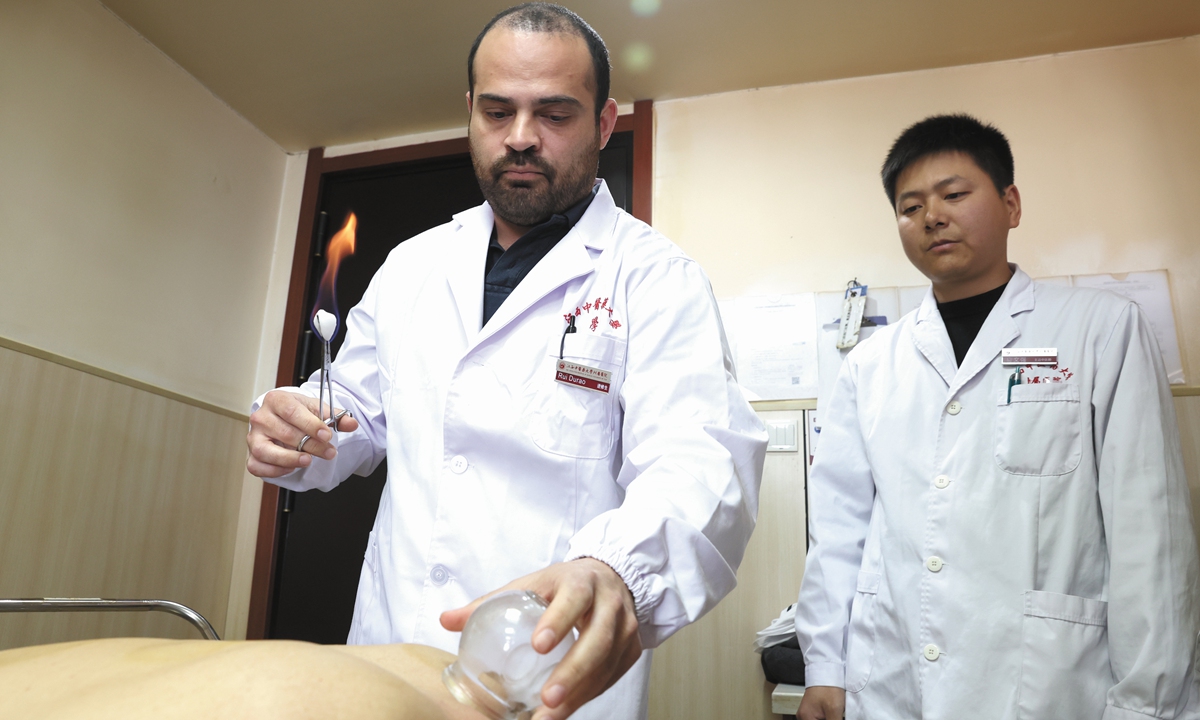
A Portuguese doctor of traditional Chinese medicine (left) learns cupping therapy at the Affiliated Hospital of Jiangxi University of Traditional Chinese Medicine in Nanchang, East China's Jiangxi Province, April 2, 2025. Photo: VCG
RELATED ARTICLES