In the face of crises, is the EU becoming increasingly ‘perfunctory’ in its responses?
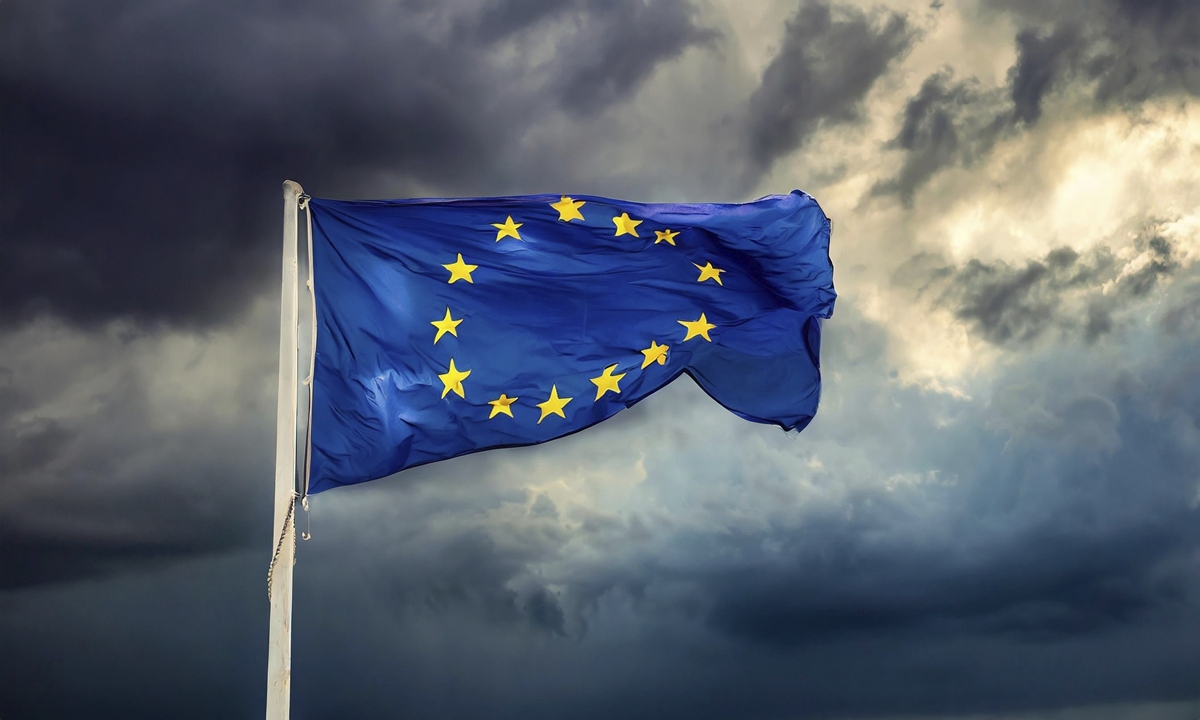
EU flag. Photo: VCG
Recently, the EU's faltering response to the Ukraine crisis sparked much discussion. In fact, even before Ukraine, the EU had already exposed its weakening ability to cope with crises such as the eurozone debt crisis, the refugee crisis and Brexit crisis. In the past, crises often served as catalysts for collective EU action; but today, they have become amplifiers of internal divisions.In recent years, the EU has adopted what might be called a "perfunctory response" model to crises. Policymakers justify their choices simply by claiming there was "no alternative." According to Zheng Chunrong, Director of the Center for German Studies at Tongji University, this strategy reflects a growing inertia in Europe's thinking: Decision-makers tend to adopt policies that are more aligned with public opinion at the moment, while avoiding a comprehensive weighing of options.
The prevailing impression is that Europe is now populated more by "politicians" than by true "statesmen" - let alone "strategists." Of course, times have changed, and even if such strategists still existed, it is questionable how much influence they could exert. In short, the EU is experiencing a certain degree of "leadership vacuum."
At the same time, the EU's internal consensus on policy is disintegrating. One example is the shrinking of the political centrists and the rise of right-wing populist and far-right forces. This shift makes it increasingly difficult to forge consensus within the EU on solutions to pressing problems.
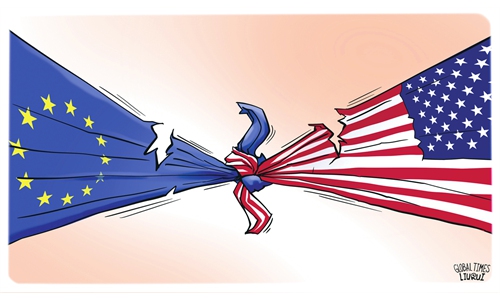
What's worse is the EU's reluctance to leave its "comfort zone." When confronted with challenges, many European politicians prefer to act according to entrenched patterns of thinking. This is especially visible in the EU's recent pursuit of strategic autonomy. Although European leaders have recognized the need for strategic autonomy, many still choose to appease and retain the US through compromise and concessions, so that they can remain in the "comfort zone" of being protected by the US.
Zheng also observes that if this inertia of thought continues to spread, it will permeate every aspect of EU internal and external policymaking. Some of its effects are already visible. For example, certain EU member states, benefiting from their traditional industrial advantages, have long enjoyed sizable shares of international markets. Yet due to neglect of structural transformation and investment in industrial innovation, they are now falling behind in global competition. In response, driven by this very inertia of thought, some European politicians have sought to place the blame on other countries.
RELATED ARTICLES