Foreign diplomats hail Chinese technology as beacon of win-win collaboration at China-Arab States Expo
China's tech helps boost industries in Global South: diplomats
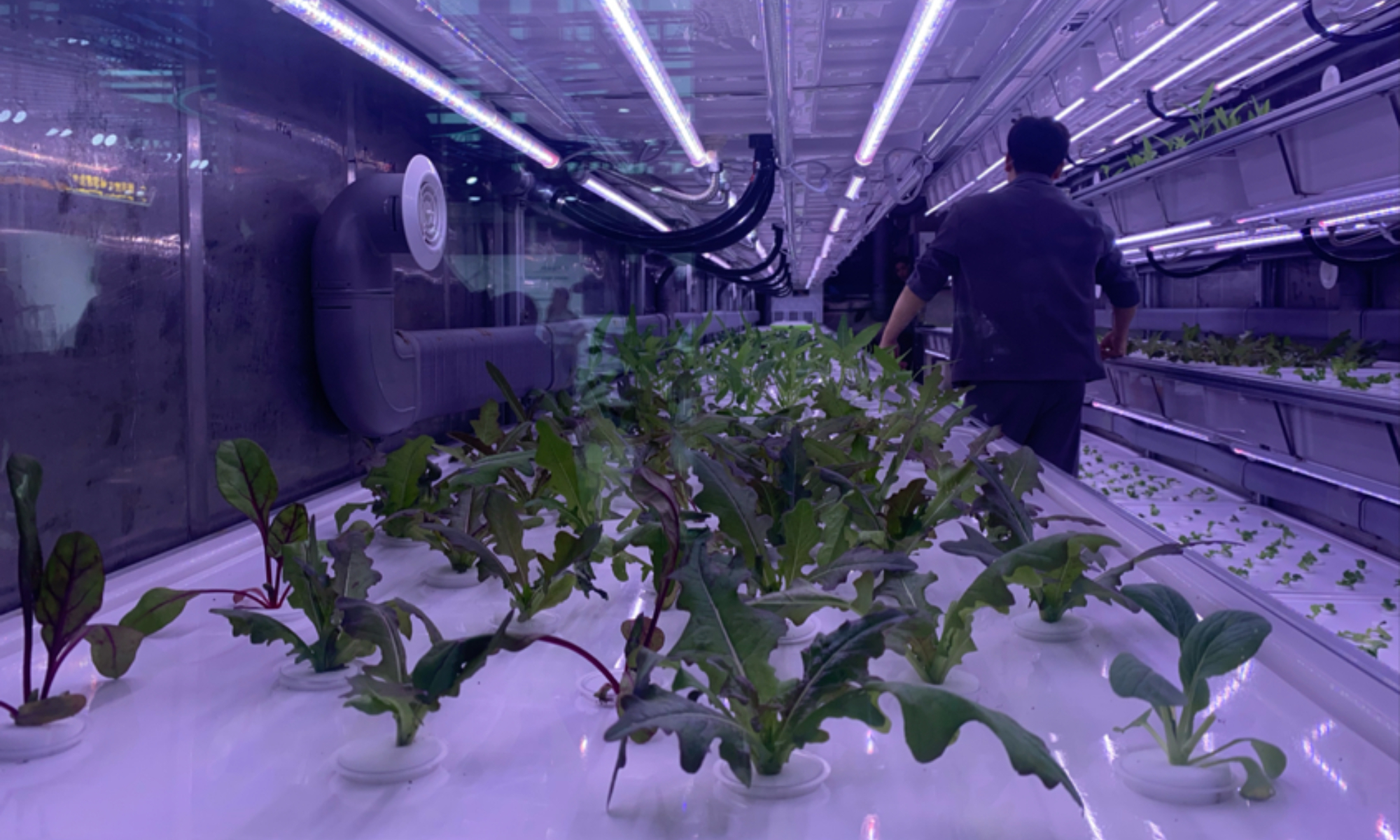
A view of smart agriculture on display during the 7th China-Arab States Expo held in Northwest China's Ningxia Hui Autonomous Region, on August 29, 2025. Photo: Zhang Weilan/GT
Chinese technology is playing a significant role in reshaping industries across Global South, influencing various sectors such as telecommunications, infrastructure, energy, agriculture, and finance, Global Times reporters learned from several foreign diplomats attending the 7th China-Arab States Expo held last week in Northwest China's Ningxia Hui Autonomous Region.
"Mauritania and China have extensive cooperation in agricultural planting, including smart agriculture and rice cultivation, and have achieved some success in this area. Cooperation in science and technology is ongoing, and we look forward to reaching further consensus and fostering broader prospects for cooperation with Ningxia," Abdellahi El Vilaly, ambassador of Mauritania to China, told the Global Times during the expo.
He noted that in recent years Mauritania has been advancing smart agriculture, desertification control, infrastructure and clean-energy initiatives in partnership with Chinese companies to drive mutual development.
Vilaly said that Chinese firms are rolling out smart-rice systems and precision-irrigation pilots that have lifted yields by 40 percent in the Senegal River basin in Mauritania. Buoyed by these early gains, both sides are preparing to scale-pairing Mauritania's vast arable land and solar potential with China's advanced seed varieties, sensor networks and green-energy finance.
Vilaly was one of the government officials from several Arab states, as well as some African countries who attended the 7th China-Arab States Expo, running from August 28 to 31, in Yinchuan, Ningxia Hui Autonomous Region. They believe that China's rapid tech progress is the driving force behind Chinese modernization and they also praise Chinese technology for promoting industrial development in their own countries.
From the dessert rice paddies of Mauritania to the AI-powered refineries in Kuwait, from AI-related classrooms of Somalia to a technical team of Ghana, ambassadors and representatives from Global South countries told the Global Times how Chinese technology is serving as an accelerator for local talent cultivation and industrial upgrading.
Impressed by AI
"Kuwait's continuous participation in the expo since 2013 is a microcosm of the close relations between Kuwait and China and the deepening cooperation between China and Arab countries," said Kuwait's Ambassador to China Jasem Ibrahem Alnajem, adding that Kuwait is moving decisively beyond a single-resource economy toward diversified, sustainable growth.
He told the Global Times that he was impressed by the debut of cutting-edge technologies such as low-altitude economics, artificial intelligence (AI), and drones at this year's expo. In addition to the high-tech exhibition area, displays of food, farming, and planting technologies also provided new ideas for the diversification of Kuwait's agriculture.
In the smart meteorology exhibition area, Global Times reporters noticed that several Arab merchants showed great interest in the latest advances in meteorology. "China's meteorological satellite services provide Arab countries with timely disaster alerts and ultra-precise weather forecasts - powerful tools that underpin agricultural growth," said Alnajem.
In addition to the agricultural sector, the ambassador noted that Chinese firms are key partners in Kuwait's push to build smart cities, modern ports, 5G networks and renewable-energy infrastructure.
"Our aspirations in economic development, trade, science, technology and people's livelihoods align closely with China's," the ambassador said. "Together, the possibilities are boundless."
This expo showcased "AI+life" scenarios, including AI robotics services, brain-computer interface devices, and intelligent manufacturing. These tangible and experiential technology displays allowed Arab countries to more directly experience China's cutting-edge AI achievements, sparking their interest and confidence in collaborating with China, Wang Guangda, secretary-general of the China-Arab Research Center on Reform and Development at Shanghai International Studies University, told the Global Times.
Arab countries, particularly those in the Gulf Cooperation Council, place great importance on AI development, while China possesses an edge in AI algorithms, application development, and talent training which has created opportunities for future collaboration, Wang added.
China is at the forefront of technological innovation, particularly in telecommunications, digital finance, and AI. Somalia stands to benefit immensely from strategic collaborations in these areas, Hodan Osman Abdi, Somali ambassador to China, told the Global Times on the sidelines of the expo.
Access to affordable and advanced Chinese technology can accelerate Somali digital transformation, improving connectivity, facilitating e-commerce, and enhancing public service delivery through digital platforms. This could also involve training Somali youth in emerging technologies, preparing them for the jobs of the future, Hodan Osman Abdi said.
In terms of talent exchange, China boasts extensive experience in higher education and vocational skill training, which Somalia faces significant demand for. Many Somali students have received Chinese scholarships, with the majority studying engineering, AI, and agricultural sciences in Chinese top universities, she said.
During the interview, the ambassador also mentioned a new high-level biometric engineering program, jointly launched in April this year by Somalian and Chinese universities, which aims to equip Somali youth with cutting-edge skills in AI.
Organized by Shenzhen Polytechnic University and the Southern University of Science and Technology in China, in collaboration with Somali Jamhuuriya University and Somali National University, the program is designed to strengthen the capacity and promote educational cooperation between the two countries, according to Goobjoog Media Group.
"This initiative is not just about technology, it's about empowering the next generation of Somali engineers to be globally competitive," Hodan Osman Abdi said.
Technology sharing
As part of the efforts to promote "technology for good" through international cooperation, the United Nations Industrial Development Organization (UNIDO) and the Chinese government launched the fourth phase of their South-South industrial cooperation center in June. The new phase aims to accelerate technology transfer and promote sustainable industrial development across Global South. It focuses on green technology, digital transformation, and building inclusive, resilient supply chains to support the 2030 Sustainable Development Agenda.
"Technology for good" of China is not a slogan but has become daily realities for farmers, students and entrepreneurs back home, said the Chinese expert.
Unlike the Western model, China's model offers Arab countries lasting development opportunities through open technology sharing, hands-on cooperation, targeted skills transfer, and access to the vast Chinese market. According to Abdi, Chinese technology brings numerous development opportunities across various sectors. China's technology, market, and capabilities have helped transform Somalia's resources into tangible wealth.
This is echoed by Mahama Ayariga, a special envoy of President of Ghana. "China is helping developing countries help themselves," Ayariga said. "This partnership is based on mutual respect, not dependency." For instance, Chinese enterprises have invested in sectors such as infrastructure, manufacturing, mining, aviation, green energy and oil refining in Ghana, creating substantial employment opportunities while advancing local industrialization, he said.
On August 29, an agricultural forum during the 7th China-Arab States Expo concluded with the signing of 66 agreements for agricultural investment, trade, and cooperation projects, totaling 7.843 billion yuan ($1.1 billion). The deals are expected to deepen multilateral and bilateral agricultural exchanges and cooperation with the Belt and Road Initiative partner countries, according to the organizers.
The meeting called for leveraging agricultural technology transfer as a bridge and focus on capacity building to promote exchanges and cooperation in the agricultural sector, strengthen the sharing of experiences and technology, and promote best practices, so as to advance the modernization of agriculture in both China and Arab states.
Agricultural technology is a global cornerstone for ensuring food security and eradicating poverty, a vital link connecting urban and rural development, and an engine for enhancing people's well-being, Wang said, adding that Chinese firms are also making strides in agricultural technology, providing innovative solutions such as precision farming tools, drones, and smart irrigation systems.
In terms of agricultural cooperation, Ayariga said Ghana will probably dispatch a high-level technical team to Ningxia in the coming months to pilot the transfer of high-yield rice, soybean and mechanized-farming technologies to Ghana's grain planting regions.
Technology transfer can indeed be seen as a vital bridge that facilitates the flow of knowledge and innovation from research to real-world applications, driving economic growth and societal advancement in developing countries, especially Global South countries, Wang said.
RELATED ARTICLES