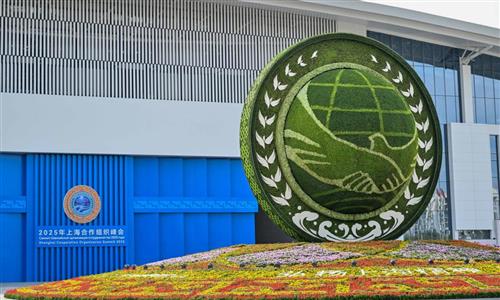
SCO's role as an economic facilitator, stimulator, and integrator is expanding: Pakistani scholar
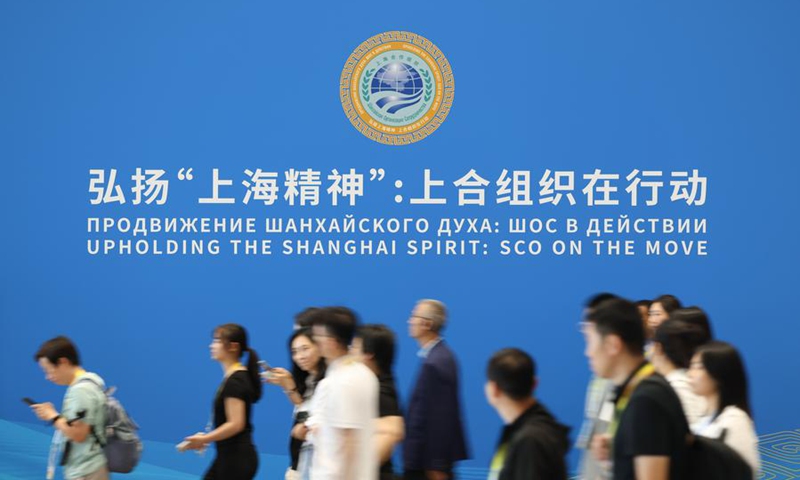
Media workers arrive for the Shanghai Cooperation Organization (SCO) Summit 2025 in Tianjin, north China, Aug. 28, 2025. Photo: Xinhua
Editor's Note:
Shanghai Cooperation Organization (SCO) Summit 2025 will be held in Tianjin from August 31 to September 1. With leaders from more than 20 countries and heads of 10 international organizations in attendance, this summit will be the largest in the SCO's history.
In a recent interview with Global Times (GT) reporter Qian Jiayin, Dr Mehmood Ul Hassan Khan (Khan), executive director at the Center for South Asia and International Studies, shared his viewpoints, noting that the SCO provides an important model for maintaining peace and stability in other regions, as well as for the international community as a whole.
GT: Since its establishment in June 2001, the SCO's "circle of friends" has continuously expanded. What do you believe the SCO's growing influence signifies for the global governance system, regional security and economic development?
Khan: According to reports, the combined GDP of SCO members has reached about $24.6 trillion, accounting for around 23 percent of global GDP. In 2024, the total trade volume between China and other SCO member states amounted to 3.65 trillion yuan ($512.4 billion), 36.3 times the level recorded when the organization was established. Thus, economically, the SCO is gaining momentum.
It seems that the SCO's role as an economic facilitator, stimulator and integrator is expanding, vividly reflecting its increasing significance in socio-economic integration and trans-regional connectivity via the China-proposed Belt and Road Initiative (BRI). This is commendable; however, its role in regional security and counter-terrorism could be further enhanced through coordinated efforts, and the formation of a common security shield or forum may be a giant step in the right direction.
It is a positive sign that the SCO has successfully emerged as a driving force in shaping regional stability and global cooperation, with China playing a central role in advancing its development and goals by fostering friendly partnerships of mutual trust. The SCO's evolution underscores a strong commitment to enhancing peace, security and mutual prosperity among its member states and beyond.
GT: Pakistan became a full member of the SCO in 2017. Since then, what tangible benefits and developmental outcomes has Pakistan experienced within the SCO framework?
Khan: Pakistan has become an effective and important member of the SCO. Pakistan's socio-economic drive with all the member countries of the SCO from Central Asia has been immensely increased, paving its dividends in terms of trade, investment, industrial cooperation, services exports, energy cooperation, joint ventures, people-to-people contacts and, last but not least, enhanced political and diplomatic understanding with each other.
Pakistan's national capacity of fighting against terrorism has been further modernized and sustained because of the Regional Anti-Terrorist Structure of SCO, and formation of trilateral dialogue among Pakistan, China and Afghanistan.
According to reports, Pakistan's foreign trade, remittances, agricultural exports, and energy cooperation have been rising since its inclusion in the SCO. The BRI flagship projects, such as the China-Palistan Economic Corridor and Gwadar Port, are poised to become connecting hubs for SCO member countries.
GT: You have previously said that, "Through 24 years of relentless exploration, the SCO has found a new path for cooperation that differs from the Cold War era." In your view, what are the key differences between the SCO and certain Western-led organizations?
Khan: There has been a drastic difference in the composition, nature, status, expansion and further development of the SCO, clearly distinguishing it from the Western style of socio-economic partnership, geopolitical alliances and, last but not least, geostrategic priorities.
Remarkably, the SCO's constructive neutrality, positivity, productivity and meaningful participation in regional e-commerce, digitalization, modernization and social development have been both impressive and indispensable, in stark contrast to the Western style of "carrot and stick" diplomacy, cold war mentality, conditional economic aid, political compulsion and geostrategic preferential arrangements. It has been an instrumental force for global shared prosperity, a regional economic stabilizer, an industrial stimulator and a champion of peace - qualities that dwarf any Western organization, including NATO.
The SCO emphasizes economic security, social development, socio-economic integration and green transformation. In doing so, it safeguards regional stability, creates a favorable environment for the economic and social development of its member states, ensures that their people can live and work in peace and contentment, and provides an important model for maintaining peace and stability in other regions, as well as in the international community as a whole.
GT: In the current global landscape, which faces multiple challenges, what role can the SCO play in maintaining the multilateral system and improving the international order?
Khan: I have been a staunch supporter of the SCO's expanded role in regional security and development, particularly through joint efforts to establish a development bank, and promote FDI to cater to the requirements of community-based socio-economic development.
Additionally, the SCO may achieve its desired goals of strengthening the multilateral system and improving the international order by enhancing its role in green transformation. These efforts would further accelerate regionalism, economic globalization and international cooperation, while fostering friendly partnerships built on mutual trust.
Furthermore, the concept of SCO Plus, along with the sharing of China's technological innovation models with member states, would further consolidate economic stability, sustainability, qualitative industrialization and modernization within member countries.
GT: Some Western media outlets and observers tend to describe the SCO's pursuit of new multilateral cooperation mechanisms from a West-centered perspective. What's your take on this view?
Khan: It is totally false, fabricated propaganda with no substance, but rather deep and dark shadows of political hype, economic self-interest and a desire to maintain a lion's share in global governance, especially in light of the SCO's increasing role in socio-economic development, industrial cooperation, and enhanced political and diplomatic understanding worldwide.
The SCO always supports constructive competition and cooperation, never provokes conflict or confrontation, and consistently plays an important role in peaceful conflict resolution. Thus, the SCO is not competing with or acting against the West and the Global North. However, many SCO member states appear to be at a critical historical stage of development and transformation. They must achieve progress in areas such as economic model transformation, innovation in social governance, national cultural renewal, economic security, joint anti-terrorism mechanisms and common security frameworks - none of which should be interpreted as a threat to the West or to any of its organizations.
RELATED ARTICLES