‘Nationwide registration access’ policy fuels Qixi Festival marriage boom in multiple regions in China
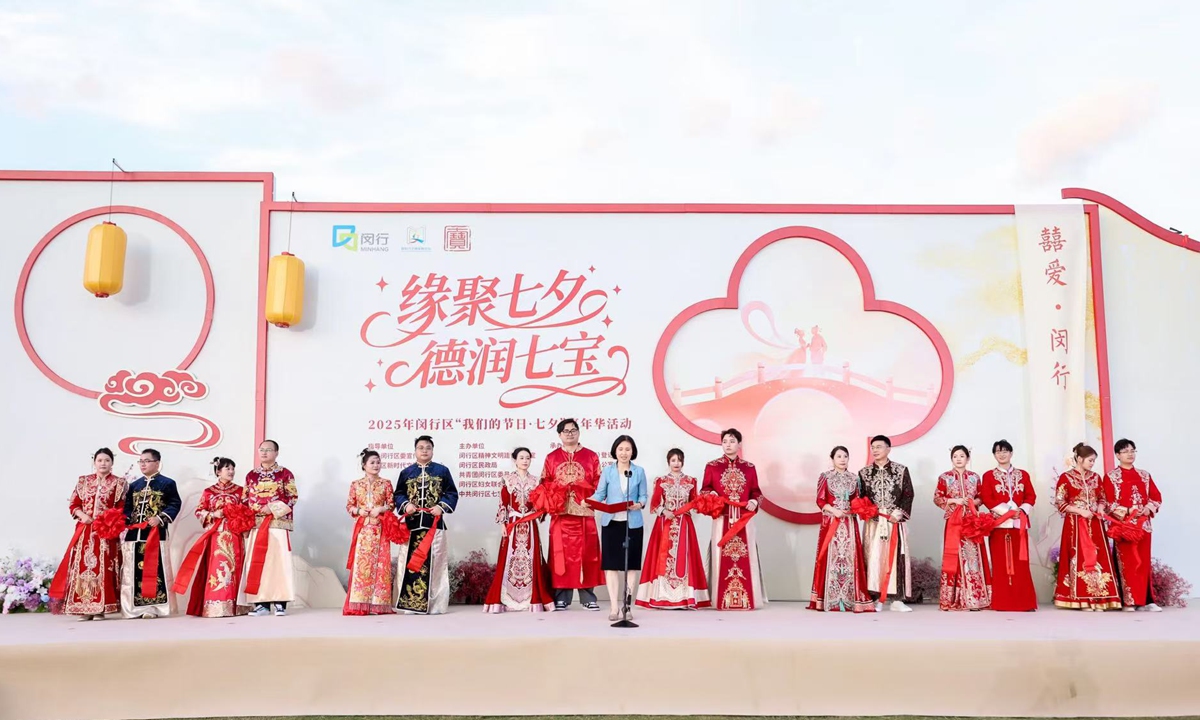
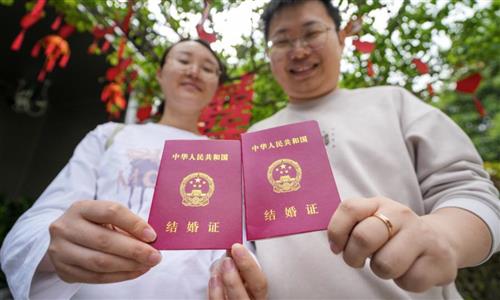
Couples registered marriage on Qixi Festival. Photo: screenshot from website of Minhang District government, Shanghai
On August 29, 2025, which coincided with China's Qixi Festival (Chinese Valentine's Day), and marked the first Qixi Festival following the implementation of "nationwide access" for marriage registration, many regions across China saw a notable peak in marriage registrations.
As of August 29, a total of 10,558 marriage registrations were processed across Guangdong Province, including 2,452 under the cross-provincial registration policy.
Various cities in Guangdong held themed wedding events. Guangzhou hosted a group wedding ceremony at the top of Canton Tower, where 15 couples participated. In Shenzhen's Guangming District, a group wedding was held for Science City builders, featuring a robot officiant, a starry-sky themed vow platform, and cyberpunk-style wedding photos.
In Shanghai, 2,310 couples registered their marriages on August 29, the highest number on Qixi Festival in nearly a decade, including 1,130 inter-provincial registrations from 29 provinces and municipalities.
On the same day,Shanghai's new flagship marriage registration office officially opened. The first 20 couples registered on the 52nd floor of Shanghai Tower, China's tallest skyscraper, with the sky as backdrop and the Huangpu River as witness, capturing their happiness "at the top of the city."
Elsewhere, Southwest China's Guizhou Province recorded 7,796 marriages, including 65 inter-provincial marriages nationwide. East China's Jiangsu Province registered 9,330 marriages, including 1,637 inter-provincial marriages. Northeast of China's Liaoning Province recorded 4,109 marriages — up 178 percent from last Qixi, and held 46 large-scale activities such as group weddings and matchmaking events, according to media reports.
In recent years, China has promoted appropriate-age marriage and childbirth while improving family support systems. Marriage registration has become much more convenient. Since May 10, the revised marriage registration regulation removed geographic restrictions: couples no longer need household registration documents, and marriage registration can be processed anywhere nationwide. This benefits people working outside their registered domicile province, especially in eastern coastal regions, where "nation-wide registration access" made up a large share of this Qixi's registrations.
An economics expert from Xiamen University said that nationwide inter-provincial marriage registration reduces both economic and time costs for non-residents, enhancing their sense of well-being.
Additionally, the policy makes it possible for couples to register marriages while traveling. Many cities and scenic spots have created "new landmarks" for marriage registration, promoting marriage registration tourism. More young couples now choose to register in distant locations, leading to a surge at scenic registration offices for this Qixi Festival, said the expert.
On Qixi Festival, over 300 couples registered at the administrative center in Sayram Lake, Bortala Mongolian Autonomous Prefecture in Xinjiang Uygur Autonomous Region. Staff reported a sharp rise in registrations since the "national-wide registration access" policy began on May 10, according to media reports.
In Jiangsu, scenic-spot registration offices were especially popular. In Suzhou's Gusu District, the Shiquan Street office—symbolizing a "perfect marriage"—saw a rush of couples. In Nanjing, the Xuanwu Lake office, known as the city's most photogenic wedding site, received more than 300 reservations that day, reports said.
Global Times
RELATED ARTICLES