Trump defends remarks on ‘allowing 600,000 Chinese students to study in US’; US law-enforcement agencies urged to align actions with goodwill words
By Published: Sep 01, 2025 05:45 PM Updated: Sep 02, 2025 02:56 AM

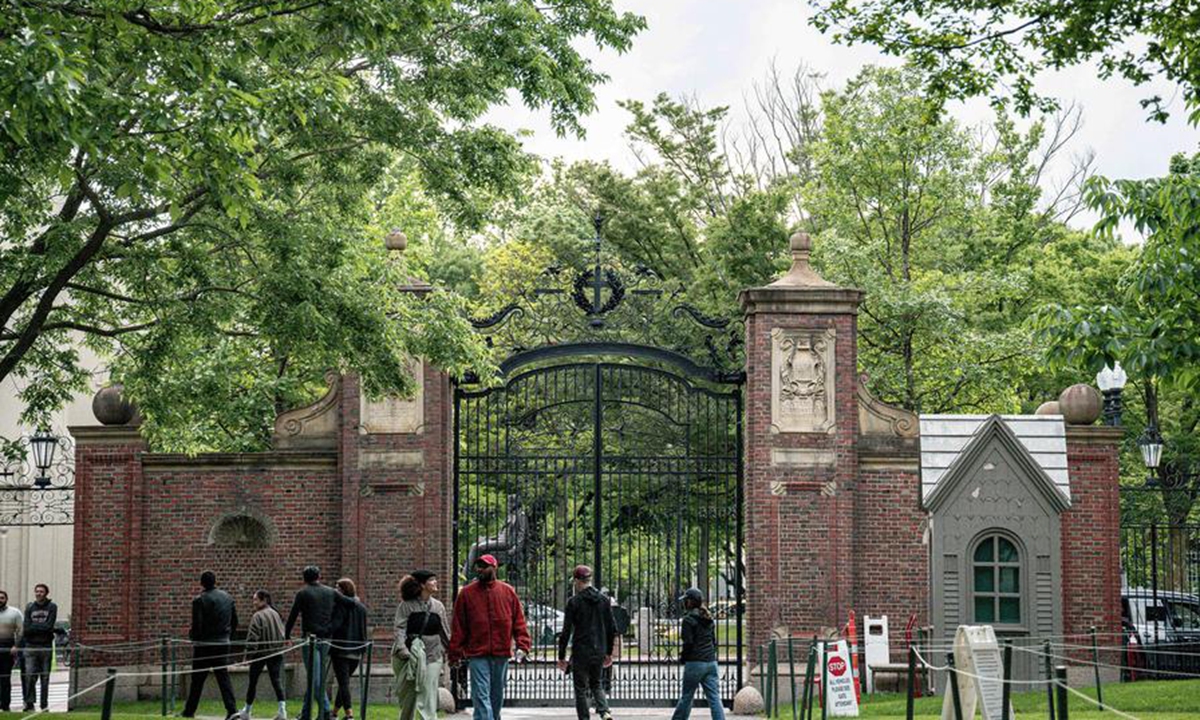
This photo taken on May 24, 2025 shows a view of the Harvard University campus in Cambridge, Massachusetts, the US. Photo: Xinhua
The US President Donald Trump has signaled welcoming Chinese students to study in the US on several occasions recently.
In an interview published Sunday by The Daily Caller, a Washington DC-based conservative news site, Trump defended his previous remarks that allowing Chinese students to study in the US is the "right thing to do" because "it's good to get along with other countries."
Chinese observers said Chinese students, like other international students, are an indispensable part of the US education system and a key component of US service trade exports. The US must align their actions with goodwill remarks of the US leader to foster an actual welcoming environment, or else it will struggle to attract top international talent, including students from China, they warned.
Explaining his stance, Trump told the Daily Caller that it is "very insulting" to tell another country that their students can't come here. Trump added that it would cause "lesser universities" to suffer, and told White House Correspondent Reagan Reese that he didn't want to see Ivy League universities fail, according to the report.
Trump elaborated during the interview that allowing "600,000 over two years" is "good for our system," and claimed that when taking them out, the lesser colleges are the ones going to be affected, but not the top colleges.
When asked if he expected anything in return for allowing Chinese students to still study in the US, Trump replied, "No, no, I don't want anything in return." "I think what we're doing is the right thing to do. It's good to get along with countries, not bad, especially, you know, nuclear-powered countries. I think it's good to get along with countries."
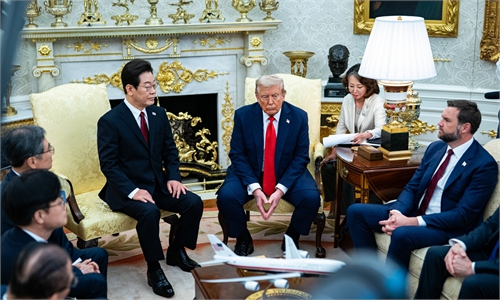
On August 25, during a meeting with the South Korean president, Trump stressed the importance of relationship with China, telling reporters he plans to allow 600,000 students from China into the US, Hill reported.
Commenting on the statement from Trump regarding Chinese students in the US, Chinese Foreign Ministry spokesperson Guo Jiakun said on August 27 that exchanges and cooperation on education help enhance interactions and understanding between people from all countries. We hope the US will act on President Trump's commitment to welcoming Chinese students to study in the country, stop groundlessly harassing, interrogating or repatriating them, and protect their legitimate and lawful rights and interests, Guo said.
The Hill noted on Sunday that Trump's comments marked a shift from earlier in the year, when Secretary of State Marco Rubio said he planned to "aggressively" revoke visas from Chinese students.
Yet just a day before the Daily Caller interview, the Trump administration proposed a new rule on August 27 to curb foreign student visa abuse, according to the US Department of Homeland Security (DHS) website. "New rule will limit the amount of time that foreign students, professors, physicians, and other visa holders are allowed to remain in the US without additional screening and vetting."
"This new proposed rule would end that abuse once and for all by limiting the amount of time certain visa holders are allowed to remain in the US, easing the burden on the federal government to properly oversee foreign students and their history," a DHS spokesperson said.
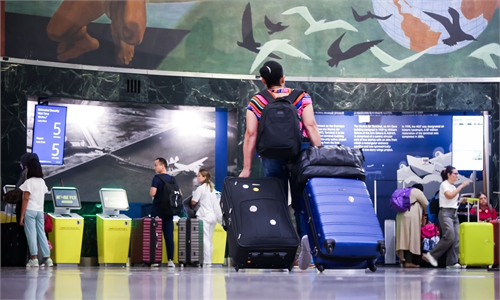
According to the AP on Monday, another student from China, a 22-year-old philosophy major student, was stopped, interrogated and 36 hours later, put on a plane back to China after arriving at a Texas airport this month as he was on his way to study at the University of Houston.
The AP noted that his paperwork was in order and he was going to study humanities — not a tech field that might raise suspicions. He had a full scholarship from the US school and had previously spent a semester at Cornell University for an exchange program with no issues, per the report.
The Chinese Embassy, according to the AP, said it has received reports involving more than 10 Chinese students and scholars being interrogated, harassed, and deported when entering the US.
"The US has frequently carried out discriminatory, politically driven and selective law enforcement against Chinese students and scholars, inflicting physical and mental harm, financial losses, and disruptions to their studies and careers," the Chinese Embassy said in a statement.
They were deported under the pretext of "so-called 'visa issues' or 'might endanger US national security,'" the embassy said.
Chinese students, along with other international students, constitute an indispensable "must-have" group for the US education system. They not only make tangible contributions to the US education sector but also serve as a crucial component of the US service trade exports Lü Xiang, a research fellow at the Chinese Academy of Social Sciences, told the Global Times on Monday.
Due to the anti-China rhetoric that has been continuously disseminated by the US government, Congress, and media over the years, some US law enforcement agencies continue to exhibit significant institutional inertia when handling relevant matters. US government and law-enforcement officers often show unwarranted sensitivity and hostility toward international students from China, an attitude that is inconsistent with its actual market needs and in particular, with goodwill remarks from its leader, the expert said.
It is important to stress that Chinese students studying in the US is not a "favor" bestowed by the US. In fact, only when the US demonstrates a friendly stance and fosters a welcoming environment for exchange can it continue to attract outstanding international students from around the world, including those from China, he said.
RELATED ARTICLES