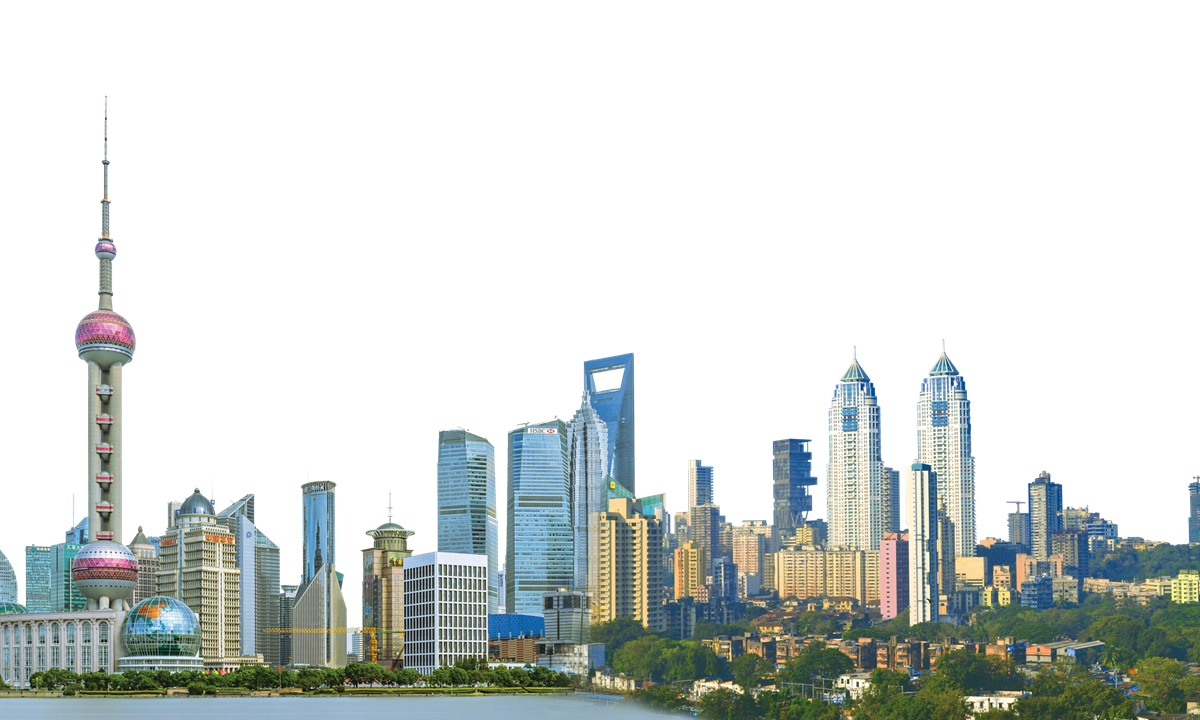
Views of Shanghai, China (left), and Mumbai, India. Photos: VCG
Editor's Note:
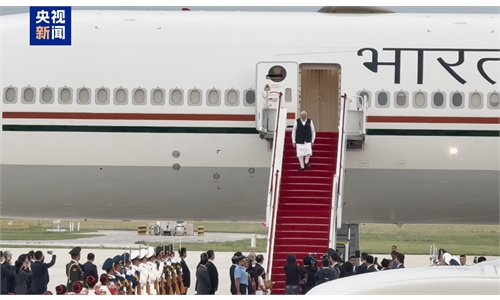
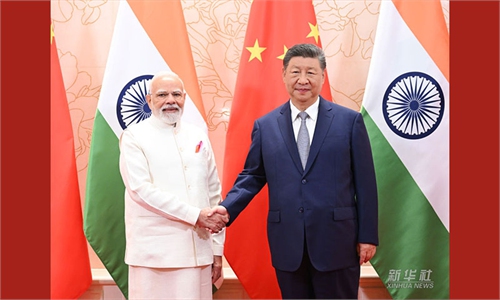
Chinese President Xi Jinping and Indian Prime Minister Narendra Modi met in Tianjin on Sunday, ahead of a summit of the Shanghai Cooperation Organisation (SCO) in the same city. During the meeting, President Xi said that a "cooperative pas de deux of the dragon and the elephant" should be the right choice for the two countries. In an exclusive interview with Global Times (GT) reporters Xia Wenxin and Liu Xuandi, Aravind Yelery (Yelery), associate professor at Jawaharlal Nehru University, shared his views on the current China-India relationship, emphasizing the need for both sides to foster consistent and incremental engagement.
GT: How would you assess the significance of Modi's ongoing visit to China?
Yelery: Modi's visit to China is certainly a big development. Both countries attach importance to summit-level meetings between the two leaders. As is evident, whenever the leaders of both countries have met, there is momentum in building long-lasting perceptions and shaping future engagements. It was their meeting in Kazan, Russia, last year that led India and China to engage and look forward to resolving contentious issues. Modi's current visit will be broader in scope and grander in aspirations. Additionally, the Shanghai Cooperation Organisation (SCO) will host several global leaders, making it one of the prominent platforms for India to reaffirm its commitment to inclusive and globalized engagements.
GT: What role do you believe the latest special representatives meeting on the boundary question played in advancing the two countries' bilateral ties?
Yelery: The Working Mechanism for Consultation and Coordination and the special representatives meetings are key arrangements which have been facilitating more practical dialogues. The recently held special representatives talk, in the context of Modi's visit to China to attend the SCO summit, were crucial to ensuring continuity in engagements. The talks are instrumental in ensuring peace and tranquillity along the borders. For India, the success of the talks also means that both sides can share their concerns over boundary disputes and other broader regional and global issues. Therefore, it is essential that every round of the special representatives meeting concludes with some upward movement.
GT: How do you view the SCO's prospects? What role would you expect India to play within the SCO?
Yelery: The global crisis of health, environment, energy, finances and sustainability has a direct correlation with the performance of the SCO, and likewise organizations globally. China is a key economy and stakeholder in the SCO. Given its central role in influencing these factors, China attracts expectations from the global players. Hence, China's role in shaping the effectiveness of the SCO will be the central focus, given the unfolding global scenarios of uncertainty and contestations. India has been providing crucial assistance in this regard through its role in the New Development Bank (NDB) and the Asian Infrastructure Investment Bank (AIIB), where both countries share a common agenda. India accepts the equitable sharing of stakes in SCO-like multilateral mechanisms and would play a key role in assisting China to fulfil its agenda as the host this year.
GT: How should China and India enhance their cooperation within BRICS and other multilateral platforms?
Yelery: The resilience of global growth lies in the performance of developing economies and the key supportive role played by smaller economies from the Global South. These economies hold key stakes in driving Global South cooperation through multilateralism. India and China are key partners in BRICS, AIIB, and NDB-led initiatives. Along with cooperation, equality will play a significant role in balancing the rise of the Global South, where every country has an equal playing field. Moreover, India and China's collective role in promoting the common denominator of growth should drive their engagement in the Global South. India and China have different views on governance, market access, and opportunities for growth and inclusiveness. If handled well, these differences could actually help pave the way for a broader consensus. However, for that to happen, both countries would need to set examples of success.
GT: To what extent has the US-India tariff disputes influenced India's policy toward China?
Yelery: The US tariffs have posed numerous challenges for the global economy. Not only for India, but also for US' neighboring countries, partners and allies. Under the current US government, the US has been gradually narrowing the scope of its India policy for some time. India's consistent and incremental engagement with China is also not a recent development, and both sides have been escalating their efforts through repeated rounds of talks.
The US approaches are encouraging other global powers to explore greater synergies, as seen in the current context of India-China relations. The US, despite being the world's largest economy, suffers from vulnerabilities that are leading to volatility. The volatility and crises are the prime reasons behind the global power and economic recalibrations. Therefore, the re-organizing of priorities among these countries has direct correlations with US tariffs.
GT: As China and India have agreed to restart direct flights, how would you evaluate the current state of people-to-people exchanges between the two countries?
Yelery: As Asian nations, both India and China have had a track record of vibrant people-to-people interactions. This includes art, music, education and the business sector, as well as common citizens visiting each other for tourism. Indian and Chinese travelers play a significant role in the aviation industry. Travelers from both sides have been waiting for the routes to be opened and are eager for operations to begin as soon as possible. The direct flights will reduce the longer flying hours and the hassles involved. Earlier, before the pandemic, budget airlines also operated various routes, saving travelers from overpriced tickets. The resumption of flights will help connect the larger metropolitan cities on both sides, as well as tier-2 and tier-3 cities.
GT: As a scholar with deep insights into China's economy, how do you think China and India might strengthen cooperation in emerging technological fields?
Yelery: India remains one of the key players in global markets. Whether it is manufacturing, services or the prospects of the value chain, India brings growth and macroeconomic momentum. Green technologies and industrial machinery for the transitioning economy, such as India, hold promise for Chinese market players. Moreover, there are several sectors and product lines for which India has potential in the Chinese market. Accessibility and fair practices for joint engagement would be a key role if both economies wish to build combined resilience in the global market. Electronics, automobiles, automation and transmissions are areas where China has experience, as well as a proven record of adaptability, serving both developed and emerging economies.
RELATED ARTICLES