US pawn shop owner’s journey from donating photo album of Japanese war crimes to upholding truth of history, bridging China-US ties
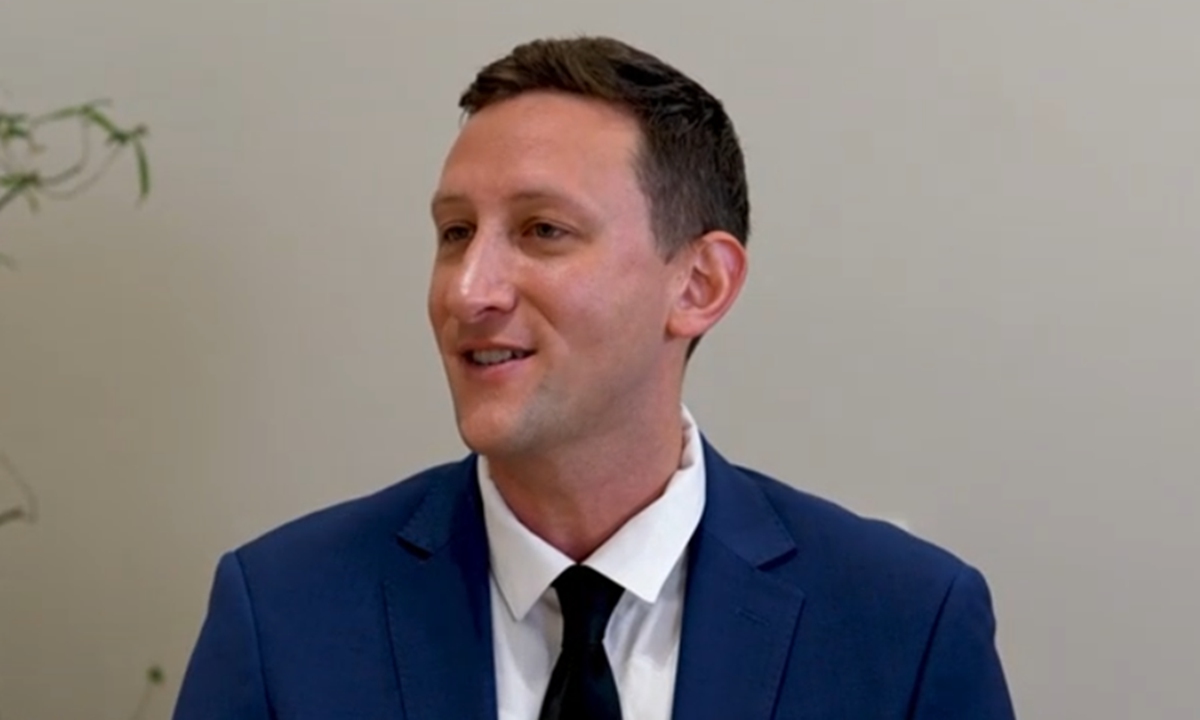
Evan Kail Photo: Li Jieyi/GT
Editor's Note:
Evan Kail, a Minnesota-based pawnshop owner, captured global attention when he donated a rare photo album documenting Japanese war crimes during World War II to China, an act driven by a deep sense of "peace, harmony, and friendship." Known in China as a symbol of moral courage, Kail's gesture earned him a piece of Chinese state gift porcelain. As stated in the letter of appreciation from the Chinese Consulate General in Chicago to Evan, history serves as a mirror for people today, and his donation inspires everyone with a kind heart to safeguard peace. On the occasion of the 80th anniversary of the victory in the Chinese People's War of Resistance Against Japanese Aggression and the World Anti-Fascist War, the Global Times (GT) sat down with Kail to discuss his transformative journey, his commitment to fostering China-US friendship, and his vision for promoting global peace.
GT: Thank you for joining the Global Times for this interview, Mr. Kail. You are famous, a celebrity in China. What does it feel like?
Kail: I don't like that word. I am known for my deeds, my actions, my message, and what I am doing. The fact that people recognize me for doing the right thing is very rewarding. But I'm not here to be a famous celebrity. I'm here to do something good, to use my platform to promote world peace, improve US-China relations, and help educate people about World War II and the terrible events that happened in this country.
GT: When you did what you did [donating a WWII Japanese atrocity album to China], did you imagine this outcome?
Kail: Not even close. I donated the album because it was the right thing to do, because I thought it needed to be done, expecting it to be a simple gesture that would end there. Then I received this diplomatic gift, along with an outpouring of support on Chinese social media. These responses made me think I could do more, though I wasn't sure what that meant at first.
It took two years from the donation to arriving in China. I started learning Mandarin to better understand the country and show respect, ensuring no one thought I was chasing clout. I waited for the dust to settle, and exactly two years later, I came here. The reception was so warm that I realized there's much more I can do beyond the donation and beyond just telling history, especially about the atrocities in Nanjing [East China's Jiangsu Province], to make a broader impact.
GT: From what I understand, your trips reflect what you've been doing. Can you talk about your trips in China? What was the main purpose, and what have been some takeaways so far?
Kail: The initial purpose of my first trip to China last year was to introduce myself to the Chinese people, pay my respects to the people of Nanjing on the national memorial day for the victims of the Nanjing Massacre , and see the country for myself. Seeing things on TV or reading about them is one thing, but being here is entirely different. The original plan was a 30-day visit to introduce myself, pay respects, and express gratitude. It was also part of my healing process, as people in America heavily criticized me for my actions. I'm still accused of staging a hoax or using a war crime to gain fame. Coming here allowed me to experience the positive side.
During my first week here, the overwhelming support and recognition of my actions as an example for world peace showed me this should be my life's work. I should use this attention to build a better message, educate people not just about World War II, but also encourage Americans to visit China. If more Americans came, the very common negativity about China in the US might diminish. I myself believed negative things about China before arriving, due to mass media portrayals, but I was delighted to find they weren't true.
GT: There are many smear attacks against you, yet in China, your actions are genuinely appreciated. How do you emotionally deal with such a stark difference? and what motivated you to donate the war crime album despite the backlash?
Kail: It's a lot for the brain to process. In the US, my story has been buried. But here in China, everyone knows me, my actions, and my pure intentions. Coming to China has been part of my healing journey, and the warm, overwhelming welcome has meant a lot to me.
I decided to donate the album to China the day I got it, knowing it belonged to their history. My parents raised me to follow a moral compass—do what's right, no matter the cost. Donating was the right thing, and I don't regret it.
GT: From what I've read, World War II isn't a mainstream topic in media coverage in the US. How did you get interested in the history, and how did you come across the photo album in the first place?
Kail: My grandfather served in the Pacific, mainly in the Philippines, fighting the Japanese. Through his war stories, I learned about the brutality of the Japanese war machine and how Americans fought to stop fascism. This sparked an interest in Japanese society and culture through Japanese cartoons on American TV. I studied Japanese in high school and majored in it at the University of Minnesota, gaining a deep education in Japanese history. When I received the photo album of war crimes, I knew Japan had covered them up and denied them without apology.
At my business, I often receive historical artifacts. Someone sent me photos from a war crime album, and when I got the album itself, I knew it belonged in a museum, despite past failed donation attempts due to lack of funds or museum interest. This time, I felt compelled to act.
GT: This year marks the 80th anniversary of World War II's end, with events like movie premieres for Dead to Rights and Dongji Rescue, and a grand gathering on September 3 in China. There's much discussion and commemoration here, but in the US or Japan, it's not a mainstream topic, often viewed through a different lens. What's your take?
Kail: The American narrative is, "We won World War II," which downplays the critical role China played. Japan's war machine was formidable, and without China's fierce resistance, Japan might have taken more territory, and killed more people.
Without China's sacrifices, Japan might have prolonged the war.
In the US, a "we won, not you" mindset prevails, and focus has shifted to later conflicts, so World War II isn't commemorated as deeply as in China, where the war's impact remains vivid.
GT: China will hold a grand gathering on September 3 to commemorate the 80th anniversary of the victory in the Chinese People's War of Resistance Against Japanese Aggression and the World Anti-Fascist War. What's do you see its significance in today's world?
Kail: The gathering commemorates China's victory over fascism in World War II - a critical and often underrecognized contribution to the global victory. Without China's fierce resistance, the war's outcome could've been very different. This major event honors the unity of the Chinese people in defeating a brutal invader and reclaiming their nation. By keeping that history alive, the commemoration also highlights China's strength, both past and present, and stands as a powerful stance against fascism. As an American, I hope my efforts to foster people-to-people connections demonstrate to the Chinese people that many of us are friendly and sincerely seek peace with China.
GT: What's your plan going forward? Are you moving to China?
Kail: The original plan was a 30-day visit, but I realized I could do something constructive at a time of global animosity and rising nationalism. I want to be a symbol of peace and hope, encouraging others to stand up for these values. My mission began with World War II history but has grown into promoting US-China collaboration. I want more Americans to visit China and see it for themselves, countering the fear-mongering of profit-driven media.
GT: That sounds like a long-term endeavor, does it?
Kail: It's my life's mission now. I didn't plan this when I came to pay respects for the Nanjing Massacre anniversary and see China. But I realized I've accidentally become a role model with a powerful message. Starting with World War II history, it's now a global peace mission. With my platform, I'm encouraging Americans to visit China and see beyond the media's agenda of hatred and fear. I'm excited to show my friends China, hoping they'll spread the word.
I've seen comments from people saying they'll visit China because of me, so I'm making an impact. I wish American media would share my story to encourage more Americans to come here for peace and understanding. It's a long-term endeavor for peace and development.
RELATED ARTICLES