Total loan of listed banks exceeds $25 trillion by end-June
Chinese lenders boost credit to tech, green sectors, backing high-quality growth

Customers check out new-energy vehicles at a large shopping mall in Jinhua, East China's Zhejiang Province on February 23, 2025. According to data from the National Development and Reform Commission, China issued 150 billion yuan ($20.7billion) in ultra-long-term special government bonds in 2024 to support trade-in programs for consumer goods, boosting sales of more than 1.3 trillion yuan. Photo: VCG
The total loan amount of China's 42 A-share market listed banks exceeded 180 trillion yuan ($25 trillion) as of the end of June, with a growing focus on technology related to new quality productive forces, the Xinhua News Agency reported on Tuesday.
This surge highlights the banking sector's pivotal role in fueling China's transition toward an innovation-driven economy, which is seen as key for achieving the nation's broader economic goals and high-quality growth, analysts said.
Data from Wind, a financial information database, showed that as of the end of June, the total loan amount of these banks stood at 184.38 trillion yuan, a year-on-year increase of 7.96 percent and a 5.89 percent rise from the end of the previous year, according to Xinhua.
This growth mirrors the broader banking industry's trend. According to recent data from the People's Bank of China (PBC), the central bank, the total balance of yuan loans reached 268.6 trillion yuan by June's end, up 7.1 percent year-on-year.
As the backbone of credit allocation, China's major state-owned banks posted steady loan growth in the first half of 2025. As of end-June, the Industrial and Commercial Bank of China (ICBC) reported a 6.4 percent increase in customer loans and advances from the end of 2024. Loans by China Construction Bank (CCB) rose 6.2 percent, those by Agricultural Bank of China (ABC) increased 7.3 percent, and those of Bank of China (BOC) increased 6.74 percent, Xinhua reported.
The direction of banks' credit allocation will play a crucial role in driving economic growth in the second half of the year. Zhang Hui, president of BOC, emphasized the bank's commitment to supporting the high-quality growth of the real economy, according to CCTV News.
As of end-June, loans to the manufacturing sector were up by 12.99 percent from the previous year-end, while loans to strategic emerging industries surged by 22.92 percent, with technology finance loans outpacing industry peers, Zhang noted.
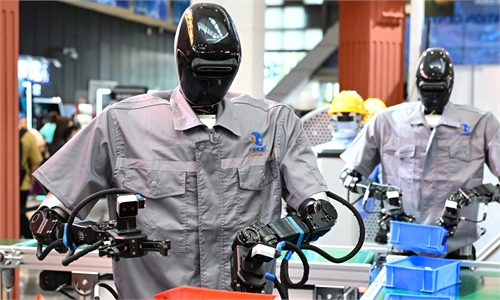
Since early 2025, banks have sharply increased lending to sectors linked to new quality productive forces. As of June 2025, ICBC's technology loans climbed to 6 trillion yuan, up more than 1 trillion yuan from the year's start. CCB's technology lending rose 16.81 percent from the end of 2024, while ABC added more than 800 billion yuan in the first half, up more than 20 percent, CCTV News reported.
Listed banks have also ramped up green lending. As of June 2025, ICBC's green loan balance topped 6 trillion yuan, mainly in clean energy, green transport and the energy-saving industries. ABC's green loans grew by 14.6 percent from the end of 2024, while CCB's were up 14.88 percent and Bank of China's jumped by nearly 17 percent, according to Xinhua.
Xi Junyang, a professor at the Shanghai University of Finance and Economics, said that the widespread adoption of artificial intelligence and new-energy applications has driven significant funding toward these sectors to meet the economy's pressing needs.
"Meanwhile, robust government measures are fostering growth in these sectors, where investments promise both substantial commercial returns and strong future potential," Xi Junyang told the Global Times on Monday.
In February 2025, China's securities regulator called for channeling resources into key areas like technological innovation, advanced manufacturing, green initiatives, and public welfare. In May, the Ministry of Science and Technology, the PBC, and five other authorities announced policy actions to boost tech finance, encouraging banks to increase lending to tech firms and support their direct financing.
In August, the PBC said in its second-quarter report on monetary policy implementation that it raised the re-lending quota for technological innovation and transformation by 300 billion yuan and launched a risk-sharing tool for tech innovation bonds to boost domestic demand in areas such as consumption and technology.
Xi Junyang anticipated that this supportive trend would continue to strengthen, with policies like lower thresholds and enhanced guidance for tech companies' IPO financing receiving positive market responses, further driving growth in the sector.
In addition, sectors tied to public welfare and consumption were a major focus for bank lending in the first half. Several state-owned banks reported double-digit growth in personal consumption loans compared with the start of the year, Xinhua reported.
Loans disbursed in the first half of the year will gradually contribute to real economic growth in the second half, analysts said. Multiple Chinese banks have indicated that they will continue to increase support for key sectors of the real economy, including manufacturing, technology innovation, inclusive finance, and green development.
This commitment aligns with the PBC's report, which pledged to leverage structural monetary policy tools to strengthen support for technological innovation, consumption, small and micro-sized enterprises, and stable foreign trade.
As the traditional economy faces challenges like weak demand and overcapacity, emerging sectors, with their extensive industrial chains, can spur upstream manufacturing and revitalize growth, Xi Junyang said.
RELATED ARTICLES