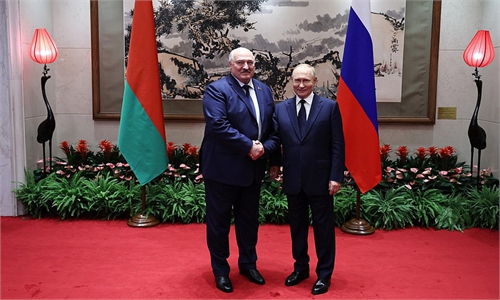
Illustration: Xia Qing/GT
Editor's Note:
When chairing the "SCO Plus" Meeting recently in North China's Tianjin, Chinese President Xi Jinping proposed the Global Governance Initiative (GGI), calling on countries to work in concert for a more just and equitable global governance system. Global Times (GT) reporter Wang Wenwen spoke to Kanatbek Aziz (Aziz), director of the Research Institute of Kyrgyzstan-based Geopolitics and Strategy and corresponding member of the National Academy of Sciences of the Kyrgyz Republic, about the newly proposed initiative and the achievements of the SCO over the past few years.
GT: Why is it important to promote the GGI and what is the significance of introducing it at the "SCO Plus" Meeting?
Aziz: The GGI is being promoted not by chance. The world has entered a systemic crisis of international institutions, where the previous balance of interests is collapsing and the global system risks fragmenting into competing blocs and spheres of influence. In such conditions, the need for new universal rules becomes urgent - rules based on the sovereign equality of states, strict adherence to international law, and genuine multilateralism.
It is highly symbolic that this initiative was voiced precisely during the SCO meetings, a unique platform where countries with diverse political systems and civilizational trajectories meet at the same table. Here, it transforms from a slogan into a concrete response to a global demand, shaping the intellectual and institutional framework of a future world order, one grounded in trust, justice and collective responsibility.
GT: The recent SCO Summit in Tianjin is the largest one in its 24-year history. With many leaders of countries and heads of international organizations in attendance, how did the SCO Summit demonstrate solidarity and friendship?
Aziz: The SCO Tianjin Summit was a compelling demonstration of the vitality and relevance of the "Shanghai Spirit" in an age of global instability. By bringing together leaders from more than 20 countries, the organization once again showed that solidarity and friendship are the practical foundation of cooperation. At a time when the international system risks being increasingly fragmented into competing blocs, the SCO has managed to sustain a unique model of equal dialogue, uniting states with different political systems and civilizational paths.
Unlike Western-centered structures, the SCO offers developing countries an alternative: a framework of cooperation built on equality, respect for sovereignty and freedom from bloc thinking. Crucially, member states also stressed their readiness not only to coordinate efforts against terrorism and transnational threats, but also to work toward common approaches to urgent conflicts underlining the SCO's potential role as a stabilizing factor.
Finally, by expanding humanitarian exchanges and aligning with the China-proposed four global initiatives, the SCO is gradually shaping the foundations of a future world order rooted in multipolarity, trust and fairness.
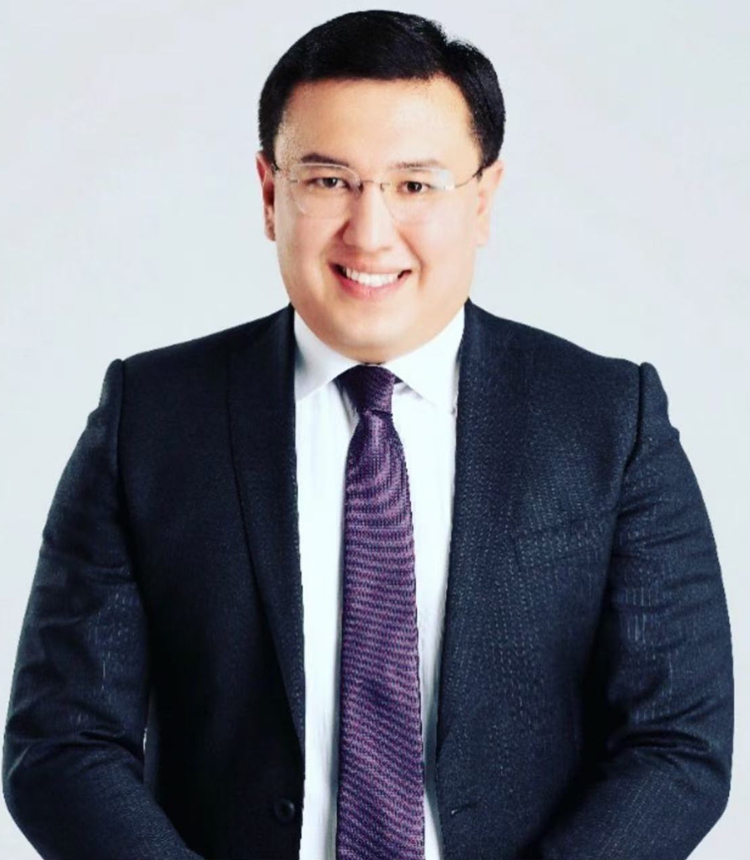
Kanatbek Aziz Photo: Courtesy of Aziz
GT: Founded in Shanghai in June 2001, the SCO has expanded from six founding members into a large family. In his speech at the "SCO Plus" Meeting, Xi called for the organization to stand as a pillar in promoting a multipolar world. How can the SCO truly practice multilateralism?
Aziz: It practices multilateralism rooted in its institutional philosophy: the consensus principle, which rules out majority diktat and compels states to find common ground, ensuring that even smaller members have their voices heard. This makes the SCO a true laboratory of multipolarity, where great powers and smaller states engage as equals in shaping the agenda. Importantly, this is not just diplomatic rhetoric: Mechanisms are being built from regional counter-terrorism structures to the first steps toward financial autonomy through settlements in national currencies and discussions of an independent clearing system. Taken together, these developments position the SCO as an institution capable of defining the parameters of a future multipolar architecture.
GT: The SCO, as well as BRICS, emerged under the total domination of the West over the international agenda. What differentiates the SCO from West-centered bodies? What alternatives does the SCO provide to emerging countries?
Aziz: The key difference is that the SCO does not seek to export ready-made models. Instead, it allows states to choose their own pace and depth of engagement. This is a fundamentally different philosophy. Rather than promoting ideologies or rigid standards, the SCO provides a space of trust that values the diversity of political systems and cultures. The SCO's strength lies precisely in bringing together states with distinct historical trajectories without imposing a universal template. For developing countries, this offers tangible alternatives: ensuring that the key benefits of globalization - security, trade, technology and human exchange - are not turned into tools of coercion.
As President Xi said in his speech, "We should continue to unequivocally oppose hegemonism and power politics." Rejecting a sanctions-driven logic, supporting sovereign choices in economics and climate policy, and opening educational and humanitarian corridors all elevate the SCO from a "regional club" into a prototype of a new multipolar architecture, where cooperation emerges from freedom of choice rather than compulsion.
RELATED ARTICLES