GT Voice: Chain reaction to US tariffs shows need to safeguard global trade order
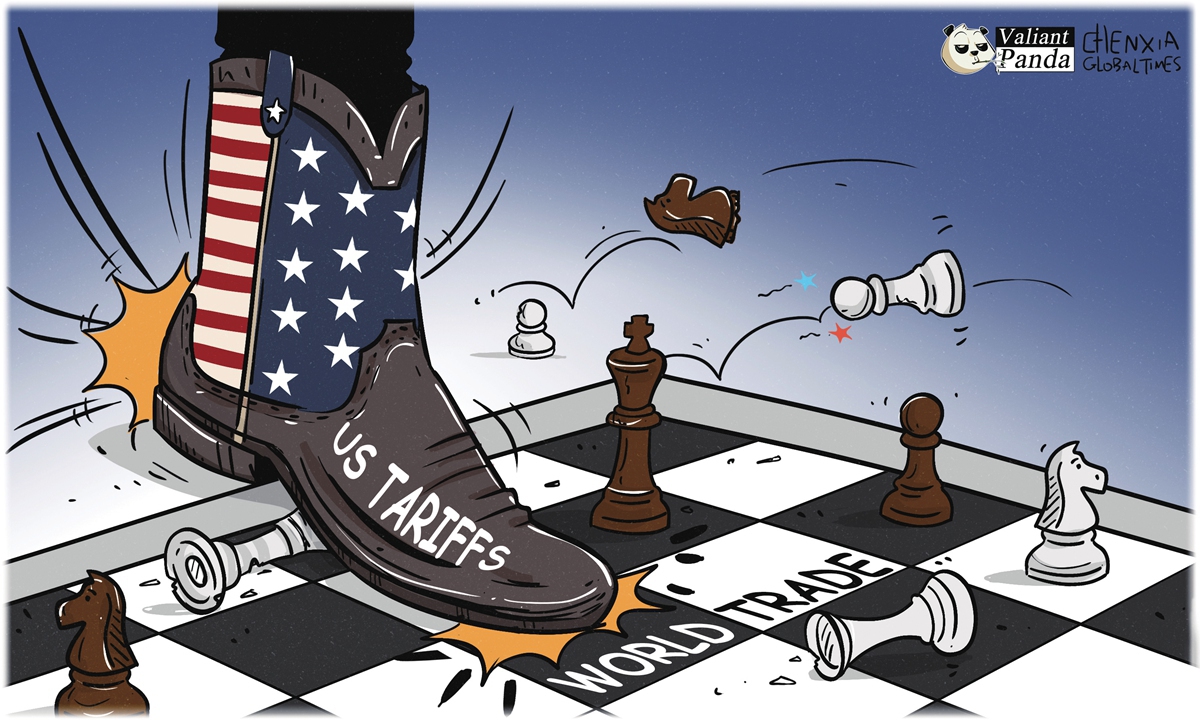
Illustration: Chen Xia/GT
As the spillover effects of US tariffs become increasingly apparent, the rising risk of global economic fragmentation threatens the long-term interests of all countries and hinders growth opportunities for the world economy. Against this backdrop, it is all the more essential for countries to enhance trade communication and coordination to maintain the functioning of the international economic and trade order.European steelmakers are urging Brussels to impose US-style tariffs on all imports of the metal, claiming that the industry risks collapse under pressure from high US duties and "cheap imports from China," the Financial Times reported on Sunday.
On the surface, this call appears to be a response to industrial competition pressures. Yet, it fundamentally exposes the systemic crisis brewing in the global multilateral trade order under the spillover effects of US unilateralism. If major economies adopt such protectionist strategies in succession, not only will structural issues remain unresolved, but the world economy could be pushed into a fragmented, stagnant predicament.
The European steel industry's plea is essentially a chain reaction triggered by US tariff policies. Since the US imposed hefty tariffs on imported steel under the pretext of "protecting domestic industries," international steel trade flows have been distorted. Steel products originally destined for the US market, blocked by tariff barriers, have been diverted to alternative regions. The EU has become a potential destination for this redirected supply.
However, simplifying the problem to one of external competition and resorting to tariff barriers is a shortsighted and perilous approach. Should Brussels follow Washington's path, it would only plunge global steel trade into a chaotic situation where no participant would emerge unscathed.
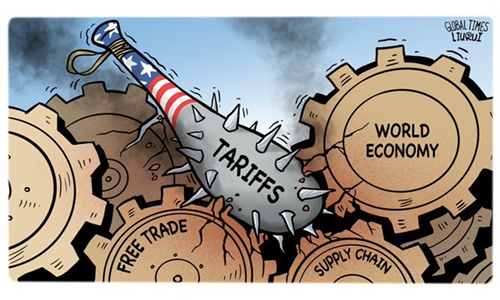
More alarmingly, the European steel industry's plea for tariffs is actually a microcosm of the current crisis in the world trade system. The challenges facing international trade today are not confined to a single industry or region; they are systemic. In recent years, the US has frequently imposed tariffs on both allies and competitors, setting a damaging precedent. The weakening of the rules-based order and the spread of unilateral measures have fueled distrust and fragmentation worldwide and triggered a chain reaction. More and more countries may use unilateral means to resolve trade issues, further intensifying the risk of global economic fragmentation. If this trend continues, the world may face a future of divided markets, disrupted supply chains, and stagnant growth.
Avoiding the collapse of the world trading system requires collaborative efforts by nations, enterprises, and international organizations to build a new order of open cooperation. As a pivotal global power, the EU's choices are particularly critical for upholding the world trade system. The EU needs to focus on negotiations with the US while also strengthening coordination with more developing countries to jointly safeguard the multilateral trading system.
This is not only in line with the EU's own interests in the global industrial chain but also the responsibility it should bear as an important world economy.
Indeed, whether it's the competition pressures in the steel industry or trade frictions in other sectors, they are all manifestations of imbalances in the world trade system. Only by first addressing systemic flaws such as deficient rules and insufficient coordination can we fundamentally reduce the urge by countries to set up trade barriers against each other, and bring global trade back to the track of openness, inclusiveness, shared benefits, balance, and win-win results.
Against this backdrop, the BRICS Leaders Virtual Meeting presented a vital opportunity. It was during the 17th BRICS Summit in July that leaders of BRICS countries emphasized strengthening multilateralism, reforming global governance, and opposing unilateralism and protectionism. China, as the world's second-largest economy and a BRICS member, has consistently played a proactive role in maintaining world trade order and supporting multilateral solutions. The deepening of the BRICS cooperation mechanism can provide an important practical foundation for reconstructing global trade governance.
The global trade fragmentation caused by protectionism is detrimental to all economies. Major economies must recognize that in today's deeply integrated globalization, no nation can thrive in isolation, nor can any protectionist measure genuinely "protect" domestic industries. Through negotiations, major economies and industrial organizations can resolve disputes; otherwise, the long-term interests of every nation and world economic growth opportunities will be jeopardized.
RELATED ARTICLES