Beijing’s permanent elderly population surpasses 5 million in 2024; city introduces more targeted policies: report
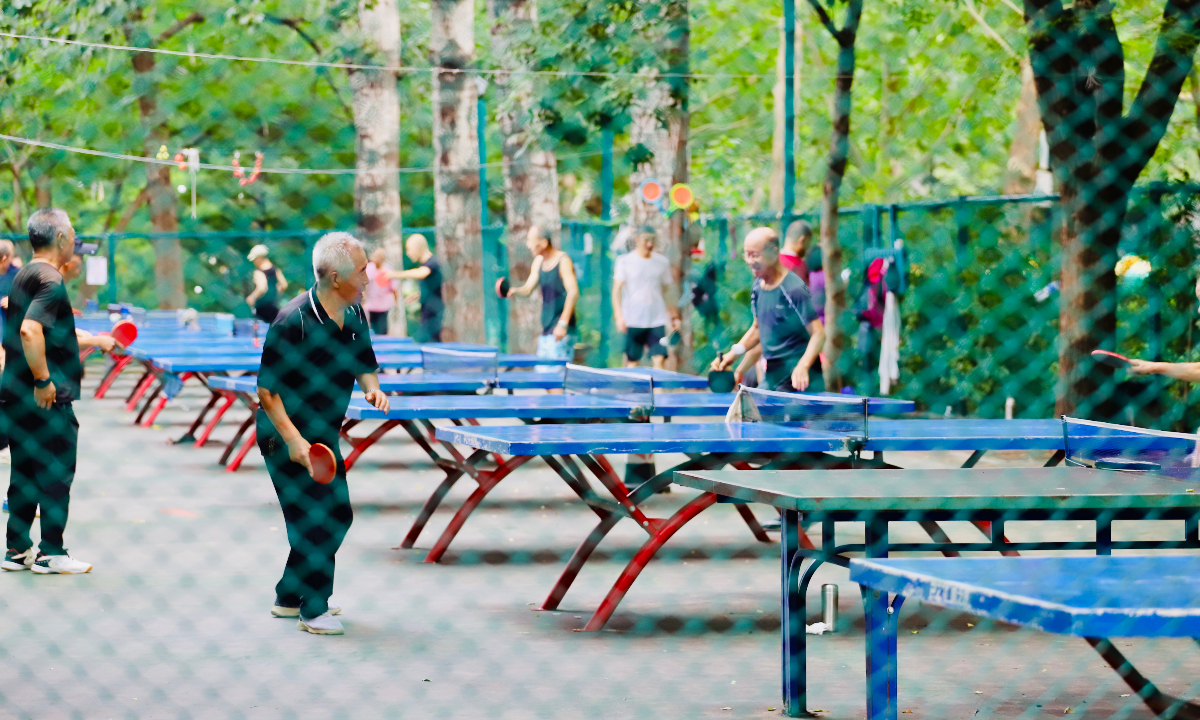
Elderly residents play table tennis at a park in Beijing on September 1, 2025. Photo: IC
The number of permanent elderly residents in Beijing increasing by nearly 200,000 in 2024 and surpassing 5 million for the first time, according to a new report, Beijing Daily reported on Tuesday.
In response, the city has introduced a series of policies and measures to direct more resources toward the oldest and most vulnerable groups, said the news report.
The 2024 Beijing Elderly Services Development Report, released during the 2025 Beijing Sijiqing Forum of Elderly Care Industry Development which kicked off on Tuesday, shows that the number of permanent residents in the city aged 60 and above hit 5.14 million in 2024, an increase of 192,000 from 2023 and the first time the figure has surpassed 5 million.
It is projected that in the early stage of the 16th Five-Year Plan period, Beijing will enter a phase of severe population aging, with the elderly population expected to peak by the middle of this century, the Beijing News reported on Tuesday.
The report noted that Beijing had a total of 5.14 million permanent residents aged 60 and above in 2024, accounting for 23.5 percent of the city’s total population, which is 1.5 percentage points higher than the national average. Among household-registered residents, the elderly population reached 4.47 million, accounting for 31.1 percent of the total population with household registration, an increase of 159,000 compared with 2023.
The top three districts in terms of the number of permanent residents aged 60 and above are Chaoyang, Haidian and Fengtai districts, while the top three districts with the largest proportion of elderly permanent residents are Xicheng, Mentougou and Dongcheng districts, with their respective proportions of 30.8 percent, 30.6 percent and 30.4 percent.
The report also highlighted the continued trend of population aging. Beijing had 687,000 permanent residents aged 80 and above, accounting for 3.1 percent of the city’s total population, roughly in line with the national average. Among household-registered residents, 661,000 were 80 and above, making up 4.6 percent of the total.
In response, the city has introduced a series of policies and measures to direct more resources toward the oldest and most vulnerable groups, making aging-related policies more precisely targeted.
In 2024, Beijing added 105 regional elderly care service centers to benefit 1.55 million elderly residents, including 267,000 “older seniors,” (usually referring to those old people who are disabled, or suffering from dementia, as well as the elderly population aged 80 and above.)
Besides, a total of 9,829 new in-home elderly care beds were set up, bringing the cumulative number of elderly care beds built and in operation to around 27,000. By year’s end, Beijing had 577 elderly care institutions with 108,000 beds, providing service to 52,000 elderly residents.
Global Times
RELATED ARTICLES