Illustration: Liu Xidan/GT
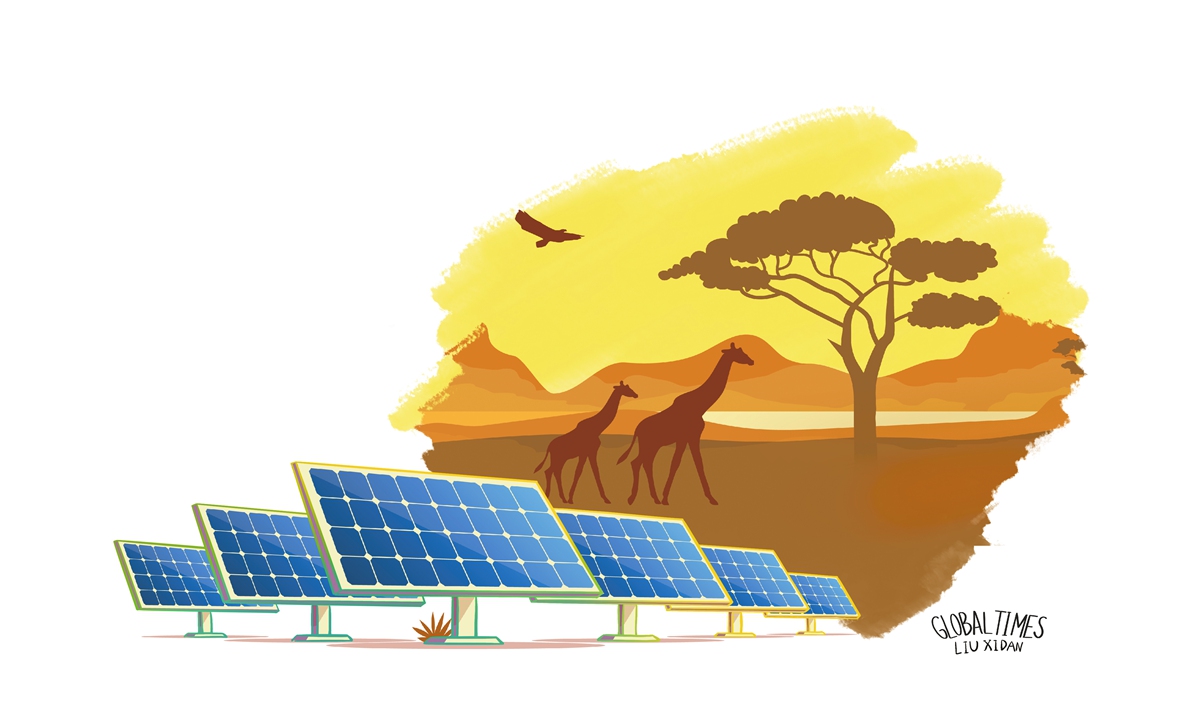
On the streets of Kampala, Uganda's capital, the contours of Africa's shifting energy market are clear: stacks of Chinese-made solar panels line electronics shops - a scene the New York Times recently noted as emblematic of China's expanding trade with the continent.In recent days, solar power has attracted renewed attention from international media outlets. Some of that coverage has cited Ember, an energy tracking group, which said that solar is "taking off" in Africa. According to reports on its findings, solar panel imports from China rose 60 percent in the past 12 months, and 20 African countries imported a record amount over that period.
Some Western observers might be inclined to portray the surge in solar panel trade as Chinese firms redirecting exports after US tariffs curtailed access to American markets. That reading, however, glosses over the continent's genuine needs and the underlying rationale for a deepening China-Africa partnership. It also betrays the ambivalence with which some in the West view the expansion of clean-energy cooperation between China and Africa.
Chinese solar panels are gaining traction in Africa not simply because they are affordable or widely available, but because they align with the continent's broader aspirations for a green transition and industrial takeoff. For economies struggling with chronic power shortages and heavy reliance on costly fossil fuels, solar provides a relatively swift and scalable alternative. By lowering energy costs and expanding reliable access, these imports support both daily consumption and the foundations of long-term industrial growth.
China not only exports solar panels to Africa, but also plays an important role in constructing photovoltaic (PV) power stations and training local talent. This multifaceted cooperation contributes significantly to improving the quality of life, lowering energy costs, and stimulating industrial development - precisely what Africa needs to accelerate its path toward industrialization.
In 2023, China launched the Initiative on Supporting Africa's Industrialization, stressing the importance of helping Africa advance industrialization in a green, coordinated and sustainable manner. Since Africa's industrialization process requires accessible and affordable electricity, China emphasized that it will leverage its strengths in solar, wind and other renewable energy fields to continue supporting and participating in Africa's renewable energy development and construction.
In practice, more than providing solar panels and other equipment, China is actively involved in building large-scale solar power stations in the continent. China has carried out hundreds of projects in the field of clean energy across Africa. The cumulative installed capacity of PV power stations jointly built by China and African countries has already exceeded 1.5 gigawatts, according to data released by China's Ministry of Foreign Affairs in January.
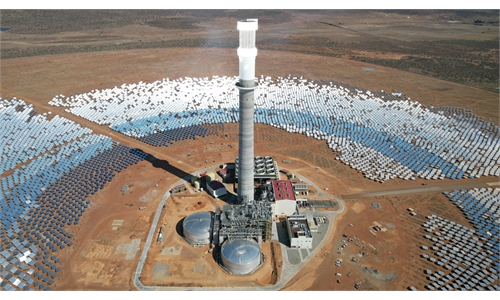
For instance, in South Africa, the 100-megawatt Redstone Concentrated Solar Thermal Power Project, being built by a subsidiary of POWERCHINA, is one of the largest renewable energy investment projects in South Africa. Once completed, it will supply about 480 gigawatt-hours of clean electricity annually, and significantly cut reliance on fossil fuels and carbon emissions, according to the Xinhua News Agency.
On the talent-development front, Chinese firms have also made various efforts across Africa. For example, infrastructure and clean energy projects have involved extensive localization of procurement and staffing in African countries - backed by the establishment of technical schools that train engineering and construction professionals. These efforts help lay the essential material and talent foundations for local industrialization and economic development.
Western media outlets often default to viewing China-Africa trade through a geopolitical lens, amplifying concerns over imbalances while downplaying the continent's development imperatives and the mutual benefits involved. Such framing risks obscuring the reality that cooperation in areas like clean energy is not about one-sided dependence, but about enabling African economies to pursue industrialization on more sustainable terms.
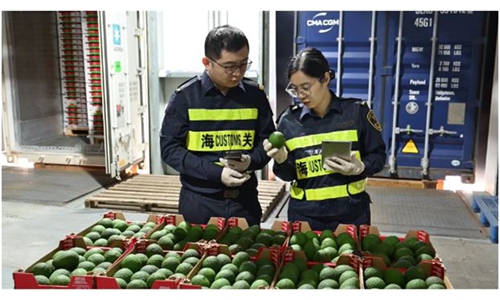
China's growing role as a partner in Africa's green energy transition also has reciprocal effects. As solar and other renewable projects advance industrial development on the continent, they lay the groundwork for greater African exports to China. In recent years, China has cut tariffs on a wide range of African goods, opening new opportunities for high-quality products to reach Chinese consumers.
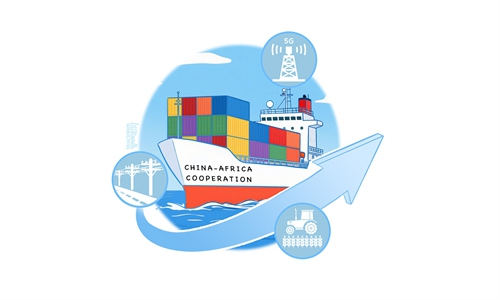
A single solar panel on sale in Kampala, then, represents far more than a piece of hardware. It embodies the technical depth of Chinese manufacturing, the determination of African nations to industrialize, and the broader momentum of the global green transition. That is the real story of China-Africa cooperation - one that emphasizes shared interests and long-term growth.
The author is a reporter with the Global Times. bizopinion@globaltimes.com.cn
RELATED ARTICLES