Nation to build multi-tiered sports system, foster integration with tourism, commerce
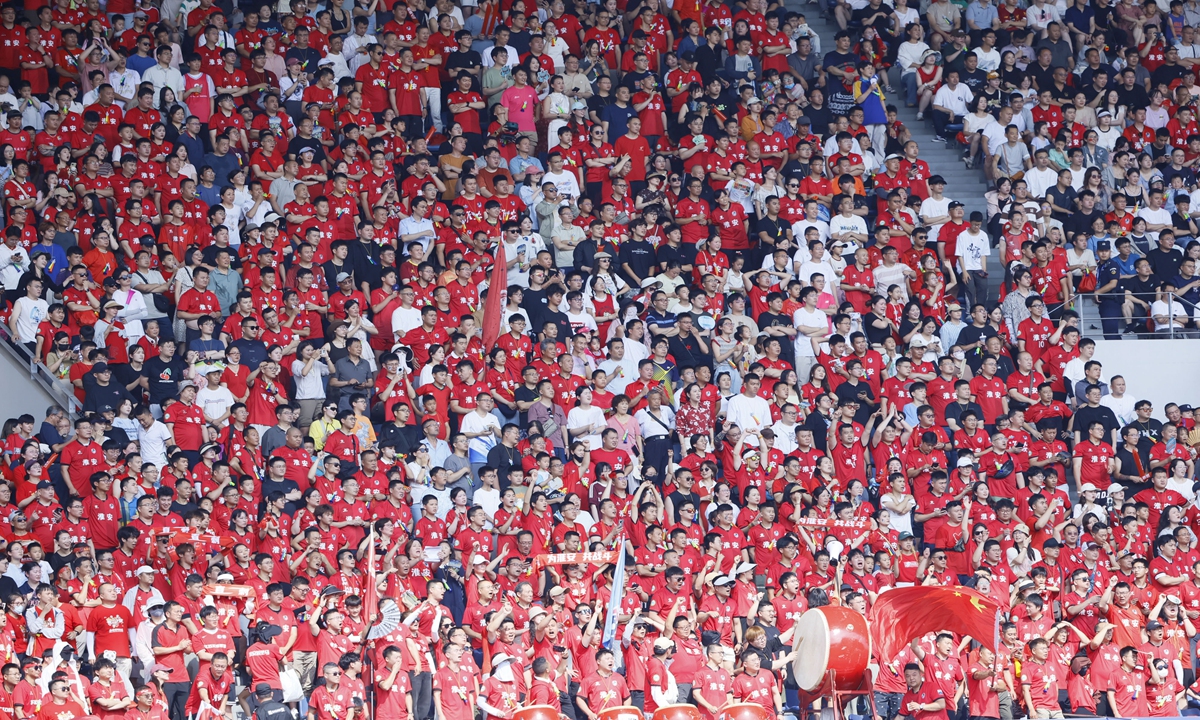
The fourth round of Suchao - Huai'an vs. Nanjing sets a new attendance record on June 14, 2025. During the fourth round of the tournaments over the weekend, there were more than 25,000 spectators per match, according to the Xinhua News Agency. Photo: VCG
The General Administration of Sport of China (GASC) vowed on Tuesday to build a multi-tiered competition system and promote deeper integration between sports events and related industries, with other authorities also pledging to boost sectors such as outdoor sports and sports exhibitions, amid the nation's intensified efforts to stimulate consumption.
Yang Xuedong, head of the sports economy department of the GASC, said that in the upcoming Five-Year Plan (2026-30), the authorities will accelerate the drafting of a sports industry development blueprint to better coordinate and plan the growth of the event economy.
The plan includes promoting professional leagues and domestic intellectual property-based sports events, while deepening the integration of sports with culture, tourism, business and exhibitions, according to Yang.
The official made the comments at a policy briefing, introducing guidelines issued by the General Office of the State Council on Thursday, aimed at unleashing sports consumption potential and further promoting the high-quality development of the sports industry.
The 20-point policy package pledges that by 2030, China will foster a number of globally influential sports enterprises and events, with the industry's total scale exceeding 7 trillion yuan ($982 billion).
"Sports performances and competitions are a key part of the sports industry, with huge market potential and a significant role in boosting consumption, expanding investment and driving economic growth," Yang told the briefing.
China's sports industry has seen robust growth in recent years. Between 2021 and 2023, the industry's added value grew at an average annual rate of 11.6 percent.
Sports events in particular have fueled industry prosperity and a consumption boom. Between July 6 and September 2, Zhejiang's province-wide community basketball league, ZheBA, held 280 matches, attracting nearly 920,000 spectators and generating more than 1 billion yuan in sports and related spending, according to GASC data.
The new policy package underscores Beijing's broader strategy of using the sports sector as both a consumption driver and an emerging industry with strong multiplier effects, Jiang Yiyi, a tourism and sports expert at Beijing Sport University, told the Global Times on Tuesday.
"Sports have moved beyond leisure and competition. They are now closely tied to urban development, cultural confidence and people's pursuit of a better life," said Jiang. "By linking sports events with tourism, commerce and technology, China is essentially creating new engines for domestic demand."
Highlighting breakthroughs in the guidelines, a deputy director of the GASC said the authority will work to establish a multi-layered event system and raise the level of professional competitions. The aim is to cultivate a number of branded events with independent intellectual property and global influence, vice minister of the GASC Li Jing noted.
In 2025, the GASC system plans to host or support more than 600 international competitions, alongside about 190 national championships and other high-level domestic events, according to the official. Authorities also pledged to open more public resources, such as roads and waterways, for sports events, while streamlining approval procedures and improving efficiency.
The government will also focus on nurturing market players by lowering financing costs, enhancing innovation capacity, and supporting private firms' participation in sports industry investment and development, to strengthen industry chains, Li said.
Promoting sports consumption is another key policy direction. Yang noted that sports spending has been steadily expanding, with upgrading consumption structures and emerging business models making the sector a new driver of economic growth.
Trendy niche sports such as frisbee, paddle tennis, climbing, skiing and trail running are gaining traction, spurring demand for equipment and training services. For example, during the 2024-25 winter season, ski resorts across the country received 256 million visitors, up 13.5 percent year-on-year, with on-site spending reaching 78.6 billion yuan, GASC data showed.
Yang added that more measures will be taken to tap consumption potential, including expanding high-quality supply and diversifying consumption scenarios. This includes making more venues accessible to the public, offering sports vouchers and incentives, and encouraging sports tech innovation.
Outdoor sports were also highlighted at Tuesday's briefing. A National Development and Reform Commission (NDRC) official said China will build high-quality outdoor sports destinations and foster the growth of the outdoor sports industry.
The NDRC official added that the country aims to develop a number of internationally recognized outdoor sports hubs with sound facilities, quality services and rich event offerings, while stepping up support for eligible venues and public service facilities.
According to research institutions, China's outdoor sports industry is expected to exceed 3 trillion yuan by the end of the 14th Five-Year Plan period (2021-25), making it one of the fastest-growing segments of the sports economy, the official said.
Meanwhile, Kong Dejun, head of the department of trade in services at the Ministry of Commerce (MOFCOM), said authorities will leverage major exhibition platforms such as the China International Import Expo and the Canton Fair to connect industry resources and stimulate sports consumption.
The China International Fair for Trade in Services, which opens on Wednesday in Beijing and runs through September 14, will feature a dedicated sports services section, according to the MOFCOM. "It will showcase new tech and achievements in resource integration, smart sports, industry convergence, and global collaboration," Kong added.
RELATED ARTICLES