GT Voice: Decision on Pirelli will be litmus test for Italy’s investment environment
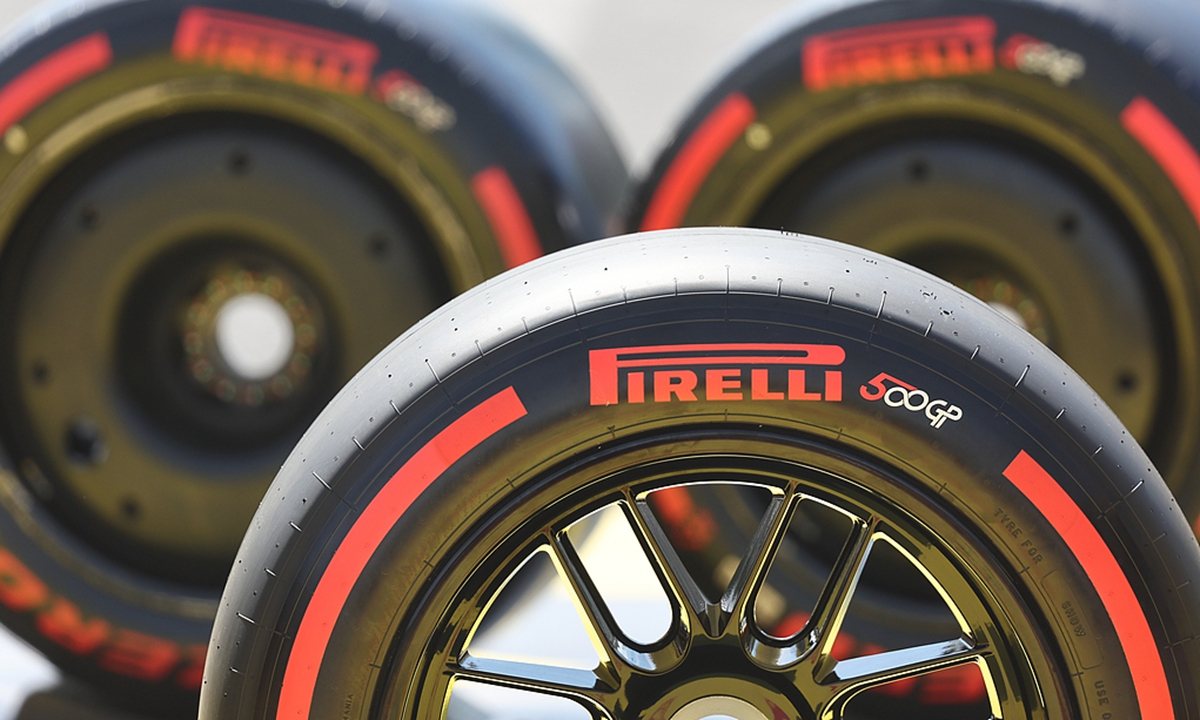
File photo: VCG
As the US ramps up pressure on Italy over tire firm Pirelli, Italy stands at a crossroads as its choice will test the nation's ability to balance pragmatic cooperation with external political pressures that risk interfering with its own economic interests and long-term development.In a letter to Italian officials in mid-July, the US Commerce Department's Bureau of Industry and Security said that the veto powers Rome imposed on Pirelli in 2023 to curb Sinochem Holdings Corp's influence weren't sufficient to protect the company from restrictions in the US, Bloomberg reported on Tuesday, citing people familiar with the matter.
The letter suggested a hardening US demand that Italy interfere with the Chinese investor's legitimate rights in Pirelli, a move that represents a breach of the normal order of international business cooperation and an outright act of political manipulation.
Looking back, this investment deal between Sinochem and Pirelli has always been a mutually beneficial market-driven endeavor. In 2015, when Italy was still grappling with the aftermath of the European debt crisis, Pirelli was sold for $7.8 billion to a group of investors including ChemChina, which later merged with Sinochem. The Chinese investor has not only invested in the tire firm, but also helped it find new growth in the world's largest automotive consumer market. Now this cooperation faces uncertainty due to a US warning, a clear deviation from commercial logic and market principles.
The US pressure is essentially an extension of its investment restrictions against China and another move to sever China's links with global industrial chains. Under the narrative of "national security" and "technology protection," the US is urging its allies to align with its strategic goal of containing China, pushing them to restrict or even cut off Chinese companies and investments in key sectors. This goes far beyond ordinary trade friction; it is a direct intervention into corporate governance and market competition through political means.
From the perspective of Italy and Europe as a whole, the actual cost of complying with such US pressure is exorbitant. The first casualty would be the very foundation of Pirelli's prospects, considering the distortion of the company's long-term development logic due to political interference. If business decisions yield to political considerations, Pirelli's research and development direction, investment layout, and strategic planning would deviate from market forces, disrupting its innovation- and market-driven development path.
Also, the label of being "vulnerable to external political interference" would severely damage its creditworthiness and investment value in the eyes of global investors, deterring future international partners.
Moreover, the cost of compromise would stretch far beyond the fate of a single company. Italy has long prided itself on an open business environment as a cornerstone of its appeal to global investors. To sacrifice Chinese investment interests under US pressure would send a damaging signal: Italy's commercial rules can be arbitrarily rewritten by external political forces, and the legitimate rights of foreign investors lack reliable protection. This would not only erode the confidence of Chinese investors but also spark widespread anxiety among global investors that would rightfully fear becoming the next casualties of such political meddling.
More profoundly, this kind of supply chain uncertainty in the name of "security" is becoming a major obstacle to practical cooperation between China and the EU. As two of the world's largest economies, China and the EU are supposed to share broad common interests in trade, technology, and environmental protection.
Yet, under sustained US pressure, some EU countries are being compelled to erect barriers against Chinese investments and collaboration. As commercial cooperation becomes increasingly politicized, practical cooperation between China and the EU becomes fraught with uncertainty, ultimately harming the interests of businesses on both sides.
What is even more alarming is that Washington's "security coercion" of its allies is escalating and expanding. From restricting ASML's exports of lithography machines to China to now pressuring Italy over Pirelli, the US is using security rhetoric to deeply entangle Europe in its "decoupling" strategy against China.
Every step it takes to tighten restrictions on China amounts to a further tightening of the constraints of "security blackmail" around the EU economy. With each move, the US binds the EU economy more tightly to its own strategic path, forcing the bloc to forgo valuable cooperation opportunities with China and instead become dependent on a US-led supply chain system. While this approach may seem to offer the EU so-called "security guarantees" on the surface, it is, in reality, stripping the EU of its economic autonomy and reducing it to little more than an "economic vassal" in Washington's campaign to contain China.
Now all eyes are on Italy. Will it adhere to practical cooperation, or allow "security anxiety" to dominate its economic decisions? This choice not only concerns the fate of Pirelli alone, but will also define Italy's development path in the years to come.
RELATED ARTICLES