Japan’s peace education neglects victims in China, other countries: Japanese peace activist
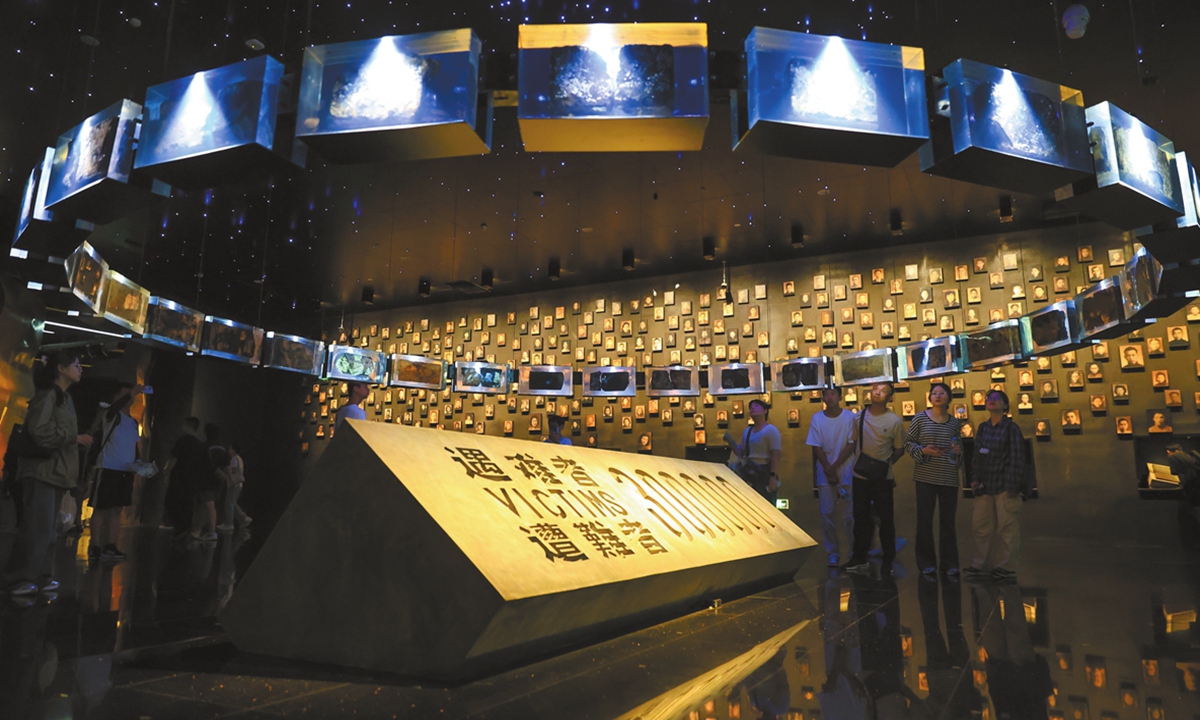
People visit the Memorial Hall of the Victims in Nanjing Massacre by Japanese Invaders in Nanjing, East China's Jiangsu Province, on September 18, 2024. Photo: VCG
Editor's Note:
This year marks the 80th anniversary of the victory of the Chinese People's War of Resistance against Japanese Aggression and the World Anti-Fascist War. Eight decades on, concerns are growing worldwide that memories of World War II (WWII) are fading and younger generations lack a full understanding of that history. Akira Kawasaki (Kawasaki), a member of the Executive Committee of the Tokyo-based non-governmental organization Peace Boat, shared his views with Global Times (GT) reporter Xia Wenxin on Japan's peace education and the crucial role of young people in shaping a more peaceful future, in a recent interview. Kawasaki joined Peace Boat's 120th Global Voyage from April to August to mark the 80th anniversary of the end of WWII. The event served as a meaningful platform for reflection and action, encouraging individuals, particularly the younger generations, to consider their own role in building a more peaceful and just world.
GT: How well do young people in Japan today understand the history of WWII?
Kawasaki: Japan's public education system has tended to address the history of WWII in a superficial manner, in particular it has failed to adequately address Japan's aggression against neighboring countries and the atrocities and war crimes committed during the war. As a result, many young people in Japan lack a full understanding of these historical facts. In recent years, certain groups have actively used social media to spread narratives that deny or downplay Japan's war crimes, which appears to be having a growing influence on younger generations. Overall, the events of WWII are becoming increasingly distant from the lived experience of Japan's younger generation.
GT: What is included in Japan's peace education, and how is China described?
Kawasaki: Although Japan has a well-established tradition of peace education, its public education system tends to address the history of WWII in a superficial way, in particular Japan's aggression against China from 1931 to 1945 is not given adequate attention. The war is more commonly presented as a conflict between Japan and the US and its allies, from 1941 to 1945.
Peace education in Japan focuses primarily on the humanitarian consequences of war, emphasizing the importance of ensuring that such tragedies are never repeated. It highlights the suffering of civilians during events such as the atomic bombings of Hiroshima and Nagasaki, the Battle of Okinawa, and the firebombings of Tokyo and other major cities. These experiences are conveyed through survivor testimonies, as well as literature, films, television programs and even manga.
However, the suffering endured by people in China is seldom addressed, and the broader historical context of the suffering of Japanese civilians is largely overlooked. I believe this is a serious shortcoming. At Peace Boat, we advocate for a more comprehensive and critical approach to historical education. This includes not only Japanese victims but also those in China and other countries affected by Japanese imperialism. Through our own educational programs, we aim to promote a more inclusive and accurate understanding of wartime history.
GT: In China, there is a saying: "Forgetting history is tantamount to betrayal." From your perspective, what would it mean for Japan, Asia and the world if the memory of WWII is forgotten?
Kawasaki: Forgetting the history of war and the immense human suffering it caused increases the risk of a country drifting once again toward armed conflict. Already, we see troubling signs of a renewed arms race and growing militarization in many parts of the world. We must learn from the past and prevent a third world war.
GT: Some young people today feel that WWII happened "a long time ago" and see it as distant from their lives. How do you view this phenomenon?
Kawasaki: Meeting and listening to survivors of war remains highly relevant. For young people, hearing personal stories, empathizing with the pain and understanding the lived experiences of those affected by war is just as important as studying historical facts. Through this engagement, history becomes personal and meaningful, allowing them to connect with the past in a way that informs their values and actions in the present.
From my observation, young people are generally open, honest and willing to engage. When they meet survivors of war and learn about their stories and experiences, they show genuine interest and develop a deeper appreciation for the value of peace. In-person interactions and visits to communities are essential, as they help young people understand that there are perspectives and experiences far beyond what is shared on social media.
At the same time, I also see many young people today exploring smart and innovative approaches to solving various social, economic and environmental problems. With a solid foundation in history education, these young people, who are open-minded and sensitive to human suffering in times of war, should be encouraged to seek solutions that are peaceful, humane and rational, rather than resorting to violence or destruction in response to conflict. This, I believe, is the kind of role young people can and should play in building a more peaceful future.
RELATED ARTICLES