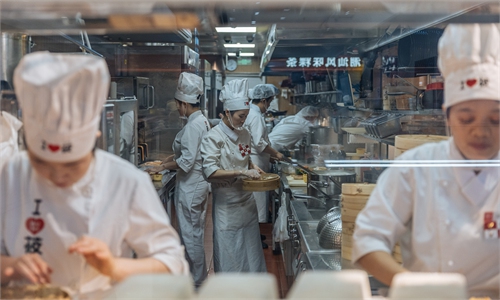
Dispute between influencer and restaurant reignites public debate over use of ‘pre-made dishes’
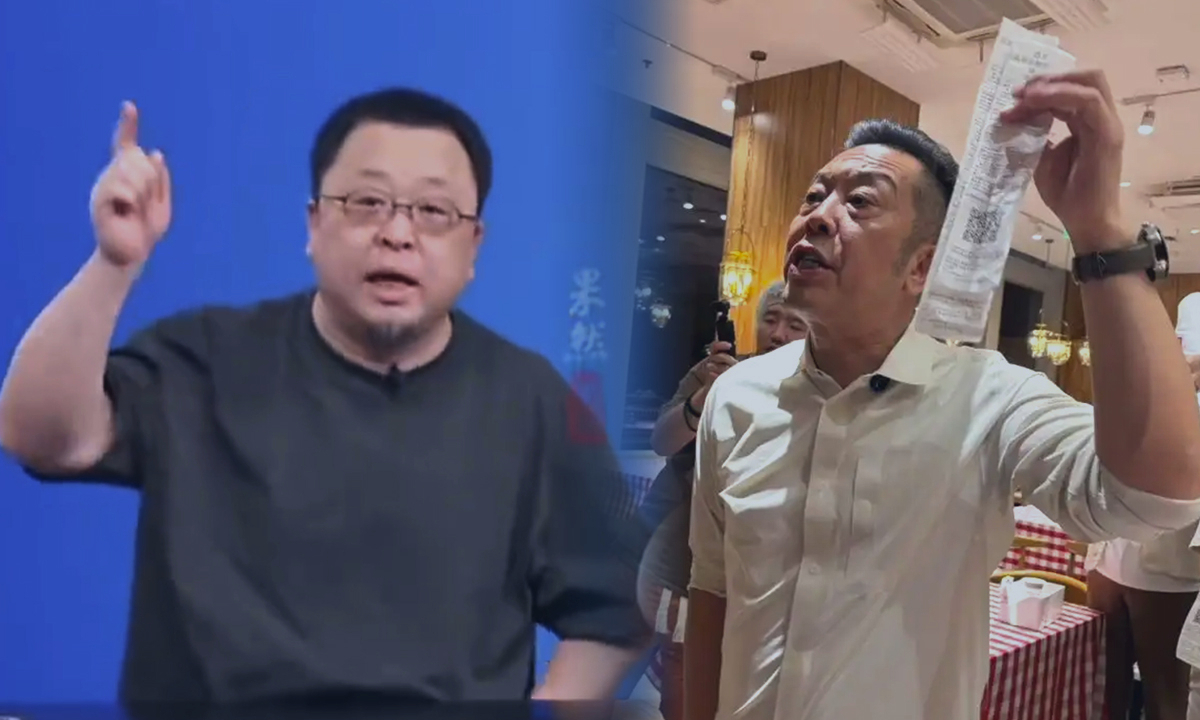
A combination of photos shows internet celebrity Luo Yonghao in a live broadcast claiming Xibei served pre-made dishes as freshly cooked ones, and Jia Guolong, founder of Xibei, promising that the restaurant does not serve pre-made dishes
The dispute between internet celebrity Luo Yonghao and the well-known Chinese restaurant chain Xibei has sparked heated discussions across China's internet over the transparency and definition of pre-made dishes.
The online feud started with a post by Luo on Wednesday, who said that Xibei's dishes were "almost all pre-made, and so expensive.” He also called on authorities to legislate to make restaurants to indicate whether they use pre-made dishes.
In response, Jia Guolong, founder of Xibei, on Thursday denied Luo’s accusation that Xibei serves pre-made dishes. He stated that under national regulations, none of Xibei's dishes fall into the category of pre-made dishes. He also told media that they would definitely sue Luo, given the damage his comment has caused to the brand.
On Friday, Xibei released an open letter to customers on its official Weibo account. In the letter, the restaurant stated that it "will never tolerate any actions that slander the brand" and made public all the standard operating procedures detailing the specific preparation processes of the 13 dishes ordered by Luo on Wednesday.
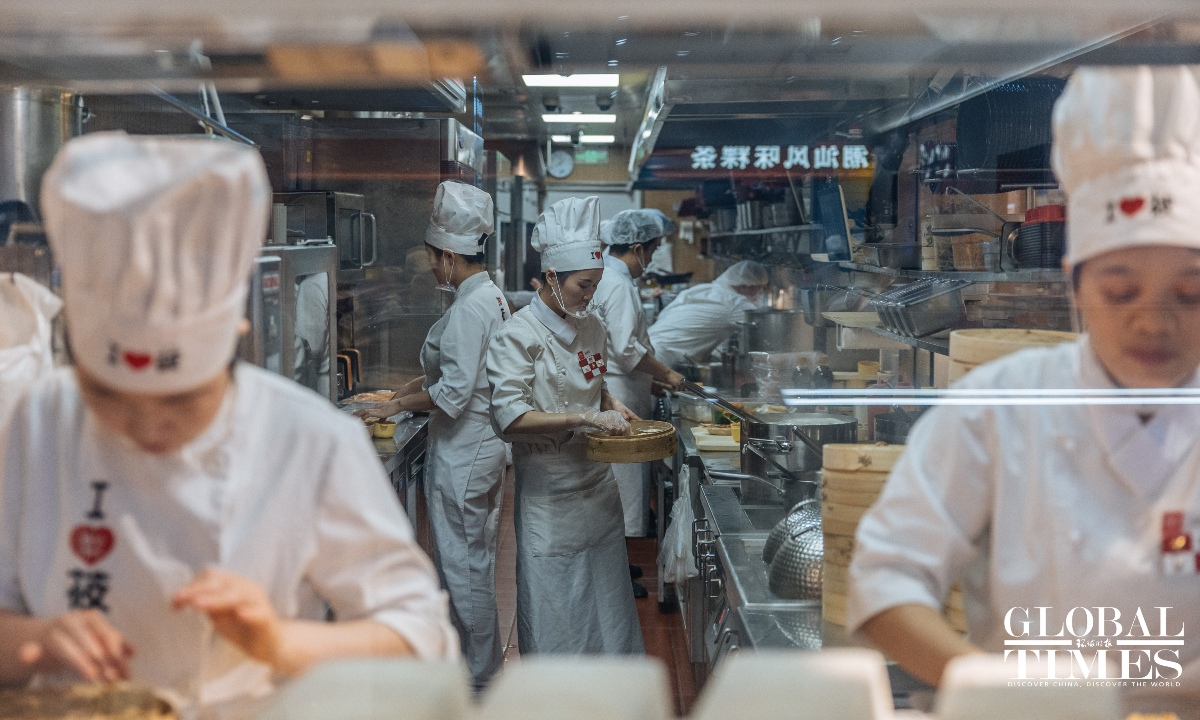
Not backing down, Luo then issued a 100,000 yuan reward announcement on social media to publicly solicit "authentic evidence" that can prove Xibei uses pre-made dishes.
Then more and more information about Xibei's kitchen emerged, and media field visits found that there were a large number of frozen ingredients in Xibei's kitchen. For example, the frozen fish has a shelf life of up to 18 months and can be served on the table after simple grilling once thawed; some meats are also processed after freezing, and even the ingredients for children's meals were also found stored in the freezer.
The same day, Luo launched a live broadcast on social media. He said he does not oppose pre-made dishes per se but objects to restaurants selling pre-made dishes while disguising them as freshly cooked. His aim, he said, is to promote transparency in the pre-made food industry and safeguard consumers' right to know.
During the live broadcast, Luo took a sea bass used in Xibei's kitchen, which was photographed by the media, as an example. He showed its packaging ingredient list, which contained multiple water-retaining agents, such as sodium tripolyphosphate and sodium hexametaphosphate, and the shelf life was as long as 18 months.
Based on this, he raised a core question. Although the fish was raw when it arrived at the store, after being marinated and preserved with additives for a long time, it was no longer the "fresh fish" that consumers understood. He said this explained why it "felt like a pre-made dish" when he ate it.
The online feud has reignited a debate that has lingered in the catering industry for years. One netizen commented that “In fact, people only have two questions. First, whether it is a pre-made dish and how to define it. Second, whether consumers should be informed about pre-made dishes. As for whether pre-made dishes are good or bad, it is not within the scope of the discussion. Don't divert the focus."
Another netizen posted, "I see many netizens arguing about whether pre-made dishes are edible. They are edible, definitely. But you can't deceive consumers by saying you make the dishes fresh, and you can't sell them at the price of freshly made dishes. That's deception."
Amid the ongoing dispute, the understanding of the definition of "pre-made dishes" has emerged as a focus.
According to the Notice on Strengthening the Food Safety Supervision of Pre-made Dishes and Promoting the High-Quality Development of the Industry issued by several departments including the State Administration for Market Regulation in March 2024, pre-made dishes, also known as pre-prepared dishes, refer to pre-packaged dishes made from one or more edible agricultural products and their processed products as raw materials, with or without auxiliary materials such as seasonings, and without adding preservatives. They are produced through industrial pre-processing (including stirring, marinating, tumbling, shaping, stir-frying, deep-frying, roasting, boiling, steaming, etc.), may or may not be accompanied by seasoning packets, and comply with the storage, transportation and sales conditions indicated on the product labels. They can only be consumed after heating or cooking, according to the information from gov.cn
Notably, consumers generally regard dishes made from long-preserved frozen ingredients that only require simple heating as "pre-made dishes."
According to official designation, dishes distributed by central kitchens and some processed frozen ingredients are not in the category of pre-made dishes, which provides basis for Xibei's claim that its dishes are not pre-made.
While official standards for pre-made dishes primarily serve to "ensure clear supervision boundaries and the bottom line of food safety," individual consumers’ perception is rooted in "dining experience," with consumers valuing the sensory satisfaction and sense of value derived from their taste buds. While catering enterprises like Xibei have reaped the benefits of efficiency brought by industrialization such as central kitchen operations, they have not done enough to "synchronously respect consumers' right to know," and this is likely the primary reason for the current heated debate, Zhu Yi, associate professor at China Agricultural University, told the Global Times on Saturday.
Liu Ge, an economic commentator, commented in a video posted online that there is no need to treat pre-made dishes as a "flood or beast". Pre-made dishes are essentially just a category in the catering industry, and even one of the most important major categories. In fact, for any restaurant chain, large-scale eatery, or establishment that needs to meet customers' demand for fast service, it is impossible to operate without some form of pre-preparation. The core of the debate should never be about rejecting pre-made dishes themselves, but about how to standardize their use, ensure transparency, and balance industrial efficiency with consumer trust.
Pre-made dishes and central kitchens are integral components of catering industrialization, whether in China or other countries. However, for this path to be stable and sustainable, companies must know how to balance reconciling industrial efficiency with consumer expectations, Zhu noted.
The online feud started with a post by Luo on Wednesday, who said that Xibei's dishes were "almost all pre-made, and so expensive.” He also called on authorities to legislate to make restaurants to indicate whether they use pre-made dishes.
In response, Jia Guolong, founder of Xibei, on Thursday denied Luo’s accusation that Xibei serves pre-made dishes. He stated that under national regulations, none of Xibei's dishes fall into the category of pre-made dishes. He also told media that they would definitely sue Luo, given the damage his comment has caused to the brand.
On Friday, Xibei released an open letter to customers on its official Weibo account. In the letter, the restaurant stated that it "will never tolerate any actions that slander the brand" and made public all the standard operating procedures detailing the specific preparation processes of the 13 dishes ordered by Luo on Wednesday.
Photo: Li Hao/GT
Xibei also announced it would open its kitchen operations to the public. Customers can request a kitchen tour while dining at its restaurants.Not backing down, Luo then issued a 100,000 yuan reward announcement on social media to publicly solicit "authentic evidence" that can prove Xibei uses pre-made dishes.
Then more and more information about Xibei's kitchen emerged, and media field visits found that there were a large number of frozen ingredients in Xibei's kitchen. For example, the frozen fish has a shelf life of up to 18 months and can be served on the table after simple grilling once thawed; some meats are also processed after freezing, and even the ingredients for children's meals were also found stored in the freezer.
The same day, Luo launched a live broadcast on social media. He said he does not oppose pre-made dishes per se but objects to restaurants selling pre-made dishes while disguising them as freshly cooked. His aim, he said, is to promote transparency in the pre-made food industry and safeguard consumers' right to know.
During the live broadcast, Luo took a sea bass used in Xibei's kitchen, which was photographed by the media, as an example. He showed its packaging ingredient list, which contained multiple water-retaining agents, such as sodium tripolyphosphate and sodium hexametaphosphate, and the shelf life was as long as 18 months.
Based on this, he raised a core question. Although the fish was raw when it arrived at the store, after being marinated and preserved with additives for a long time, it was no longer the "fresh fish" that consumers understood. He said this explained why it "felt like a pre-made dish" when he ate it.
The online feud has reignited a debate that has lingered in the catering industry for years. One netizen commented that “In fact, people only have two questions. First, whether it is a pre-made dish and how to define it. Second, whether consumers should be informed about pre-made dishes. As for whether pre-made dishes are good or bad, it is not within the scope of the discussion. Don't divert the focus."
Another netizen posted, "I see many netizens arguing about whether pre-made dishes are edible. They are edible, definitely. But you can't deceive consumers by saying you make the dishes fresh, and you can't sell them at the price of freshly made dishes. That's deception."
Amid the ongoing dispute, the understanding of the definition of "pre-made dishes" has emerged as a focus.
According to the Notice on Strengthening the Food Safety Supervision of Pre-made Dishes and Promoting the High-Quality Development of the Industry issued by several departments including the State Administration for Market Regulation in March 2024, pre-made dishes, also known as pre-prepared dishes, refer to pre-packaged dishes made from one or more edible agricultural products and their processed products as raw materials, with or without auxiliary materials such as seasonings, and without adding preservatives. They are produced through industrial pre-processing (including stirring, marinating, tumbling, shaping, stir-frying, deep-frying, roasting, boiling, steaming, etc.), may or may not be accompanied by seasoning packets, and comply with the storage, transportation and sales conditions indicated on the product labels. They can only be consumed after heating or cooking, according to the information from gov.cn
Notably, consumers generally regard dishes made from long-preserved frozen ingredients that only require simple heating as "pre-made dishes."
According to official designation, dishes distributed by central kitchens and some processed frozen ingredients are not in the category of pre-made dishes, which provides basis for Xibei's claim that its dishes are not pre-made.
While official standards for pre-made dishes primarily serve to "ensure clear supervision boundaries and the bottom line of food safety," individual consumers’ perception is rooted in "dining experience," with consumers valuing the sensory satisfaction and sense of value derived from their taste buds. While catering enterprises like Xibei have reaped the benefits of efficiency brought by industrialization such as central kitchen operations, they have not done enough to "synchronously respect consumers' right to know," and this is likely the primary reason for the current heated debate, Zhu Yi, associate professor at China Agricultural University, told the Global Times on Saturday.
Liu Ge, an economic commentator, commented in a video posted online that there is no need to treat pre-made dishes as a "flood or beast". Pre-made dishes are essentially just a category in the catering industry, and even one of the most important major categories. In fact, for any restaurant chain, large-scale eatery, or establishment that needs to meet customers' demand for fast service, it is impossible to operate without some form of pre-preparation. The core of the debate should never be about rejecting pre-made dishes themselves, but about how to standardize their use, ensure transparency, and balance industrial efficiency with consumer trust.
Pre-made dishes and central kitchens are integral components of catering industrialization, whether in China or other countries. However, for this path to be stable and sustainable, companies must know how to balance reconciling industrial efficiency with consumer expectations, Zhu noted.
RELATED ARTICLES