Australia says US to have access to new AUKUS nuclear submarine shipyard; expert cautions move to break regional equilibrium, jeopardizes country’s long-term interest
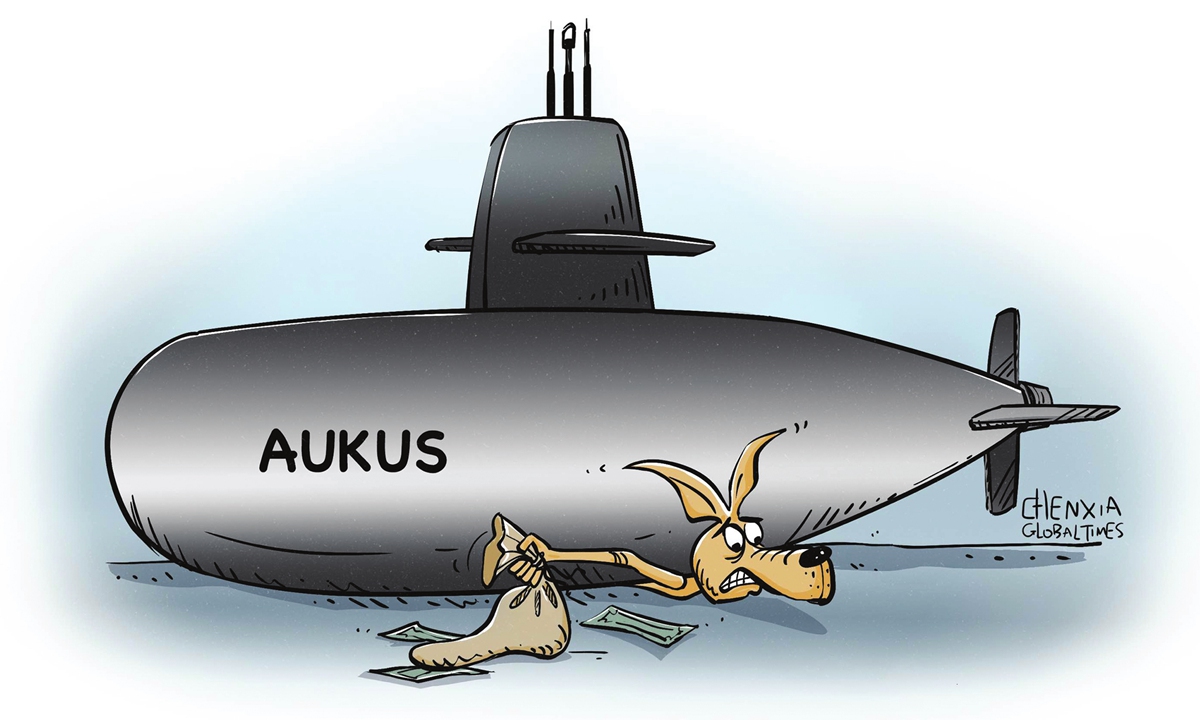
AUKUS Australia Illustration: Chen Xia/Global Times
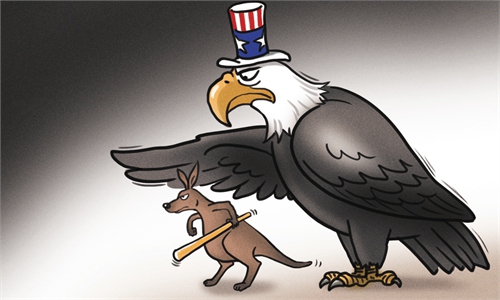
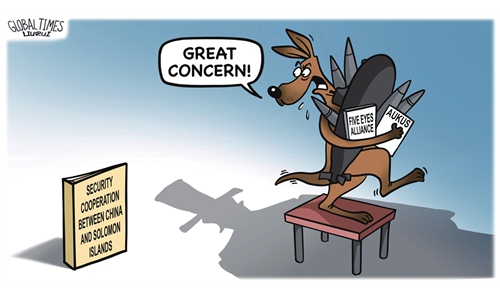
Australian Defense Minister Richard Marles said on Sunday that the US would be able to use planned defense facilities in Western Australia to help deliver submarines under the AUKUS nuclear submarine deal agreed by Australia, Britain and the US in 2021, media reported.
Australian government on Sunday officially announced a A$12 billion ($8 billion) project to upgrade facilities at the Henderson shipyard near Perth, as part of a 20-year plan to transform it into the maintenance hub for its AUKUS submarine fleet, according to Reuters.
A Chinese expert cautioned that Australia's choice may not bring about what it wants, but to break regional equilibrium, jeopardize the country's long-term interests.
The Henderson defense precinct will cost $25billion over a decade and will be used to build surface vessels and to dock and sustain submarines including those to be delivered under the AUKUS agreement, The Guardian reported.
"This world-class precinct will create more than 10,000 local jobs and strong opportunities for local industry," The Guardian quoted Prime Minister Anthony Albanese as saying.
The AUKUS pact, which aims to provide Australia with nuclear-powered attack submarines to counter the so-called "China's ambitions" in the region, is undergoing a formal review by the incumbent US administration.
Chen Hong, a professor and director of the Australian Studies Centre at East China Normal University, told the Global Times on Sunday that giving US access to an Australian facility is a trade-off of Australian interests, yet Canberra may hardly get what it expected due to the US' "America First" and tendency to squeeze benefits from allies.
According to Chen, Australia's motivation to push forward the pact is both economic and political.
The Albanese administration is under pressure from the opposition for failing to nail down a meeting with US president, while it also eyes the project as a leverage to boost the economy via development in the military industry, Chen said, adding that Australia's push of AUKUS, at this moment, seems more out of domestic needs rather than strategic concern.
However, Chen is suspicious that AUKUS can bring about sustainable economic returns, as military industry has not been an advantage of the country. Over investment could be a waste of resources and further drag its economy, Chen said.
While the Henderson shipyard pledge will increase Australia's overall defense spending, Marles would not specify what the new figure would be as a percentage of Australia's GDP, Australia Broadcasting Corporation (ABC) reported.
US officials have repeatedly called on the Australian government to raise its defense spending from around 2.2 percent to 3.5 percent of GDP.
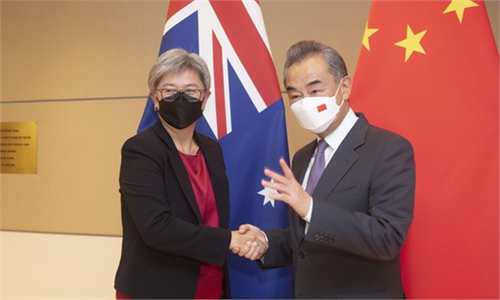
The Albanese administration has shown willingness to handle its relations with China and the US rationally, and steadily improve Australia-China ties, yet there are different views and voices in its domestic politics, Chen said.
Amid the dilemma of domestic politics and economic pressure, it's questionable whether the option of resorting to AUKUS goes in line with Australia's long-term national interests, Chen noted.
Former Australian prime minister Paul Keating also voiced opposition, calling the pact "the worst deal in all history." Keating says the AUKUS agreement and Australia's longstanding alliance with the US, which he called an "aggressive ally," is what may make Australia a target for any incident with China.
"We are better left alone than we are being protected by an aggressive power like the United States," Keating told ABC News in August.
Chen also said that it is worth vigilance that certain forces boasting for the AUKUS may seek to hype "China influence" and yield profits from regional tensions. For a long time, the Asia-Pacific has maintained stability and serves as a global engine for growth; if regional equilibrium is broken, that would deal a blow to not only regional security but also regional and global economic prospects, the expert said.
Chinese Foreign Ministry has repeatedly stated China's stance over the AUKUS. Spokesperson Lin Jian said in June that "We oppose manufacturing bloc confrontation and anything that amplifies the risk of nuclear proliferation and exacerbates arms race."
RELATED ARTICLES