Illustration: Chen Xia/GT
Cyberport, a digital tech hub and artificial intelligence (AI) accelerator in the Hong Kong Special Administrative Region (HKSAR), may add some graphics processing units (GPUs) made in the Chinese mainland to its Artificial Intelligence Supercomputing Centre in Hong Kong, as the government-run incubator seeks to reduce its reliance on Nvidia chips amid worsening China-US relations, the South China Morning Post reported on Sunday, citing Cyberport Chief Executive Rocky Cheng Chung-ngam.While further details of the plan remain unclear, the security of US chips has evidently triggered concerns among more and more Chinese businesses and entities, including those in the HKSAR. Previously, in December, after the US government announced yet another round of restrictions on chip sales to Chinese firms, four Chinese industry associations, including the China Semiconductor Industry Association and the Internet Society of China, issued firmly worded statements declaring that US chip products are no longer safe and reliable.
At the end of July, the Cyberspace Administration of China summoned Nvidia over security risks concerning its H20 AI chip sold to China, according to the Xinhua News Agency.
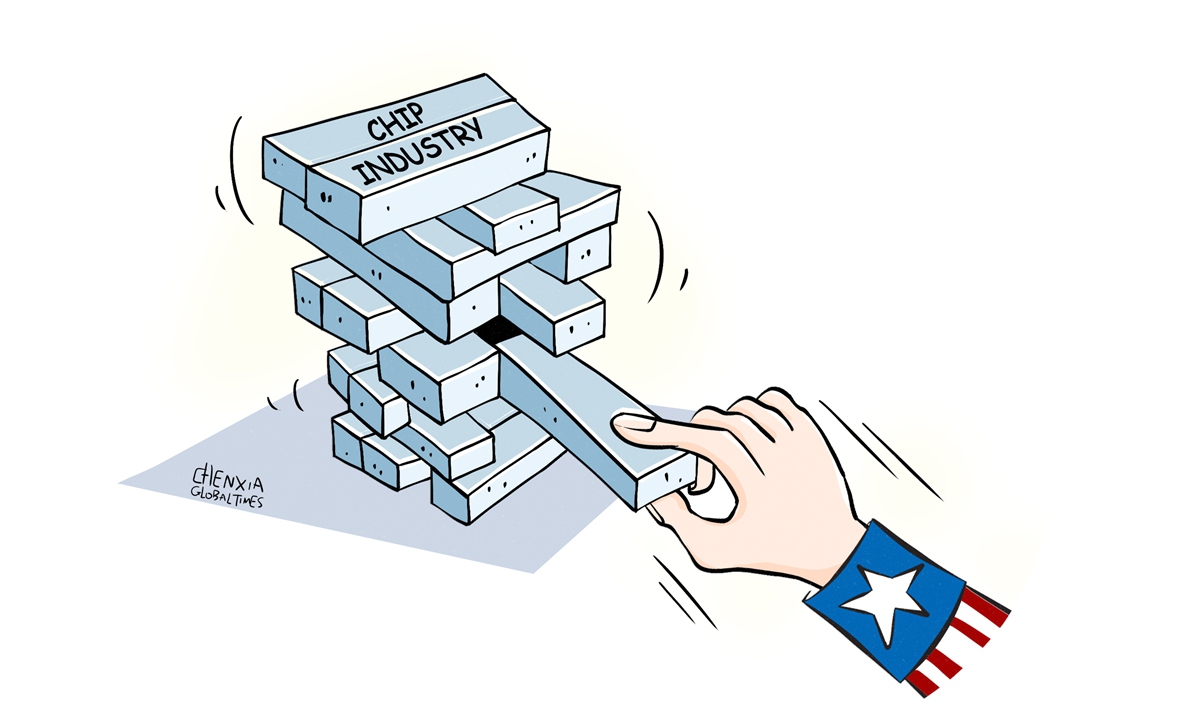
Over the years, the US has wielded chips as a weapon to curb technological advancement in other countries, including China, continuously tightening export controls targeting China's access to high-end chips. More alarmingly, foreign media also reported that US authorities have secretly placed location tracking devices in targeted shipments of advanced chips they see as being at high risk of diversion to China.
Meanwhile, in May 2025, US lawmakers from both parties introduced the Chip Security Act, seeking to require any covered integrated circuit product to be outfitted with chip security mechanisms that implement location verification. In July, the White House released its so-called AI action plan, which recommended that US authorities, in collaboration with industry, "explore leveraging new and existing location verification features on advanced AI compute to ensure that the chips are not in countries of concern."
With all these moves, how other countries and regions can trust the security of US chips. If anything, it is the US moves that have eroded the trust in US chips and forced a reevaluation of risks among enterprises and institutions that prioritize security. Against this backdrop, it is understandable that more and more companies started to choose domestic chips, representing a pragmatic and necessary step toward diversifying supply chains and mitigating external risks.
As a key market for the global chip industry, China has long advocated for win-win cooperation. In contrast, the US has been relentlessly intensifying its restrictions and other measures to undermine normal cooperation, prompting readjustments among certain businesses and other entities. However, the forced adjustments have served as a powerful catalyst for indigenous innovation in China. Rather than stifling China's technological advancement, US suppression measures have accelerated China's investment in domestic research and development and strengthened its resolve to build a self-sufficient semiconductor ecosystem.
China has already made remarkable progress in the chip field in recent years. Breakthroughs have been continuously achieved in design, manufacturing, packaging, and testing, and a number of enterprises with independent innovation capabilities have emerged.
Although there is still a certain gap between domestic chips and US chips in terms of performance and ecosystem, China is already capable of researching and producing chip products that can support tasks such as AI training and high-performance computing. The successive launch of domestic AI chips is a testament to this ability. They are already sufficient to form an effective supply in the Chinese market and meet the needs in some application scenarios.
It is important to note that China has repeatedly stated its commitment to opening-up and it welcomes businesses and products from other countries, including those from the US, to come to the Chinese market. At the same time, relevant foreign businesses must comply with Chinese laws and regulations and take concrete measures to ensure the security of their products, or more and more clients will be forced to leave them.
RELATED ARTICLES