New evidence reveals atrocities of Japanese invaders in forced recruitment and enslavement of Chinese laborers
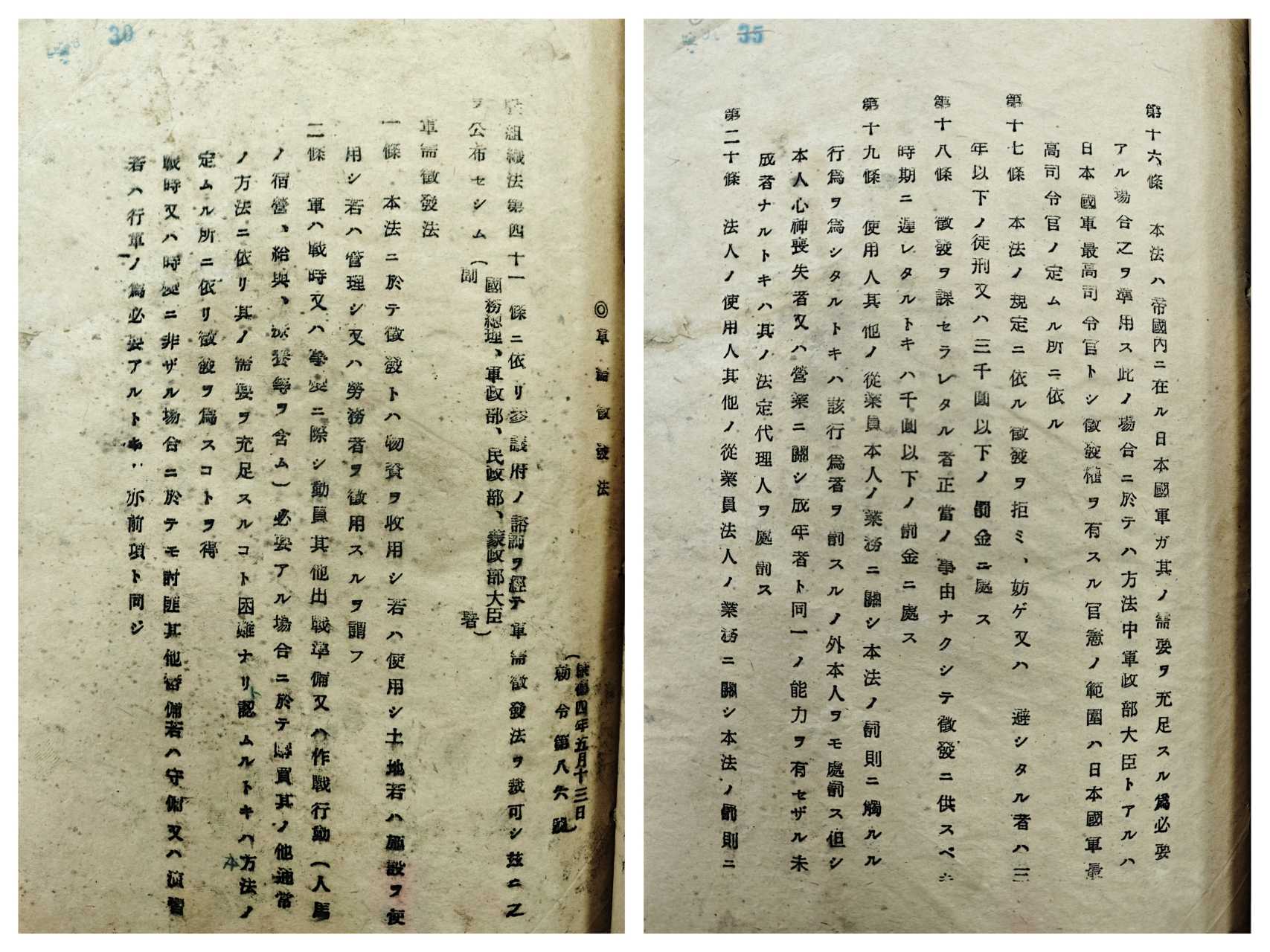
Picture of the new evidence revealed by Heilongjiang Provincial Archives Photo: China Central Television
Heilongjiang Provincial Archives on Thursday released to the public for the first time a special collection of 62 archival documents on the "forced recruitment and enslavement of Chinese laborers by the Japanese army of aggression," China Central Television (CCTV) reported.These valuable records reveal in depth the "labor control" policies implemented by Japanese imperialism during its invasion of China, exposing the planned and organized plunder and enslavement of Chinese laborers. The original documents provide irrefutable evidence of the war crimes and crimes against humanity committed by Japanese militarism, according to CCTV.
The archives released this time were formed during the period of Japanese occupation. They cover a wide range of topics, including labor utilization and control policies, the planning and implementation of labor conscription, as well as the inhumane treatment of laborers and their resistance. The documents shed light on the historical fact of forced labor conscription carried out by Japanese imperialism during its 14-year colonial rule in Northeast China following the September 18 Incident.
To sustain its war machine and plunder resources, the Japanese army, under the pretext of "labor supply," resorted to administrative coercion and violent means to conscript large numbers of Chinese laborers, who were forced into grueling work such as building roads, mining, and constructing military facilities, suffering systematic and institutionalized exploitation and oppression.
Of particular note are the original files on the "supply" of laborers by the Japanese Army's Unit 731 in Northeast China and the forced conscription of prisoners of war for the construction of military fortifications. These first-hand records provide concrete evidence of the Japanese invaders' colonial rule, military expansion and economic plunder in Northeast China.
The archives show that Japan sought to "legitimize" forced labor by promulgating the so-called Ordinance on the Requisition of Military Supplies through the puppet state of "Manchukuo." The ordinance explicitly stipulated that the Japanese army held the supreme power of requisition and authorized suppression against those who resisted.
The conscripted laborers were subjected to inhumane treatment and extremely harsh living conditions. Archival records show that they suffered from acute food shortages, lacked basic clothing to keep out the cold, and were forced to engage in intensive labor. Many laborers attempted to escape, but the Japanese army and the puppet regime carried out crackdowns through arrests, collective punishment and even brutal killings, completely stripping them of personal freedom and basic dignity, according to CCTV.
Nie Boxin, head of the archival compilation department of the Heilongjiang Provincial Archives, said the newly released documents are not only important materials for historical research, but also serve as a strong rebuttal to Japanese right-wing forces who deny aggression and whitewash crimes.
The release aims to keep alive the memory of suffering, uphold human justice, and remind the world to cherish peace and oppose war. These archives stand as historical evidence of the crimes committed by Japanese militarism and provide a lasting warning for humanity's pursuit of peace and development, said Nie.
Global Times
RELATED ARTICLES