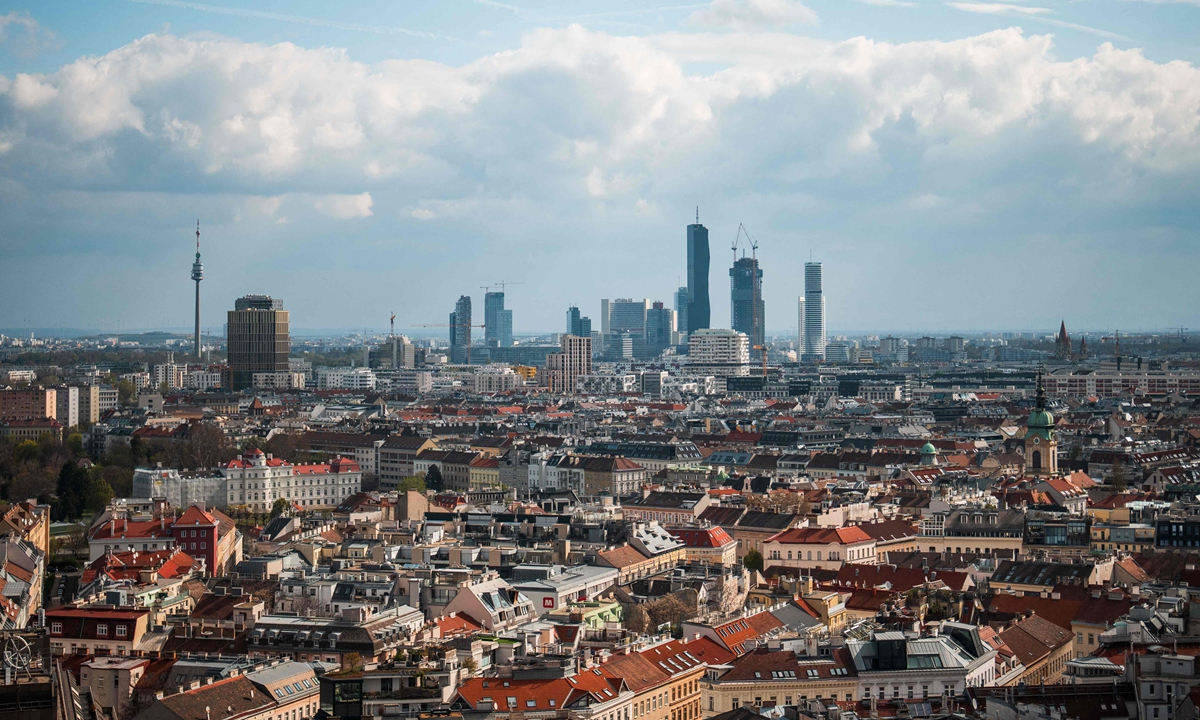
A view of Vienna, Austria, on April 10, 2025. Photo: VCG
Franz Roessler, the commercial counsellor at the Austrian embassy in Beijing, called for the use of multilateral mechanisms to address trade disputes, and said that unilateral moves such as simply hiking tariffs meet no one's interests.
The remarks were made during an exclusive interview with the Global Times on Thursday, after Chinese Foreign Minister Wang Yi wrapped up his five-day trip to Austria, Slovenia and Poland on Tuesday.
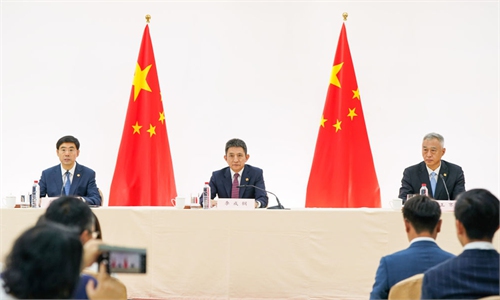
Wang held talks in Vienna on September 12 with his Austrian counterpart Beate Meinl-Reisinger, with both sides vowing to lift bilateral relations to a new stage, according to the Xinhua News Agency.
Roessler said it was an honor that Austria was the first stop of Wang's visit to Europe. "Austria and China established a friendly strategic partnership in 2018, and such a relationship has to be enriched with such a high-ranked visit," said the counsellor, noting that Wang's visit created more mutual understanding for the two countries, especially amid current uncertainties in global trade caused by hiking tariffs.
Trade disputes and tariffs worldwide have led to market adjustment. Roessler said that he has noticed a trend involving many Chinese home appliance providers seeking export opportunities in Austria and other European countries.
As Austrian leaders have emphasized, efforts to resolve trade disputes should use established mechanisms, such as the World Trade Organization. This was hailed by both Austria and China, and it was also reflected during Wang's visit, said Roessler.
"Trade flows should not be treated as politics," Roessler said, noting the attempt to bypass an established [negotiation] mechanism and impose unilateral measures creates uncertainty and harms all.
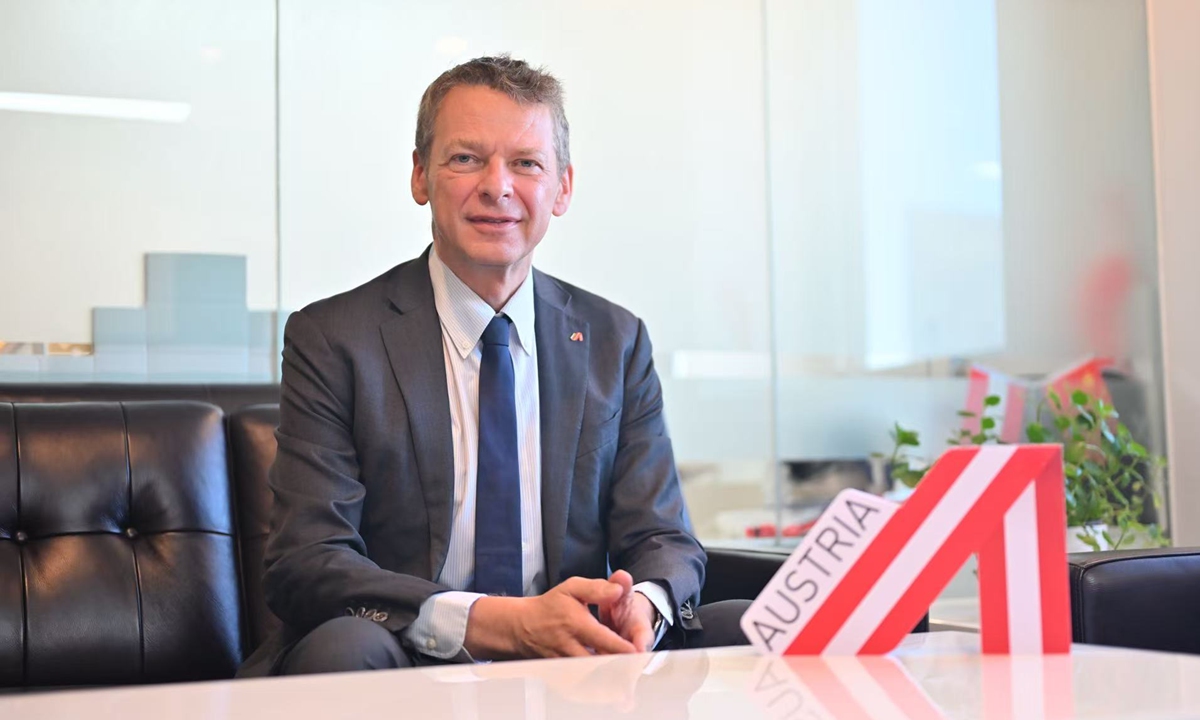
Franz Roessler, the commercial counsellor at the Austrian embassy in Beijing Photo: Tao Mingyang/GT
China is Austria's fourth-largest trade partner worldwide and the largest in Asia. About 650 Austrian companies have subsidiaries in China, driving much of the bilateral trade relationship and economic exchanges, and China has made more than 100 major investments in Austria, which Chinese companies see as a hub for Central and Eastern Europe, said Roessler, adding that Austria welcomes such investment and sees room for further growth of bilateral trade and investment.
Roessler further noted that in recent decades, China has been upgrading its industrial and value chains, transforming from manufacturing cheap products such as textiles and shoes to producing electronics and high-tech goods, which Austrian processing sectors rely on.
When collaborating with China, which boasts the world's largest manufacturing industry, Austrian companies can tap into major opportunities with their niche manufacturing capabilities, which contribute about 20 percent of the country's GDP, said Roessler.
China has experienced an infrastructure boom in the past 20 years. For high-speed rail, an Austrian company provides automated maintenance machines, rails, and specialized textiles for noise and vibration reduction, said the counsellor, adding that there are also successful consumer-related companies in China, such as Swarovski, Silhouette and FreyWille, that have expanded in recent years.
From November 30, 2024 to December 31, 2025, Austrian citizens with a valid ordinary passport can enter China without a visa for business and tourist trips, academic and cultural exchanges, visits and transit, and stay for a maximum of 30 days.
Roessler said that he hopes the policy could be extended to better serve bilateral people-to-people exchanges and tourism industry development.
Austria welcomed more than 1 million Chinese tourists per year before the COVID-19 pandemic and arrivals have recovered to 50 percent of that level, said Roessler. "Fortunately, good airline connections are now available. For example, Hainan Airlines flies new routes from Shenzhen and Chengdu to Vienna, Austrian Airlines connects Shanghai and Vienna, and China Airlines flies from Beijing to Vienna," he said, stressing that there is still potential for Chinese tourist volume to return to pre-pandemic levels.